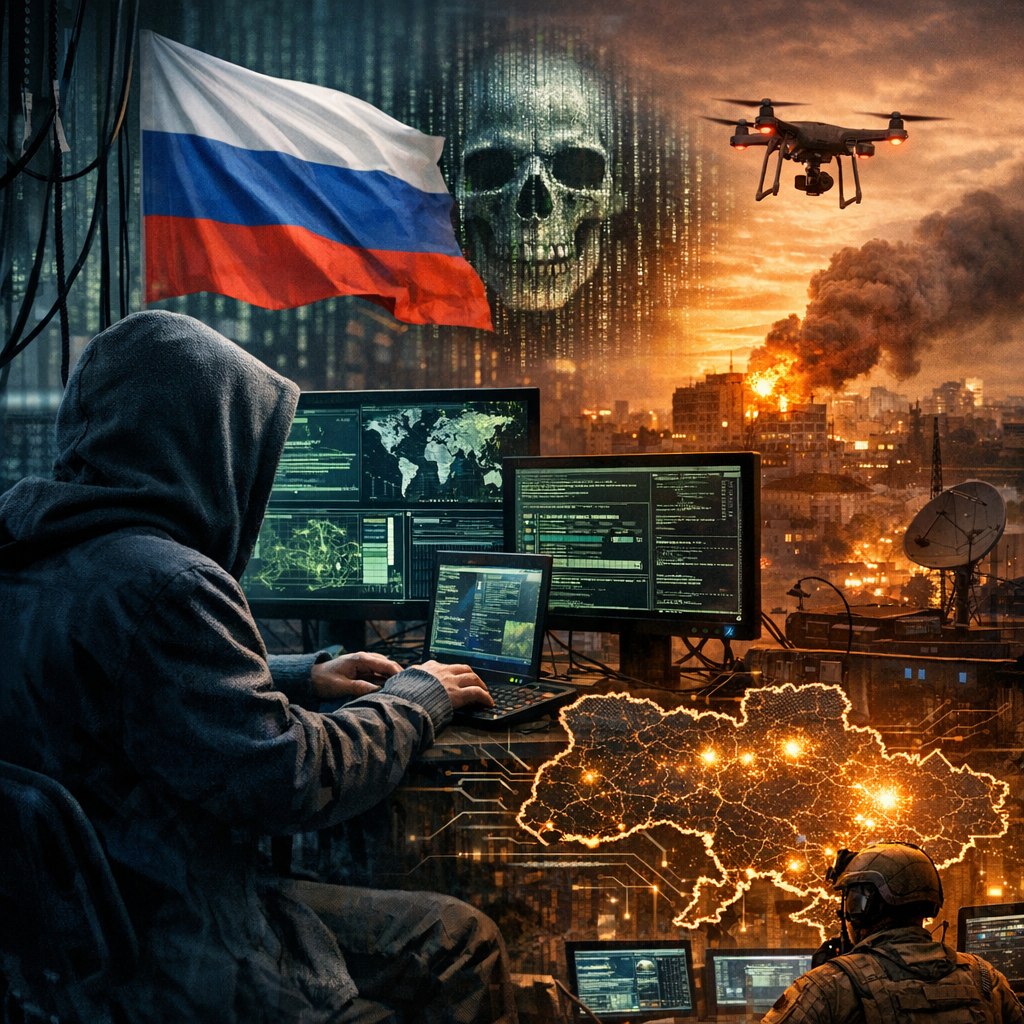
A new round of revelations about the operations of Russia-linked cyber actors against Ukrainian institutions is sharpening concerns in Kyiv and among its international partners about the durability of the country’s digital defenses as the war drags on. In an article titled “TSG 3,” published by the technology news site TechTime.news, the outlet described what it characterized as the latest evidence of a sustained campaign targeting public-sector networks and critical services, with activity that blends espionage, disruption, and information operations.
The TechTime.news report situates the alleged activity within a familiar pattern observed since the outset of the full-scale invasion: repeated attempts to penetrate government and municipal systems, compromise communications, and create operational uncertainty through attacks that can be plausibly denied or obscured through technical misdirection. While the tools and access methods described are technical in nature, the strategic aim is portrayed as decidedly political and military, focusing on weakening administrative capacity and eroding trust in state institutions.
Ukrainian officials and cybersecurity specialists have long warned that the country’s digital environment is a battlefield parallel to the front lines, where intrusion attempts can precede kinetic action, support intelligence collection, or amplify public anxiety. The TechTime.news article echoes those assessments, emphasizing how cyber campaigns against Ukraine are rarely isolated incidents; instead, they tend to accumulate into a broader pressure strategy that taxes defenders with constant triage and rapid recovery.
Analysts say the significance of such reporting lies not only in the details of any single incident, but in the persistence and adaptability of the adversary ecosystem. Even when specific vulnerabilities are patched or individual access points are closed, attackers can shift techniques, rely on stolen credentials, or compromise third parties in the supply chain to regain a foothold. That dynamic has made resilience as important as prevention for Ukraine’s public agencies and operators of essential services, forcing organizations to invest simultaneously in monitoring, incident response, and continuity planning.
The TechTime.news piece also underscores a central challenge for public attribution in cyber conflict: making definitive claims can be difficult when attackers route operations through compromised infrastructure, reuse code from other groups, or deliberately seed misleading indicators. For governments, that uncertainty complicates deterrence and response. For the public, it can blur the line between verified disruption and rumors that spread rapidly during wartime, a vulnerability that hostile actors can exploit.
Internationally, sustained attention to cyber operations against Ukraine is seen as a bellwether for threats elsewhere. Security officials in Europe and North America have repeatedly argued that tactics refined against Ukrainian targets are often repurposed later against other states, particularly those providing military, financial, or humanitarian aid. Within that framework, the issues raised by TechTime.news are likely to reinforce calls for deeper intelligence sharing, stronger protections for cross-border service providers, and continued support for Ukraine’s cyber defense capacity.
For Ukraine, the strategic imperative remains straightforward: keep government services running, protect sensitive data, and minimize disruptions that could translate into real-world harm. Yet the environment described by TechTime.news suggests that even successful defense will be measured less by the absence of attacks than by the ability to contain them quickly, communicate transparently, and maintain public confidence while the pressure persists.