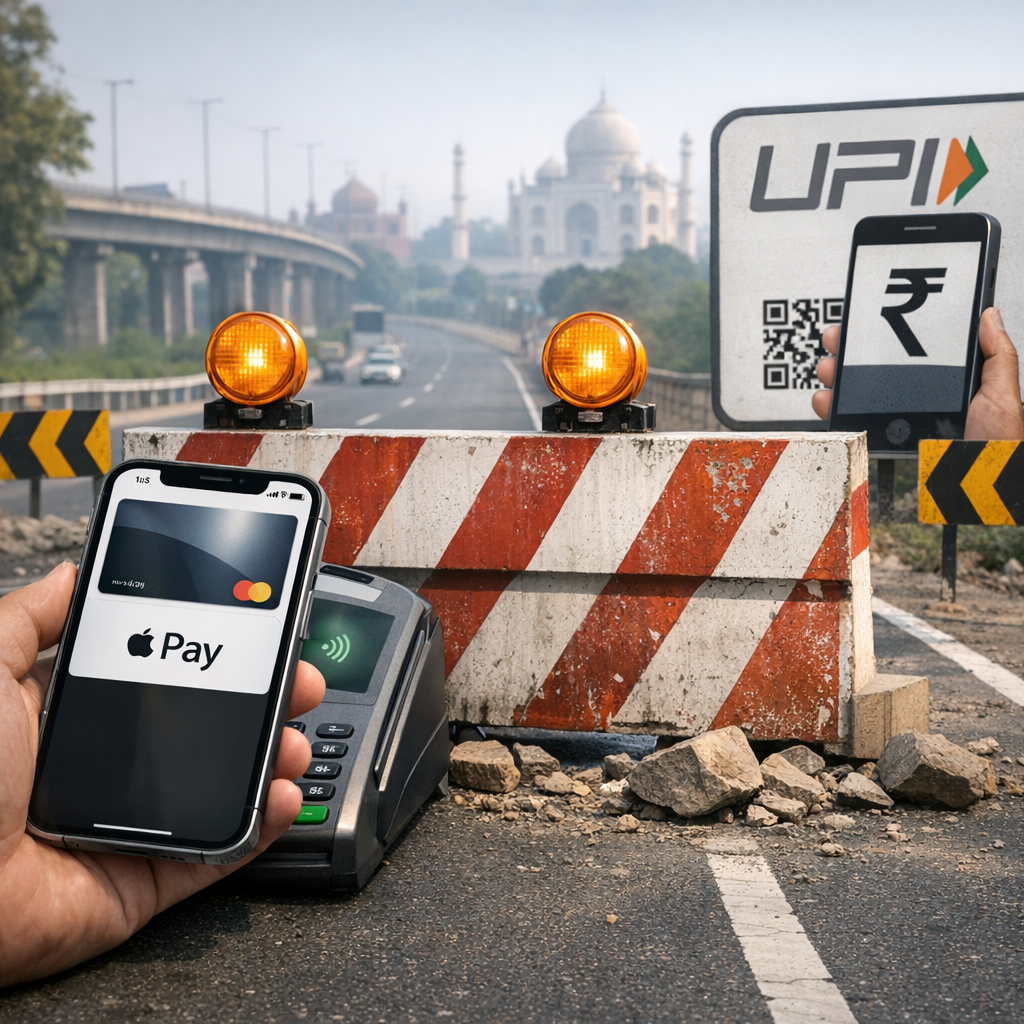
Apple’s push to expand its payments ecosystem into India is encountering a fundamental obstacle: the country’s zero-fee digital payments framework, which leaves little room for the kind of transaction-based revenue model the company relies on elsewhere.
According to a report titled “Apple Pay wants a slice of India but faces a big pricing challenge,” published by The Economic Times, the technology giant is exploring ways to introduce Apple Pay in one of the world’s fastest-growing digital payments markets. However, India’s Unified Payments Interface (UPI), a government-backed system that dominates the sector, does not permit fees on person-to-person transactions, significantly complicating Apple’s prospects.
In markets such as the United States, Apple earns a small share of each transaction processed through Apple Pay, typically paid by banks. That model has proven lucrative due to widespread credit card usage and established fee structures. India presents a stark contrast. UPI transactions, which account for the majority of digital payments in the country, are free for both consumers and merchants, leaving limited scope for intermediaries to extract revenue.
The Economic Times report notes that Apple has been in discussions with Indian authorities and financial institutions to integrate Apple Pay with UPI. While technical integration is feasible, monetization remains the central hurdle. Banks in India already operate with thin margins on payments, and there is little appetite to share revenue in a fee-free ecosystem.
Compounding the challenge is Apple’s relatively small footprint in India’s smartphone market, where Android devices dominate due to their lower cost. While Apple has made inroads by expanding local manufacturing and retail presence, its premium pricing continues to limit its user base compared with competitors. This reduces the immediate scale advantage Apple Pay might otherwise leverage.
Regulatory considerations also play a role. India’s payments infrastructure is closely overseen by the Reserve Bank of India and the National Payments Corporation of India, both of which prioritize affordability, interoperability, and broad access. Any attempt to introduce fees or proprietary restrictions could face resistance.
Despite these constraints, the potential rewards are significant. India processes billions of UPI transactions monthly, and digital payments adoption continues to surge across urban and rural areas alike. For Apple, even a modest foothold could strengthen its ecosystem and support its broader ambitions in services revenue.
The Economic Times report suggests that Apple may need to rethink its approach, potentially focusing on value-added services or partnerships rather than direct transaction fees. Features tied to security, privacy, or premium user experiences could offer alternative revenue streams more aligned with the Indian market’s dynamics.
For now, Apple’s ambitions in India’s payments space remain a work in progress, shaped as much by local policy and market structure as by its global strategy.