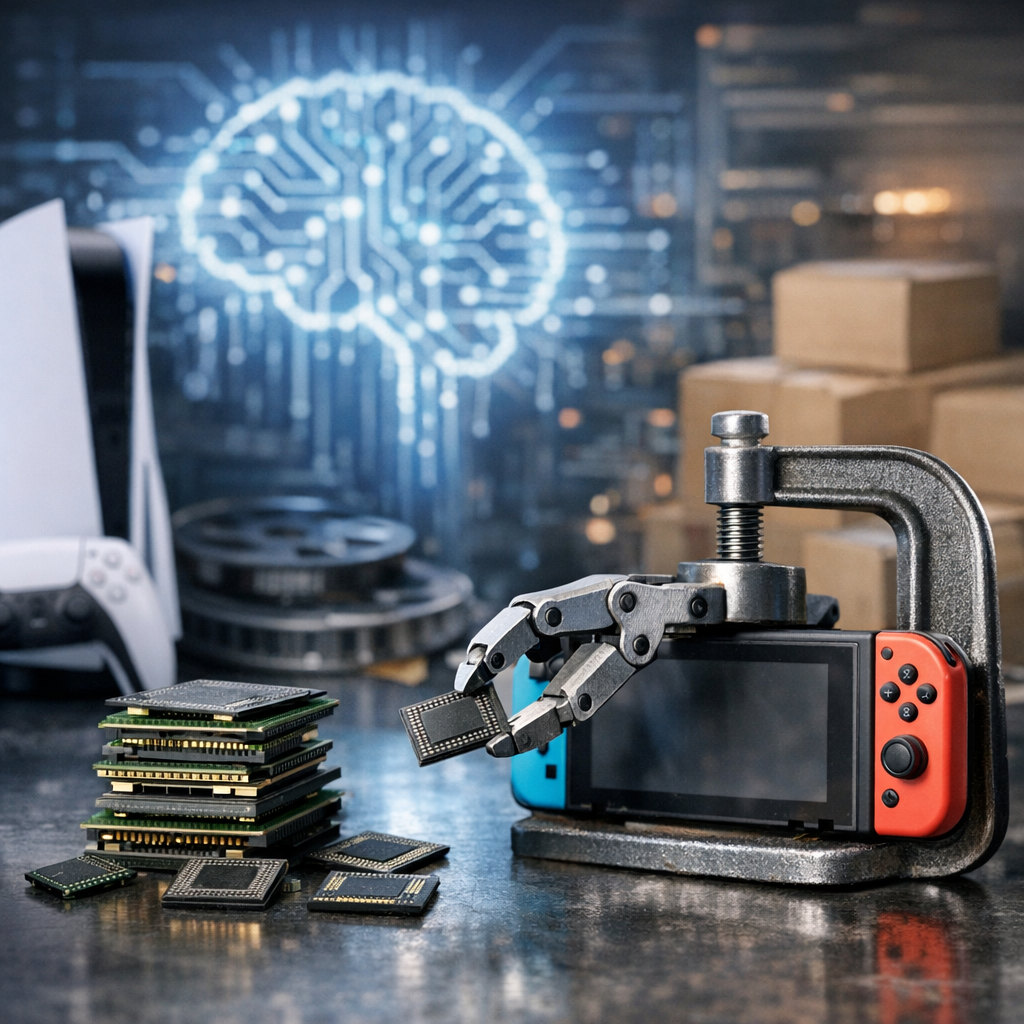
A surge in demand for memory chips driven by the rapid expansion of artificial intelligence is beginning to ripple through the consumer electronics sector, placing pressure on companies such as Sony and Nintendo as they navigate rising component costs and uncertain supply conditions.
According to a recent report titled “Sony, Nintendo grapple with memory price surge as AI boom constrains supply,” published by The Economic Times, the intensifying competition for high-performance memory—particularly DRAM and NAND flash—has tightened availability and pushed up prices across global markets. Chipmakers, seeking higher margins and longer-term growth, are increasingly prioritizing supply to data centers and AI-focused applications over traditional consumer hardware.
This shift is reverberating through the gaming industry, where both Sony and Nintendo depend heavily on memory components for their consoles. The PlayStation and Nintendo Switch ecosystems rely on steady, cost-efficient supply chains to maintain pricing stability and production volumes. With AI companies now absorbing a growing share of available memory capacity, console manufacturers face a more volatile procurement environment.
The report indicates that memory suppliers are reallocating production toward high-bandwidth memory and other advanced configurations tailored for AI workloads. These products command higher prices and are critical for training and deploying machine learning models, making them significantly more lucrative than standard consumer-grade chips. As a result, manufacturers serving the gaming sector are contending with reduced bargaining power and less predictable cost structures.
For Sony, which continues to manage production and distribution strategies for the PlayStation 5 while planning for future hardware cycles, sustained cost inflation in memory could compress margins or necessitate adjustments in pricing. Nintendo, preparing for the successor to the Switch, faces similar challenges as it seeks to balance performance improvements with affordability for a broad consumer base.
The broader implications extend beyond gaming. The ongoing reallocation of semiconductor capacity underscores a structural shift within the industry, where AI infrastructure is increasingly dictating supply chain priorities. This realignment may persist as long as investment in generative AI and large-scale computing continues to expand at its current pace.
While some analysts expect memory supply to eventually stabilize as manufacturers ramp up production, the near-term outlook remains uncertain. Capacity expansions in the semiconductor sector require significant capital investment and long lead times, meaning relief from current constraints is unlikely to be immediate.
In the meantime, companies like Sony and Nintendo must adapt to a market in which the needs of artificial intelligence platforms increasingly take precedence over traditional consumer electronics, reshaping cost dynamics and competitive strategies across the industry.