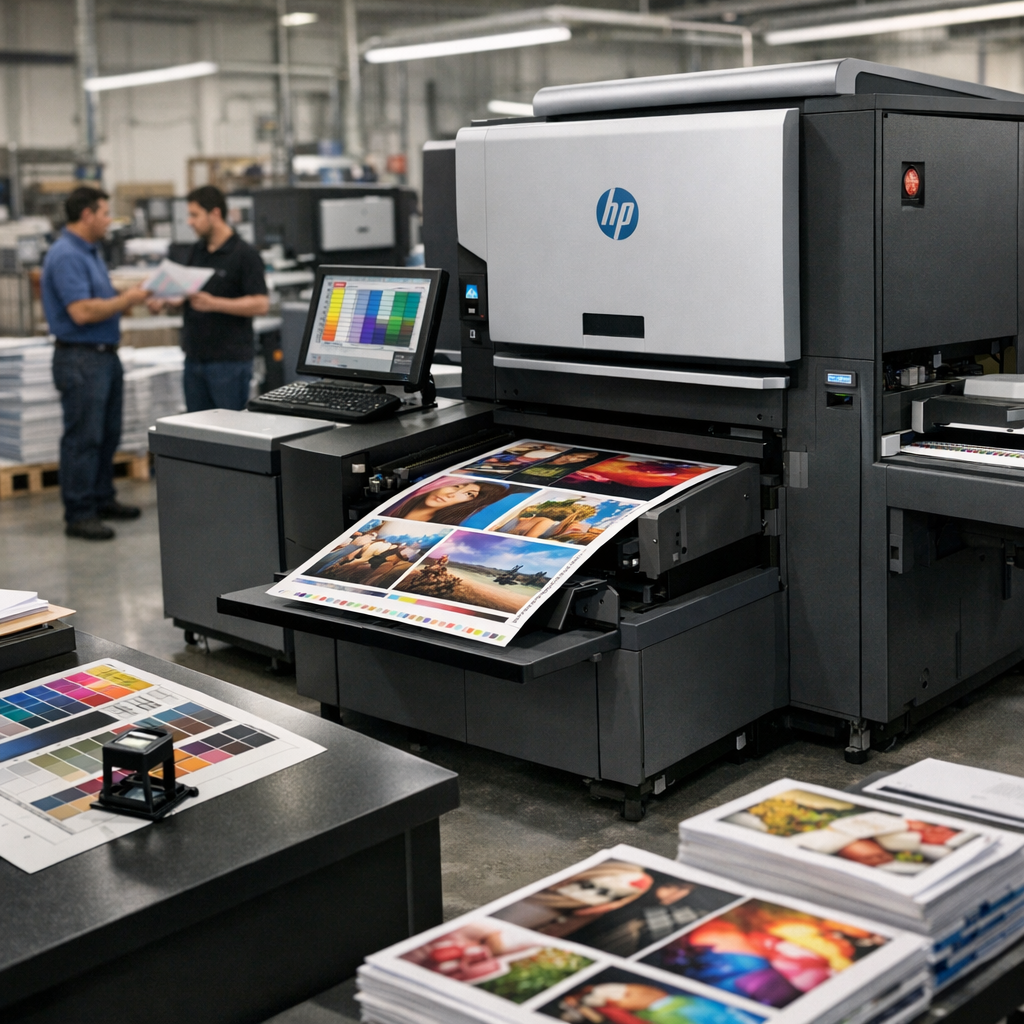
HP is preparing a significant update to its digital press lineup, according to a report published by TechTime.news under the title “HP Indigo 2.” The article describes what it characterizes as a next-generation Indigo platform aimed at pushing further into higher-volume production while tightening color consistency and reducing operational complexity for commercial print providers.
As presented by TechTime.news, the planned Indigo 2 system is framed less as a minor refresh and more as a reworking of the company’s approach to mid- to high-end digital printing—an area where print businesses have been demanding not only faster throughput but also more predictable results across substrates and repeat jobs. The report points to a combination of performance upgrades and workflow improvements intended to shorten time spent on calibration, make presses easier to run across shifts, and allow operators to move between job types with less downtime.
The timing reflects broader pressures within the commercial print sector. Print service providers are being pulled in two directions at once: brands want increasingly short runs, frequent versioning, and personalization, while the economics of running a modern print floor still reward efficiency, automation, and high utilization. A platform positioned as Indigo’s next step is therefore likely to be judged not only on peak speed but on the more practical metrics that determine profitability—waste, changeover time, maintenance intervals, and how well the press integrates with upstream and downstream software.
TechTime.news also situates the move in the context of intensifying competition among digital press manufacturers, where vendors are trying to claim the best balance between quality and productivity. In recent years, the fastest advances have often come from mechanical refinements, smarter sensing, and software-assisted color management rather than from a single headline hardware feature. If the report’s emphasis on improved consistency and streamlined operation is a fair signal of HP’s direction, Indigo 2 appears designed to answer a market that increasingly values repeatability and reliability as much as raw speed.
HP has not, in the TechTime.news account, positioned the platform as a niche product; rather, it is described as a system aimed at mainstream production environments that need to handle a wide mix of work. That includes the kinds of jobs that have become central to digital printing’s growth—packaging, labels, and commercial applications where brand color fidelity and substrate flexibility can determine whether digital is chosen over analog alternatives.
For print businesses, the practical questions will come down to total cost of ownership and real-world throughput on typical jobs, not just demonstration benchmarks. Any new Indigo platform will be weighed against the cost of upgrading from existing presses, the learning curve for operators, and the extent to which new workflow capabilities can reduce labor and human variability. Service and availability will also be critical, particularly for plants running multiple shifts, where unplanned downtime can erase the productivity gains promised by new equipment.
The TechTime.news report, titled “HP Indigo 2,” suggests HP is betting that the next stage of digital production printing will be won by platforms that combine automation and consistency with flexible job handling, rather than by those that pursue speed at the expense of stability. If the company delivers on those priorities, Indigo 2 could become a notable inflection point for commercial printers weighing when—and whether—to make their next major capital investment.