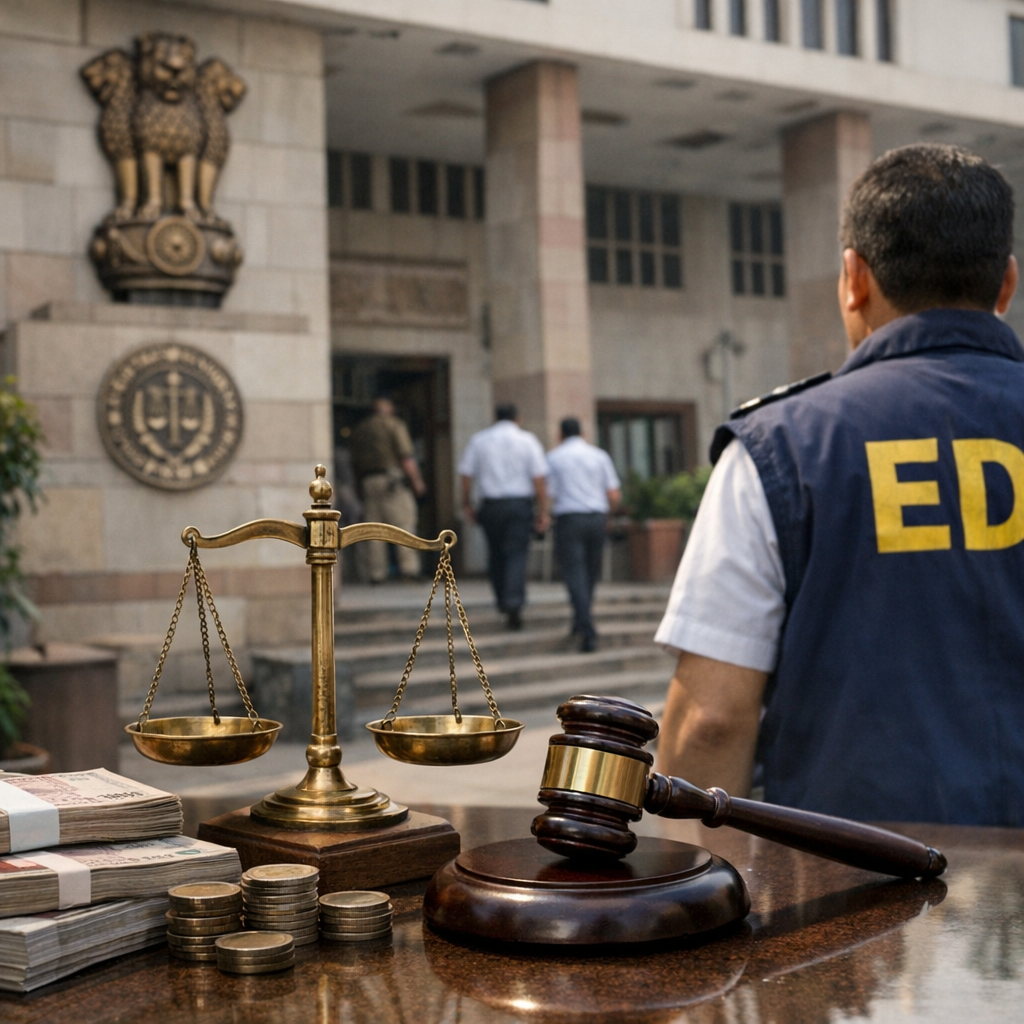
A recent report by The Economic Times, titled “WinZO case: HC warns ED of costs if challenge to Nanda’s bail is unnecessary,” highlights mounting judicial scrutiny over the Enforcement Directorate’s approach in pursuing financial investigations tied to India’s fast-growing gaming sector.
According to the report, the Delhi High Court cautioned the Enforcement Directorate (ED) against pursuing what it described as potentially unwarranted litigation in its challenge to the bail granted to Saumya Singh Rathore Nanda, associated with the gaming platform WinZO. The court indicated that if the agency’s appeal is found to lack sufficient legal grounding, it could face the imposition of costs, a signal of the judiciary’s increasing impatience with procedural overreach.
The case centers on allegations linked to financial irregularities, which the ED has been investigating under provisions related to money laundering. Nanda had previously secured bail, prompting the agency to contest the decision. However, during proceedings, the High Court questioned whether the appeal was justified or merely an extension of enforcement action without substantive new evidence.
The court’s remarks underscore a broader concern within India’s legal system regarding the balance between investigative authority and individual liberty. While agencies like the ED wield expansive powers to probe economic offenses, courts have repeatedly emphasized the need for proportionality and accountability, particularly in cases where arrests and bail decisions are involved.
The WinZO case is also significant given the regulatory ambiguity surrounding India’s online gaming industry. With the sector experiencing rapid growth, enforcement actions have increasingly drawn attention to the line between legitimate business operations and alleged financial misconduct. Legal challenges in this space often carry implications beyond individual cases, potentially shaping regulatory norms and enforcement standards.
The High Court’s warning signals that judicial oversight will remain a critical check on investigative agencies, particularly in high-profile financial cases. As proceedings continue, the outcome may influence not only the trajectory of the WinZO matter but also the broader framework within which economic offenses are investigated and contested in India.