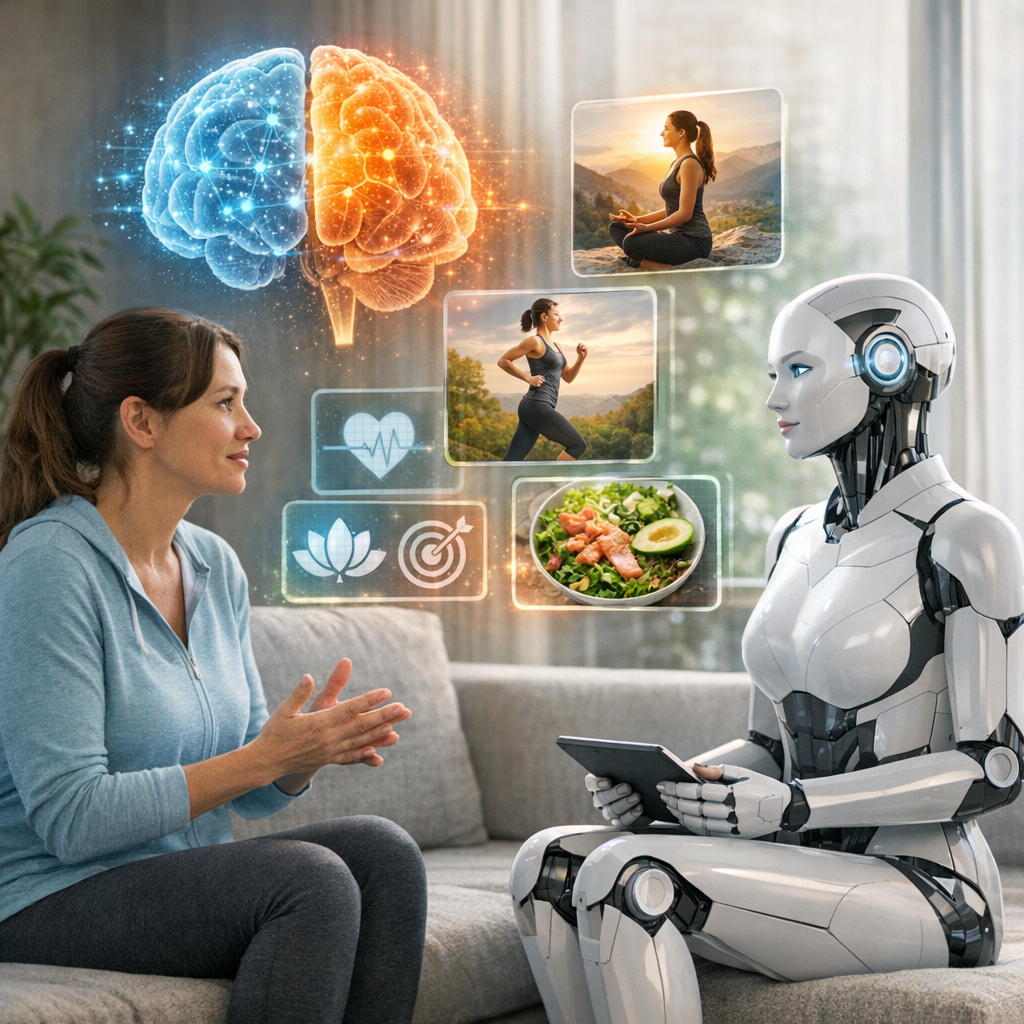
A recent report published by the Stanford Institute for Human-Centered Artificial Intelligence (HAI), titled “An AI health coach could change your mindset,” explores how emerging artificial intelligence systems may influence not only physical health behaviors but also the psychological frameworks that shape them.
The article highlights a growing line of research suggesting that AI-driven coaching tools can go beyond tracking steps or monitoring diets. Instead, these systems aim to engage users in ways that reshape how they think about health, motivation, and personal agency. By using conversational interfaces and adaptive feedback, AI health coaches may help individuals develop more sustainable habits by reinforcing mindset shifts rather than simply prescribing actions.
Researchers cited in the Stanford HAI piece emphasize that traditional health interventions often struggle because they focus narrowly on outcomes, such as weight loss or exercise frequency, without addressing the underlying cognitive patterns that influence behavior. AI systems, however, can be designed to respond dynamically to users’ emotional states, goals, and setbacks. This creates opportunities for more personalized and psychologically informed guidance.
The article points to early experimental evidence suggesting that users interacting with AI coaches can experience measurable changes in how they approach challenges. For instance, individuals may become more likely to view setbacks as temporary and controllable, a shift associated with better long-term adherence to health goals. These findings draw on established psychological theories, including growth mindset and self-efficacy, but apply them through scalable digital platforms.
At the same time, the Stanford HAI report underscores the importance of careful design and oversight. While AI health coaches offer promise, they also raise concerns about accuracy, user dependence, and ethical boundaries. Ensuring that such systems provide reliable information and avoid reinforcing harmful behaviors remains a central challenge. Researchers stress that these tools should complement, rather than replace, professional medical advice.
Privacy is another critical issue. Because effective coaching requires intimate knowledge of users’ behaviors and emotional states, AI systems must handle sensitive data responsibly. The article notes that maintaining user trust will be essential if these technologies are to gain widespread adoption.
Despite these challenges, the Stanford HAI analysis suggests that AI health coaching represents a significant shift in digital health. By focusing on how people think rather than simply what they do, these systems may open new pathways for improving well-being at scale. The article concludes that continued interdisciplinary collaboration—combining expertise in medicine, psychology, and computer science—will be key to realizing the potential of AI-driven coaching while mitigating its risks.