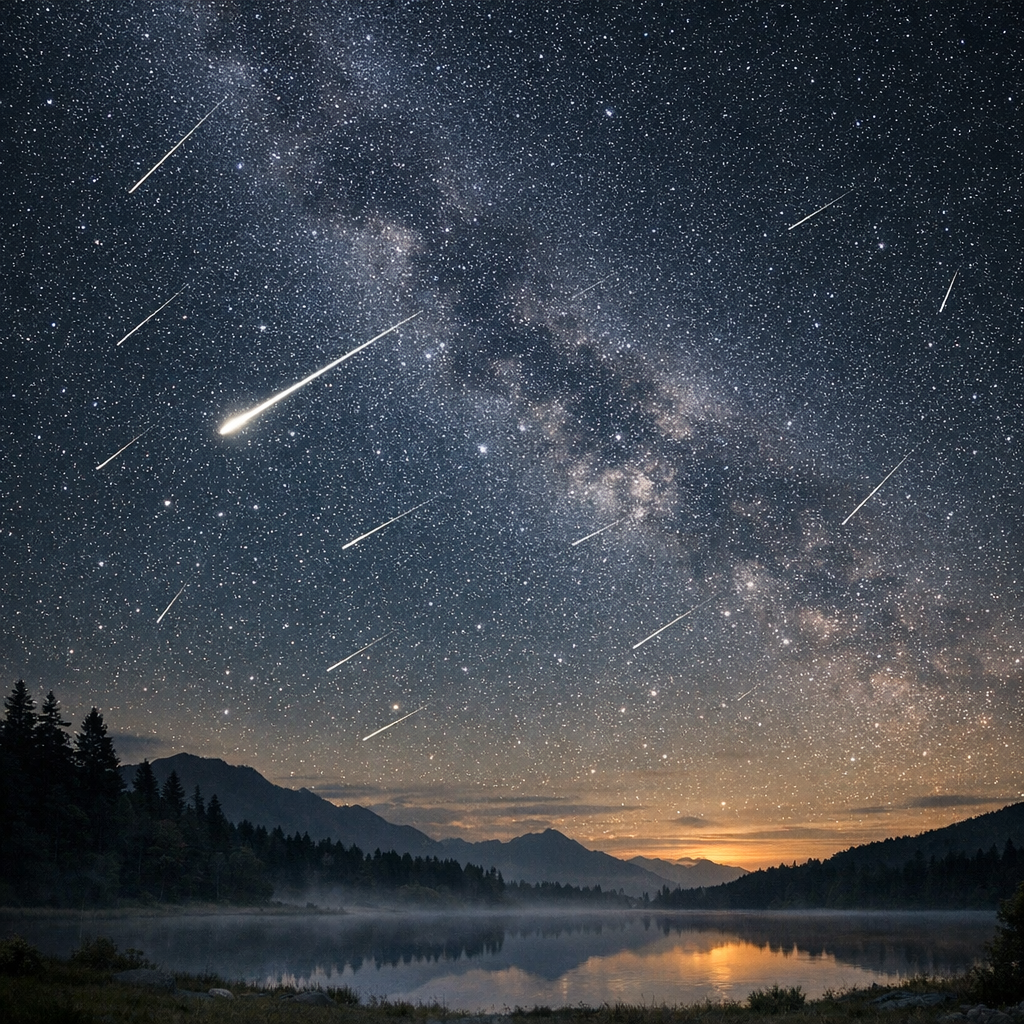
As spring settles across the Northern Hemisphere, stargazers are preparing for the annual return of the Lyrid meteor shower, one of the oldest recorded celestial events. In its recent article, “How to Watch the Lyrids Meteor Shower at Its Peak 2026,” Wired outlines viewing conditions and expectations for this year’s display, which is forecast to reach peak visibility in late April.
The Lyrids, known for their fast, bright streaks, originate from debris left behind by Comet C/1861 G1 (Thatcher). Earth passes through this debris field each April, producing a meteor shower that has been observed for more than 2,600 years. While typically modest in intensity, averaging about 10 to 20 meteors per hour under optimal conditions, the shower has occasionally surprised observers with short-lived outbursts.
According to Wired’s reporting, the 2026 peak is expected to occur overnight during the third week of April, with the best viewing window in the pre-dawn hours when the radiant point in the constellation Lyra rises higher in the sky. Observers in areas with minimal light pollution will have the clearest views, though even suburban viewers may catch some of the brighter meteors.
One key factor influencing visibility this year is the moon phase. Wired notes that darker skies, particularly during a waning or absent moon, significantly improve observing conditions. When lunar brightness is low, fainter meteors become visible, enhancing the overall experience.
Unlike more dramatic annual showers such as the Perseids or Geminids, the Lyrids are valued for their historical significance and occasional unpredictability. Past records have documented sudden surges in activity, with rates briefly climbing to 100 meteors per hour, although such events remain rare.
Experts cited in the Wired article emphasize that no special equipment is needed to observe the shower. A clear night sky, a comfortable place to recline, and patience are typically sufficient. Allowing time for eyes to adjust to darkness—often around 20 to 30 minutes—can substantially improve visibility.
Beyond its scientific importance, the Lyrid meteor shower continues to offer a reminder of humanity’s long-standing fascination with the night sky. As described in Wired’s coverage, even a modest meteor display can provide a compelling connection to both cosmic processes and centuries of recorded observation.