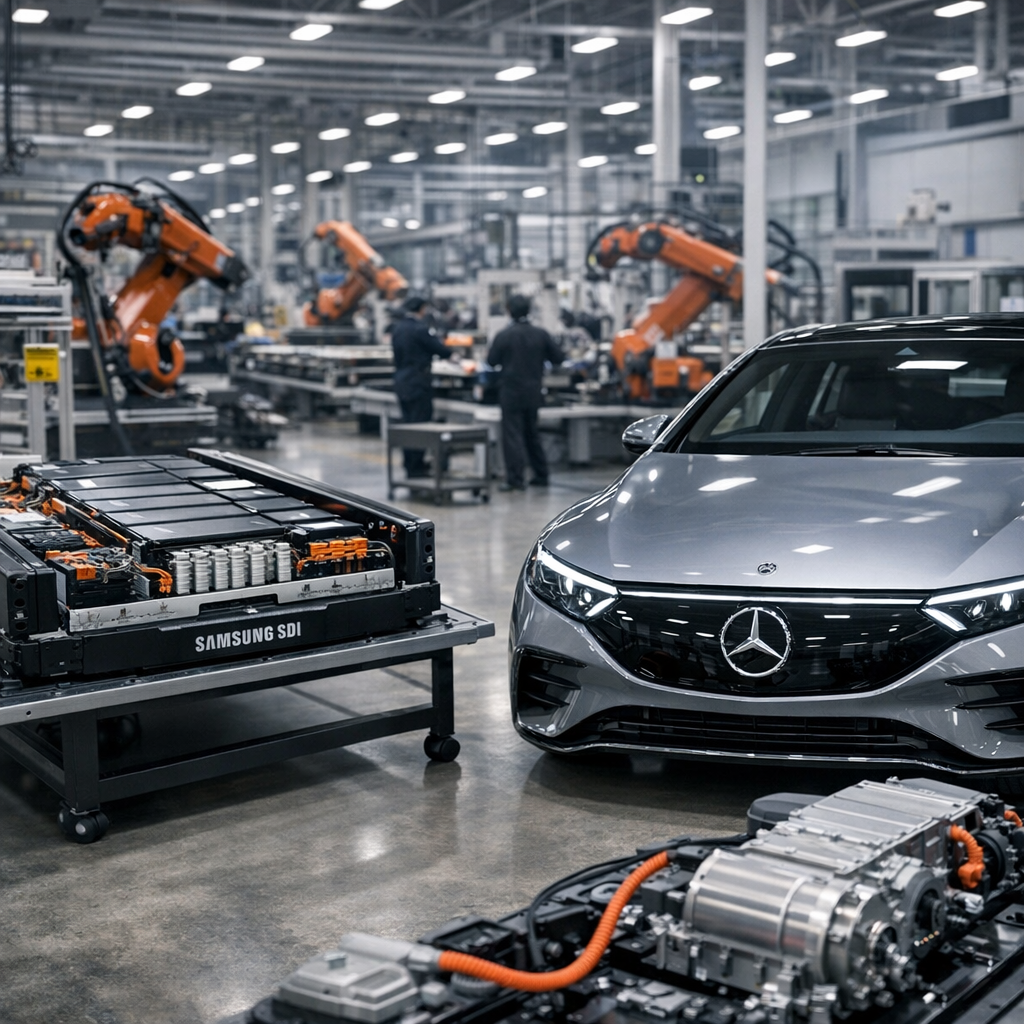
Samsung SDI and Mercedes-Benz are deepening their partnership with a multibillion-dollar electric vehicle battery supply agreement that underscores the accelerating race to secure advanced battery technology for next-generation EVs.
According to the article titled “Inside Samsung SDI and Mercedes-Benz’s $6.8B EV battery deal,” published by StartupNews.fyi, the agreement reflects a strategic alignment between a major battery manufacturer and a global luxury automaker at a time when supply chain control and technological differentiation are becoming decisive factors in the electric vehicle market.
The deal, reportedly valued at approximately $6.8 billion, centers on Samsung SDI supplying high-performance battery cells for Mercedes-Benz’s upcoming electric models. These batteries are expected to support long-range driving capabilities and improved energy density, both of which are critical to maintaining competitiveness in the premium EV segment. The partnership also highlights Mercedes-Benz’s ongoing shift toward electrification as it aims to transition its portfolio toward fully electric offerings in key markets over the coming decade.
Samsung SDI, one of South Korea’s leading battery producers, has been steadily expanding its footprint in the global EV supply chain. By securing long-term agreements with established automakers, the company is positioning itself as a key player in a market increasingly defined by scale, reliability, and innovation. The reported deal with Mercedes-Benz adds to its roster of high-profile clients and reflects broader industry demand for advanced lithium-ion battery solutions.
For Mercedes-Benz, the agreement represents more than a supply arrangement; it is a strategic move to ensure stable access to next-generation battery technologies amid intensifying global competition. Automakers are under pressure to lock in supply as governments tighten emissions regulations and consumer demand shifts toward electric mobility. Partnerships like this also provide a pathway for co-development, allowing automakers to tailor battery performance to specific vehicle platforms.
The StartupNews.fyi report suggests that the collaboration will likely involve batteries designed for improved efficiency and safety, as well as compatibility with Mercedes-Benz’s evolving EV architecture. This aligns with industry trends toward modular platforms and standardized components, which can reduce costs and accelerate production timelines.
The deal comes at a moment when geopolitical considerations and supply chain vulnerabilities remain top of mind for manufacturers. By strengthening ties with established partners such as Samsung SDI, Mercedes-Benz is seeking to mitigate risks associated with raw material sourcing and production bottlenecks while maintaining a competitive edge in battery performance.
As the electric vehicle sector continues to mature, agreements of this scale are becoming increasingly common, reflecting both the capital intensity of battery production and the strategic importance of securing long-term supply. The Samsung SDI–Mercedes-Benz partnership illustrates how collaboration between technology suppliers and automakers is shaping the future of transportation, with battery innovation at the center of that transformation.