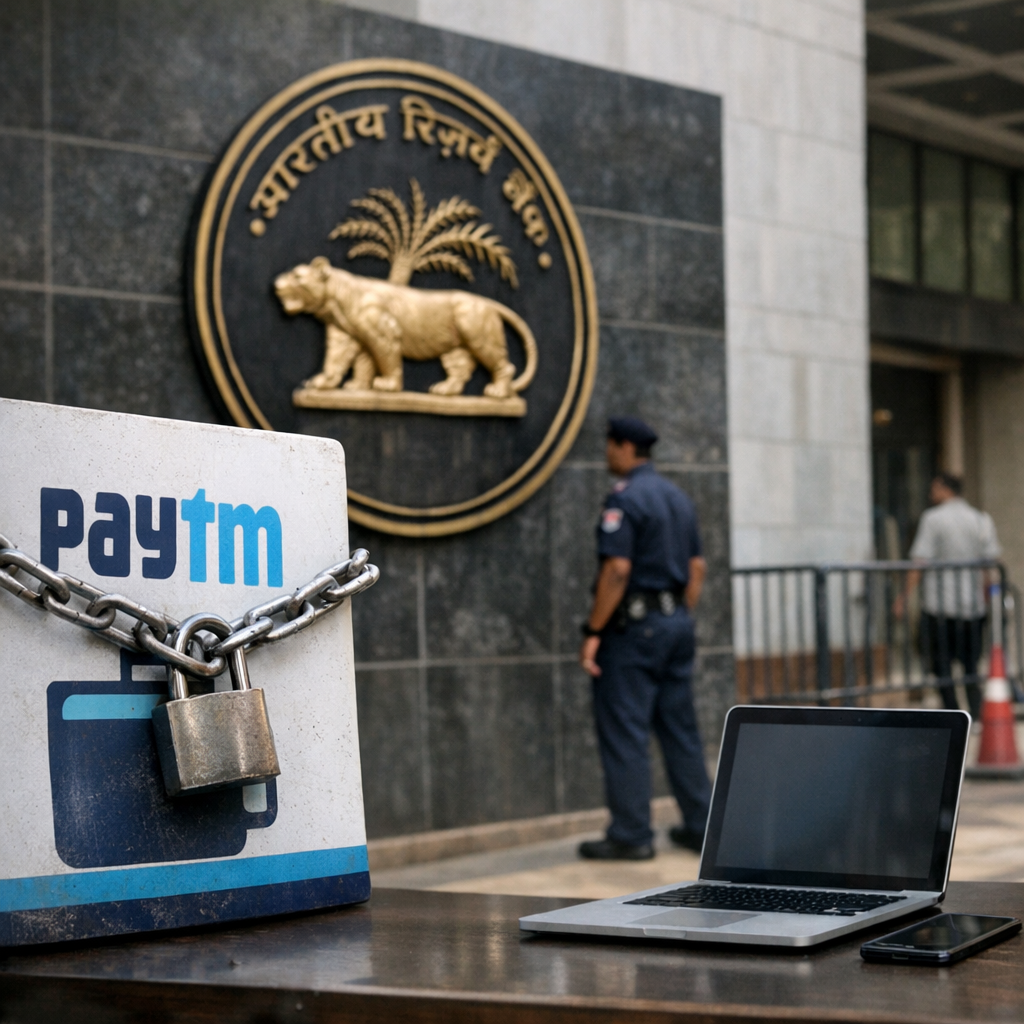
The Reserve Bank of India’s decision to cancel the licence of Paytm Payments Bank marks one of the most consequential regulatory actions in the country’s evolving digital finance sector, raising fresh concerns about governance, compliance, and the sustainability of fintech-led banking models.
According to the Economic Times report titled “RBI cancels Paytm Payments Bank licence,” the central bank’s move follows a series of supervisory findings that pointed to persistent non-compliance and systemic irregularities within the payments bank’s operations. The action effectively bars the entity from continuing its core banking activities, bringing an abrupt halt to what had once been positioned as a flagship example of India’s fintech innovation.
The development underscores the RBI’s increasingly assertive stance toward regulated entities that fail to meet prudential norms, particularly in areas such as customer due diligence, data integrity, and transaction monitoring. Payments banks, introduced to expand financial inclusion through digital-first models, operate under tighter restrictions than traditional banks, making strict compliance with regulatory frameworks essential to their survival.
Paytm Payments Bank, backed by One97 Communications, had built a vast customer base by leveraging the popularity of its parent company’s digital payments platform. However, the regulatory scrutiny it faced in recent years highlighted tensions between rapid user acquisition strategies and the operational discipline required of licensed financial institutions.
The cancellation of the licence is expected to have ripple effects across India’s fintech landscape. Analysts indicate that it could prompt heightened compliance checks and a more cautious approach from regulators when evaluating business models that blur the line between technology platforms and financial intermediaries.
For customers, the immediate impact revolves around the continuity of services and the safety of deposits. While regulatory actions typically aim to safeguard consumer interests, the transition period following such a move often creates uncertainty, particularly for users dependent on digital wallets and associated banking services.
More broadly, the episode reinforces a key message from the central bank: innovation in financial services will not come at the cost of regulatory discipline. As India continues to position itself as a global leader in digital payments, the balance between growth and governance is likely to remain a defining challenge for both regulators and industry players.