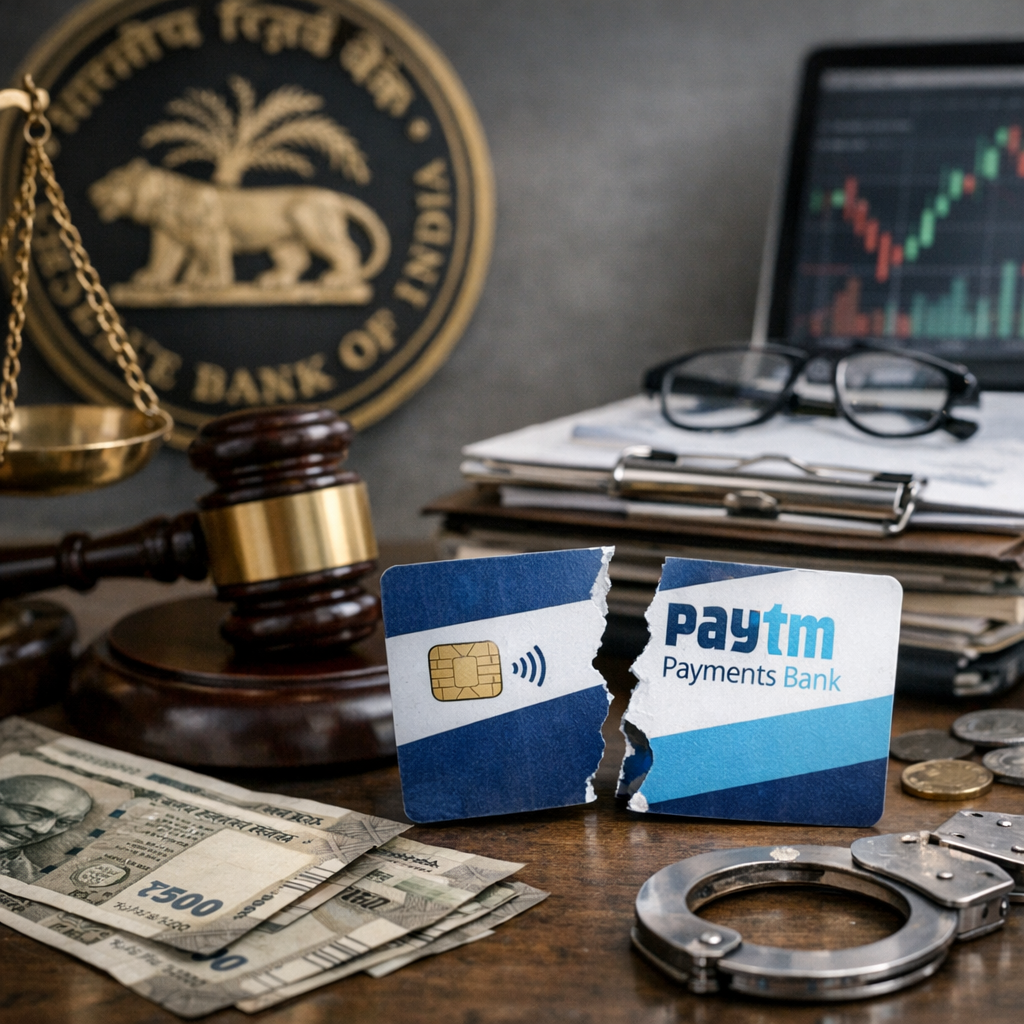
The Reserve Bank of India’s continuing clampdown on Paytm Payments Bank marks a decisive escalation in regulatory scrutiny of fintech entities, underscoring concerns around compliance and governance in India’s rapidly expanding digital finance sector. As reported in the Economic Times article titled “RBI scraps Paytm Bank licence; Pronto’s back-to-back funding,” the central bank’s move signals both the limits of regulatory tolerance and the shifting landscape for financial technology firms operating at scale.
The regulator’s action follows months of restrictions imposed on Paytm Payments Bank, during which it had already curtailed key operations, including onboarding new customers and expanding services. The effective termination of its license closes a chapter for one of India’s most prominent payments institutions, which had once been positioned as a flagship example of the country’s push toward cashless transactions. The development raises broader questions about oversight mechanisms, internal controls, and the responsibilities of platforms handling millions of users’ financial data.
Industry observers see the move as part of a broader tightening of regulatory frameworks, particularly as fintech firms blur the lines between technology platforms and financial institutions. While innovation has brought efficiency and accessibility to digital finance, regulators appear increasingly focused on ensuring that these advances do not outpace safeguards related to customer protection, data security, and systemic risk. The Paytm case illustrates how lapses—or perceived lapses—in compliance can lead to swift and consequential intervention.
Despite the setback, the wider fintech ecosystem continues to attract investor confidence. The same Economic Times report highlights fresh capital inflows into emerging players such as Pronto, which has secured back-to-back funding rounds. This contrast underscores a bifurcated environment in which capital remains available for startups with compelling models and perceived regulatory alignment, even as established players face heightened scrutiny.
Investors are recalibrating their expectations, placing greater emphasis on governance standards alongside growth metrics. Startups that can demonstrate robust compliance frameworks may find themselves better positioned to secure funding in this evolving environment. Conversely, companies that have prioritized rapid expansion without commensurate investment in regulatory infrastructure may encounter increasing friction.
For policymakers, the challenge lies in striking a balance between fostering innovation and maintaining financial stability. India’s digital payments ecosystem has been a global success story, driven by initiatives such as the Unified Payments Interface. However, the Paytm Payments Bank episode suggests that regulatory vigilance is intensifying as the system matures.
The implications extend beyond a single company. Banks, fintech firms, and investors alike are likely to reassess their risk management strategies and operational processes. As regulatory expectations become clearer—and arguably stricter—the sector may enter a phase defined less by unchecked expansion and more by disciplined, compliance-driven growth.
Taken together, the developments captured in the Economic Times report reflect a turning point for India’s fintech industry: one where regulatory credibility and operational resilience may prove as critical as innovation in determining long-term success.