Tesla is accelerating efforts to scale production of its long-promised robotaxi platform, signaling a more aggressive push into autonomous ride-hailing even as questions remain about timelines and technical readiness.
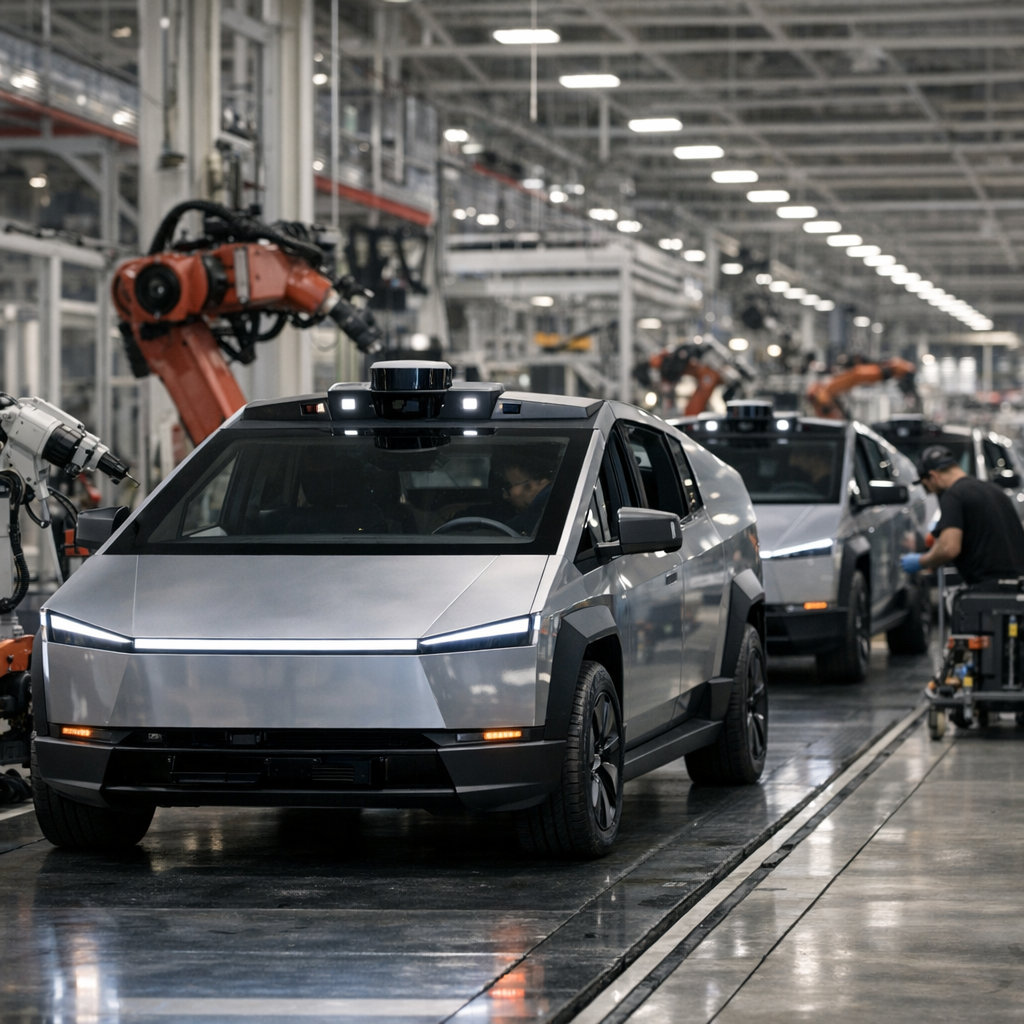
According to the Tech Xplore article “Tesla robotaxi production and Cybercab ramp,” the company is preparing to expand manufacturing capacity for its dedicated self-driving vehicle, often referred to as the Cybercab. The effort reflects Tesla’s broader strategy to pivot from conventional electric vehicle sales toward a service-oriented model built around autonomy.
The report indicates that Tesla aims to streamline production processes for the Cybercab, which is expected to feature a simplified design optimized for high-volume manufacturing. By focusing on cost efficiency and scalability, the company is attempting to position the vehicle as the backbone of a future robotaxi network rather than as a traditional consumer product.
Tesla’s leadership has repeatedly emphasized that autonomy will be central to the company’s long-term valuation. The Cybercab is intended to operate without a human driver, relying on Tesla’s evolving full self-driving software. However, deployment of fully autonomous systems at scale remains contingent on both technological milestones and regulatory approval, areas where progress has historically been uneven.
The Tech Xplore report notes that production ramp-up plans come amid ongoing scrutiny of Tesla’s self-driving claims. While the company continues to collect real-world driving data from its existing fleet, critics argue that fully driverless capability has yet to be demonstrated in a consistent and regulator-approved manner.
Even so, Tesla appears to be betting that manufacturing readiness will give it an advantage once the technology reaches maturity. By preparing factories and supply chains in advance, the company could move quickly to deploy a large robotaxi fleet if regulatory and technical barriers are resolved.
The Cybercab initiative also reflects intensifying competition in the autonomous vehicle space. Rival companies, including Waymo and Cruise, have already launched limited robotaxi services in select cities, though they, too, face operational constraints and regulatory hurdles. Tesla’s approach differs in that it seeks to leverage its existing vehicle ecosystem and customer base, potentially turning privately owned cars into revenue-generating assets within a shared network.
The Tech Xplore article underscores that Tesla’s timeline remains ambitious, with many uncertainties still unresolved. Scaling production is only one element of the challenge; ensuring safety, reliability, and compliance will ultimately determine whether the company can deliver on its robotaxi vision.
For now, Tesla’s push to ramp Cybercab manufacturing signals confidence in its autonomy roadmap, even as the broader industry continues to grapple with the complexities of fully driverless transportation.