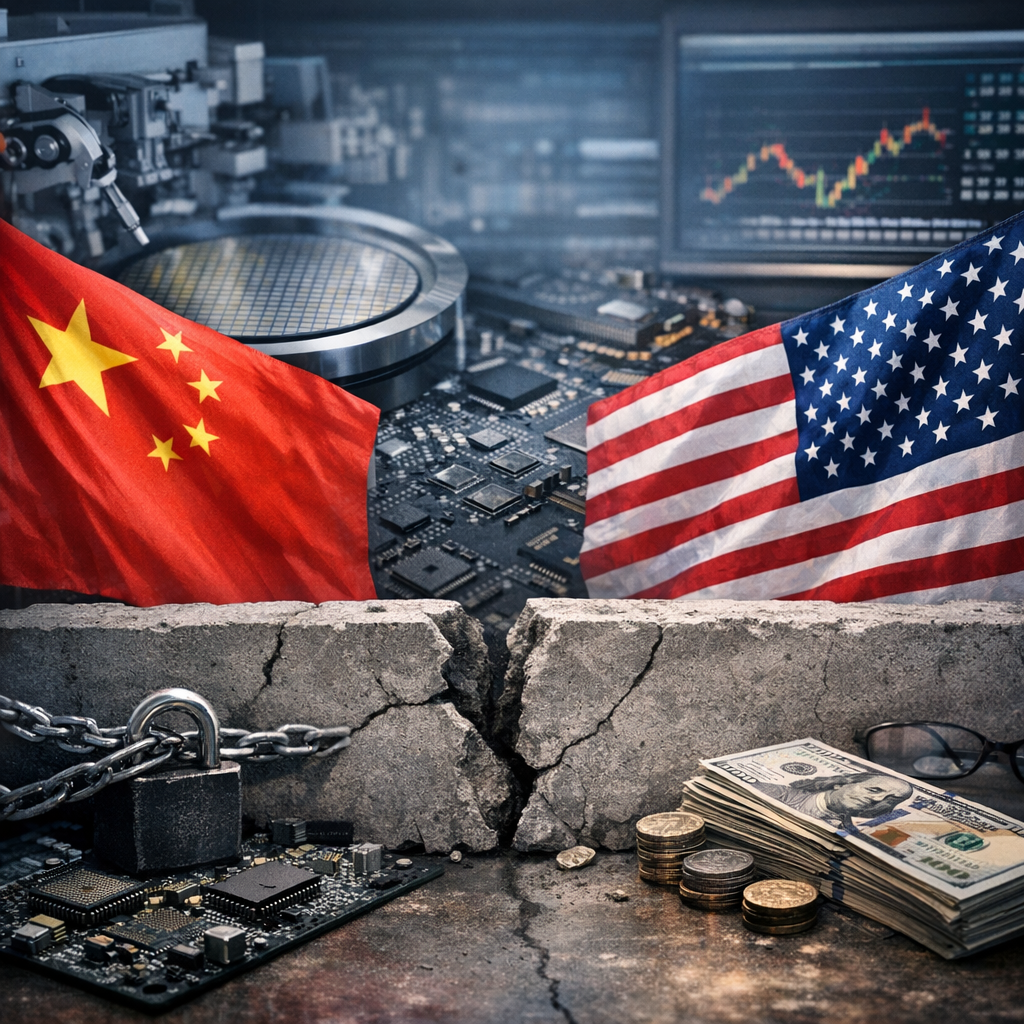
China is preparing to tighten oversight of domestic technology companies’ use of foreign capital, particularly from the United States, according to a report titled “China to curb US investment in tech companies: Report” published by The Economic Times. The move signals an escalation in financial decoupling pressures between the world’s two largest economies and underscores Beijing’s growing focus on controlling sensitive sectors amid ongoing geopolitical tensions.
Citing sources familiar with the matter, the report indicates that Chinese regulators are considering new measures that would limit or more closely scrutinize U.S. investment in key areas such as artificial intelligence, advanced computing, and other strategically significant technologies. While details remain under discussion, the direction is consistent with China’s broader emphasis on technological self-reliance and national security.
The potential restrictions come at a time when cross-border investment flows between China and the United States are already under strain. Washington has implemented its own set of measures in recent years aimed at restricting outbound investment into Chinese firms involved in critical technologies, citing security concerns. Beijing’s reported plans suggest a reciprocal approach that could further narrow channels for capital and collaboration.
Industry observers note that tighter controls could reshape funding dynamics for Chinese startups and established firms alike. U.S. venture capital and private equity have historically played a notable role in China’s technology boom, particularly in consumer internet and emerging tech segments. Any additional barriers could encourage greater reliance on domestic investors or funding aligned with state priorities.
At the same time, the move may deepen uncertainty for multinational investors navigating increasingly complex regulatory environments. Firms with exposure to both markets could face new compliance requirements, heightened due diligence, and potential limitations on deal-making.
The Economic Times report frames the development as part of a broader pattern of economic recalibration, in which both Washington and Beijing are actively redefining the boundaries of acceptable investment in sensitive sectors. While neither side has fully closed financial channels, the trajectory suggests a gradual, policy-driven separation in high-tech domains.
For global markets, the implications are likely to unfold over time. Reduced cross-border investment could slow the pace of knowledge exchange and capital allocation that has historically underpinned innovation. At the same time, it may accelerate parallel ecosystems, with each country cultivating its own supply chains, funding networks, and technological standards.
As policymakers in Beijing weigh the scope and timing of any new restrictions, the report suggests that the balance between economic openness and strategic control remains at the center of China’s decision-making.