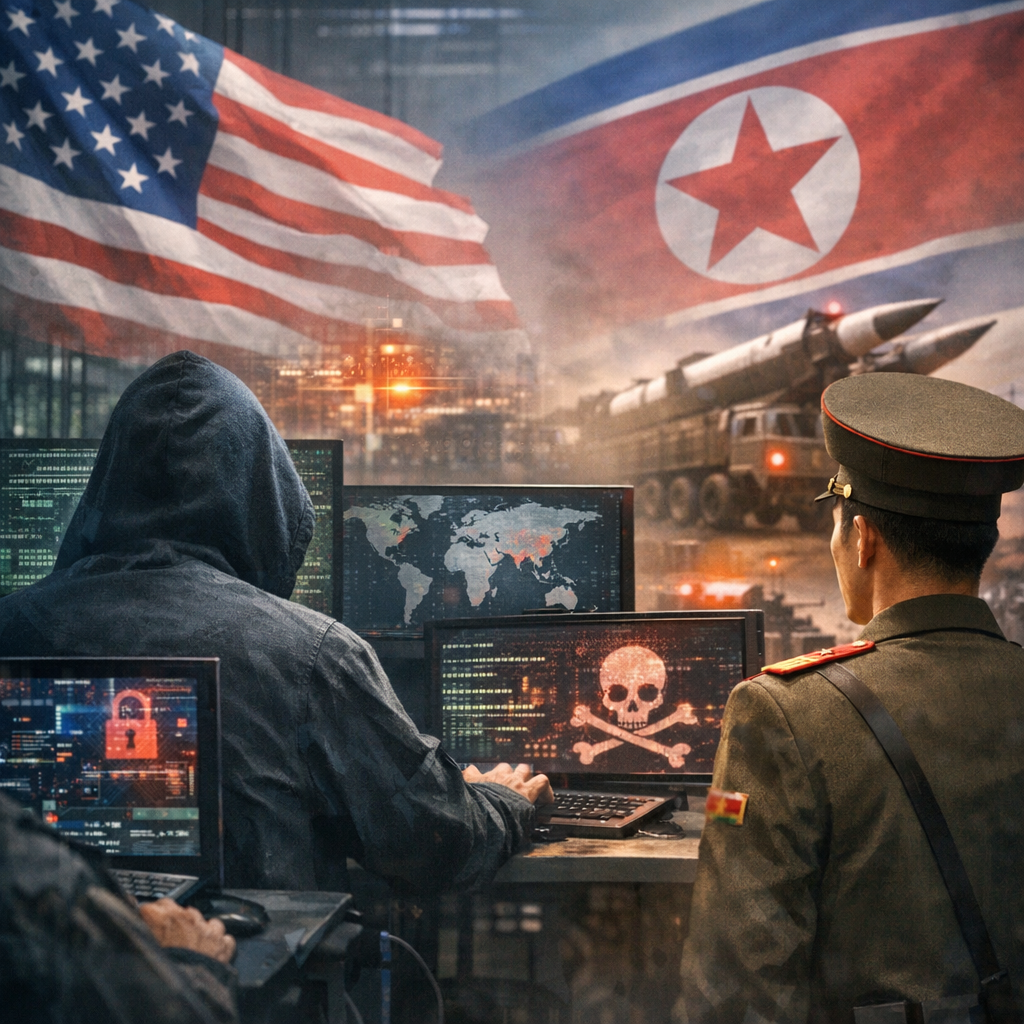
North Korea has dismissed recent allegations from the United States linking it to cybercrime operations, sharply criticizing the claims as politically motivated and lacking credible evidence, according to a report published by The Economic Times titled “North Korea calls US cyber crime accusations ‘absurd slander’.”
The dispute underscores a deepening tension between Washington and Pyongyang over cybersecurity, an area that has increasingly become a battleground for geopolitical rivalry. U.S. officials have repeatedly accused North Korea of orchestrating hacking campaigns aimed at financial institutions, cryptocurrency platforms, and government entities, asserting that such activities help fund Pyongyang’s sanctioned weapons programs.
North Korea’s response, as cited in the report, rejects these accusations outright. Officials characterized the claims as “absurd slander,” arguing that they form part of a broader strategy by the United States to discredit the country on the international stage. The statement reflects a longstanding pattern in which Pyongyang denies involvement in cyber activities attributed to it by Western governments and cybersecurity firms.
The U.S. and its allies have attributed several major cyber incidents to North Korean actors in recent years, including high-profile cryptocurrency thefts and ransomware campaigns. Authorities in Washington contend that these operations are carried out by state-sponsored groups operating under various aliases, often targeting digital assets as a means of circumventing international sanctions.
Cybersecurity analysts have pointed to growing sophistication in these alleged operations, noting the use of advanced malware, social engineering tactics, and decentralized financial systems. However, attribution in cyberspace remains inherently complex, and definitive proof that can be publicly disclosed is often limited, contributing to the cycle of accusation and denial.
North Korea’s rebuttal also reflects broader diplomatic friction. Relations between the two countries remain strained amid stalled negotiations over North Korea’s nuclear ambitions and ongoing sanctions enforcement. Cyber accusations add another layer to these tensions, complicating efforts to re-engage in dialogue.
The exchange highlights how cyber activities have become central to modern geopolitical conflict, where economic pressure, technological competition, and national security concerns converge. As both sides maintain their positions, the prospect of resolution appears distant, with cyber operations likely to remain a persistent point of contention in U.S.-North Korea relations.