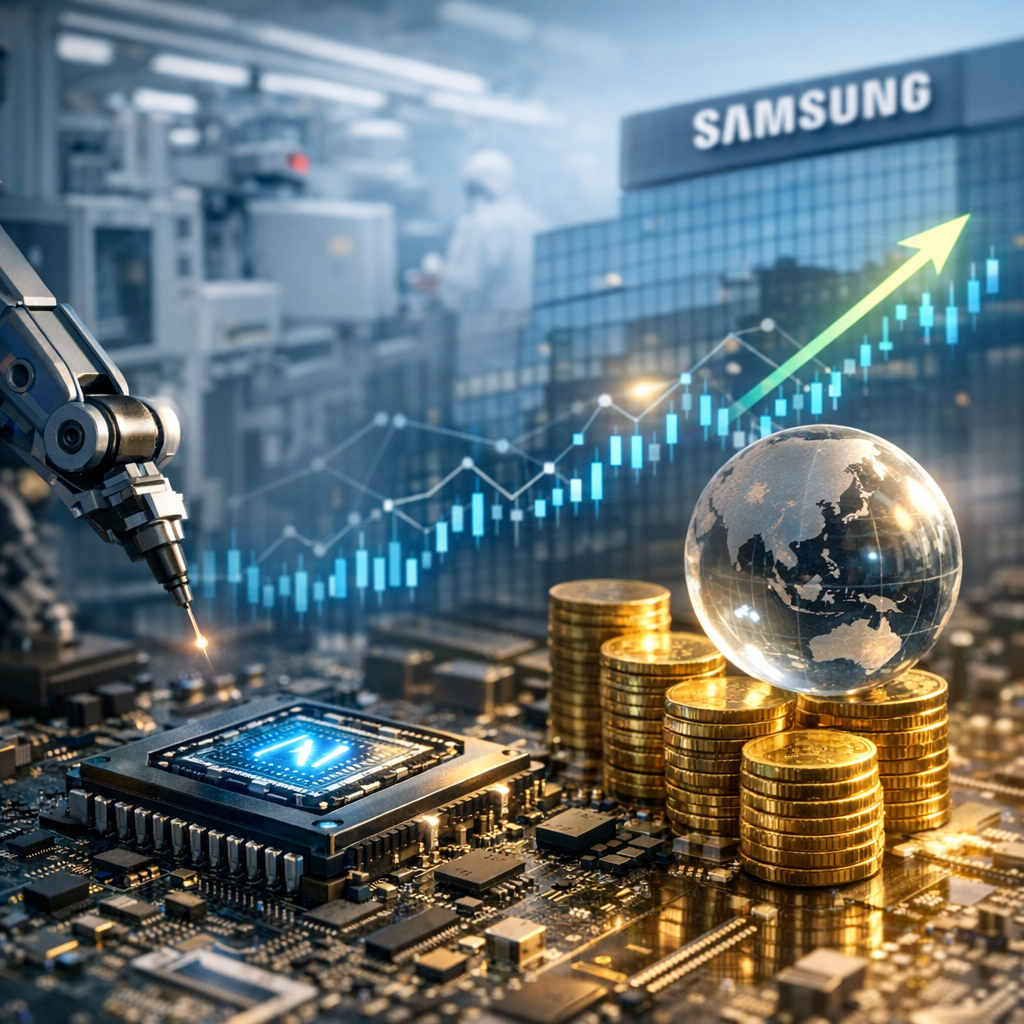
Samsung Electronics has entered the ranks of trillion-dollar companies, buoyed by a surge in demand for artificial intelligence chips that is reshaping the global semiconductor industry. The development, reported in the Economic Times article titled “Samsung reaches $1 trillion valuation: What’s fuelling the AI chip surge,” reflects both company-specific gains and a broader structural shift in technology markets driven by AI adoption.
The South Korean conglomerate’s valuation milestone comes amid a sharp rise in demand for high-performance memory chips, particularly high-bandwidth memory (HBM), which is essential for training and running advanced AI models. As AI workloads become more complex and widespread, chipmakers supplying the infrastructure behind these systems have seen a significant boost in investor confidence and market valuation.
Samsung’s position in the memory chip segment has been central to this ascent. The company, historically a dominant player in DRAM and NAND flash markets, has accelerated its focus on next-generation memory technologies tailored for AI applications. HBM, in particular, has become a critical component for data centers and AI accelerators, with demand outstripping supply as companies race to scale AI capabilities.
The Economic Times report notes that Samsung’s growth trajectory is closely tied to broader industry dynamics, including the rapid expansion of generative AI platforms and cloud computing infrastructure. Major technology firms are investing heavily in AI systems, driving orders for advanced semiconductors and tightening supply chains. This has created favorable pricing conditions for chipmakers, further enhancing profitability prospects.
At the same time, Samsung faces intensifying competition, especially from rivals such as SK hynix and U.S.-based firms that are also investing aggressively in AI-focused chip production. While Samsung has made strides in improving its HBM offerings, the competitive landscape remains fluid, with technological leadership and manufacturing capacity emerging as key differentiators.
Investor sentiment has also been influenced by expectations of sustained growth in AI-related demand. Unlike earlier semiconductor cycles, which were often characterized by sharp fluctuations, the current upswing is seen by many analysts as underpinned by longer-term structural changes. These include the integration of AI across industries, from healthcare and finance to autonomous systems and consumer technology.
However, some uncertainties persist. Supply constraints, geopolitical tensions affecting chip manufacturing, and the capital-intensive nature of semiconductor production all pose potential risks. Additionally, the pace of AI adoption and monetization remains uneven across sectors, raising questions about how durable current demand levels will be.
Despite these challenges, Samsung’s trillion-dollar valuation underscores the strategic importance of semiconductors in the evolving digital economy. As highlighted in the Economic Times report, the company’s ability to capitalize on the AI boom will depend not only on maintaining technological competitiveness but also on navigating a rapidly changing global market.
The milestone marks a significant moment for both Samsung and the semiconductor industry, signaling the central role of AI in shaping the next phase of technological and economic development.