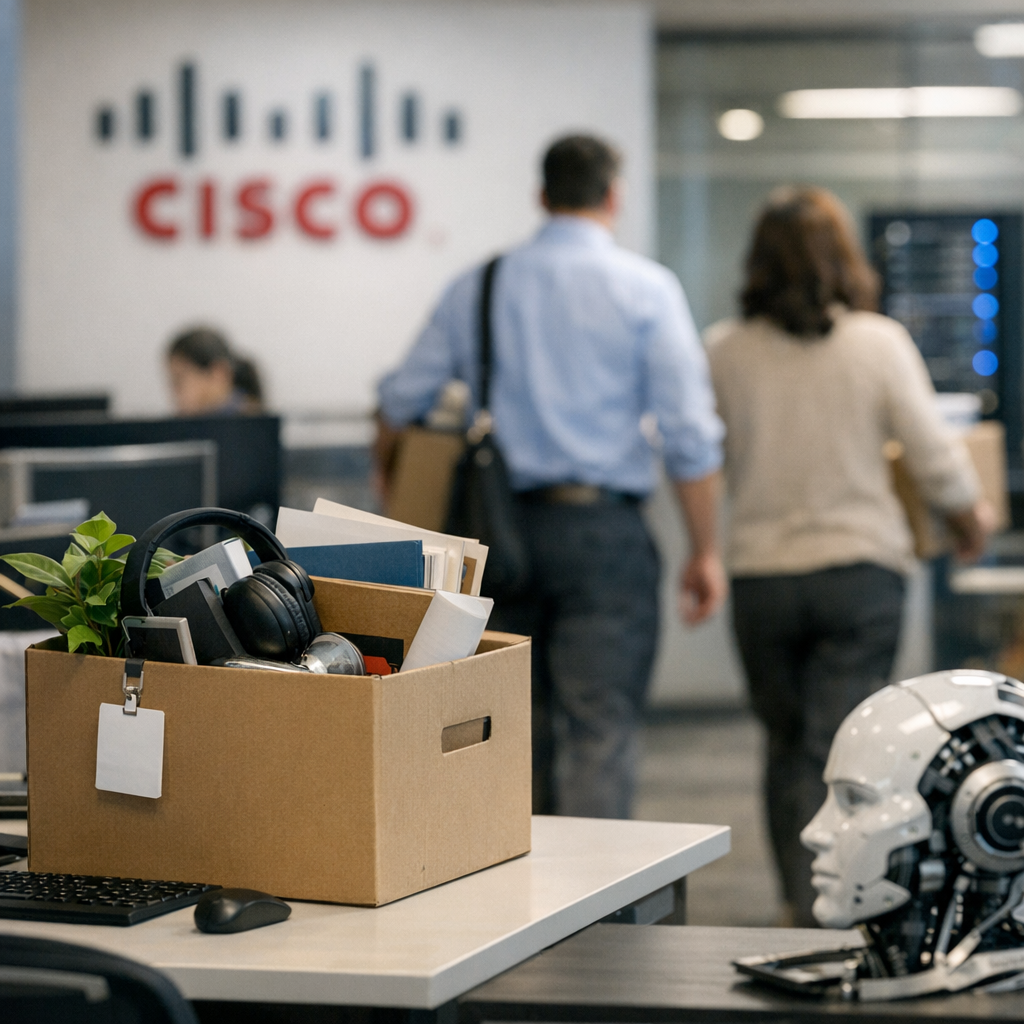
Cisco Systems is cutting approximately 4,000 jobs as part of a broader restructuring effort tied to its pivot toward artificial intelligence and higher-growth business segments, even as demand for its products shows signs of recovery. The move reflects a growing pattern among major technology companies balancing workforce reductions with increased investment in AI capabilities.
According to the article “Cisco cuts 4,000 jobs amid AI restructuring, orders surge,” published by StartupNews.fyi, the layoffs form part of Cisco’s ongoing effort to reallocate resources toward areas it sees as strategically critical, including AI-driven networking, cybersecurity, and cloud infrastructure. The company has framed the cuts not as a contraction, but as a realignment aimed at sharpening its competitive position in a rapidly evolving market.
Cisco indicated that the restructuring is intended to streamline operations and reduce redundancies while accelerating product development in emerging technologies. The focus on artificial intelligence reflects both internal priorities and external pressures, as enterprises increasingly demand networking solutions that can support AI workloads and data-intensive applications.
At the same time, Cisco reported a rebound in orders, suggesting that customer demand is stabilizing after a period of uneven spending across the tech sector. This uptick has helped temper investor concerns about the company’s near-term outlook, even as it undertakes significant workforce reductions. The combination of cost-cutting and rising orders highlights a dual reality facing many large technology firms: a need to remain lean while positioning for long-term growth.
The layoffs follow earlier workforce reductions by Cisco over the past year, underscoring the scale of transformation underway. Like many of its peers, the company is shifting from legacy hardware-centric models toward software, services, and AI-enabled solutions, areas that often require different skill sets and operational structures.
Industry analysts see Cisco’s move as emblematic of a broader recalibration across the technology sector. Companies are increasingly prioritizing investments in artificial intelligence while trimming roles that no longer align with future product strategies. This transition has led to significant job losses even as overall spending on technology innovation remains strong.
Cisco has said it will provide affected employees with severance packages and support during the transition. Nevertheless, the job cuts highlight the human impact of strategic shifts driven by technological change.
As the company deepens its focus on AI and next-generation networking, its ability to translate increased demand into sustained growth will be closely watched. For now, Cisco appears to be betting that a leaner organization, aligned more closely with emerging technologies, will position it more effectively in an increasingly competitive and AI-driven landscape.