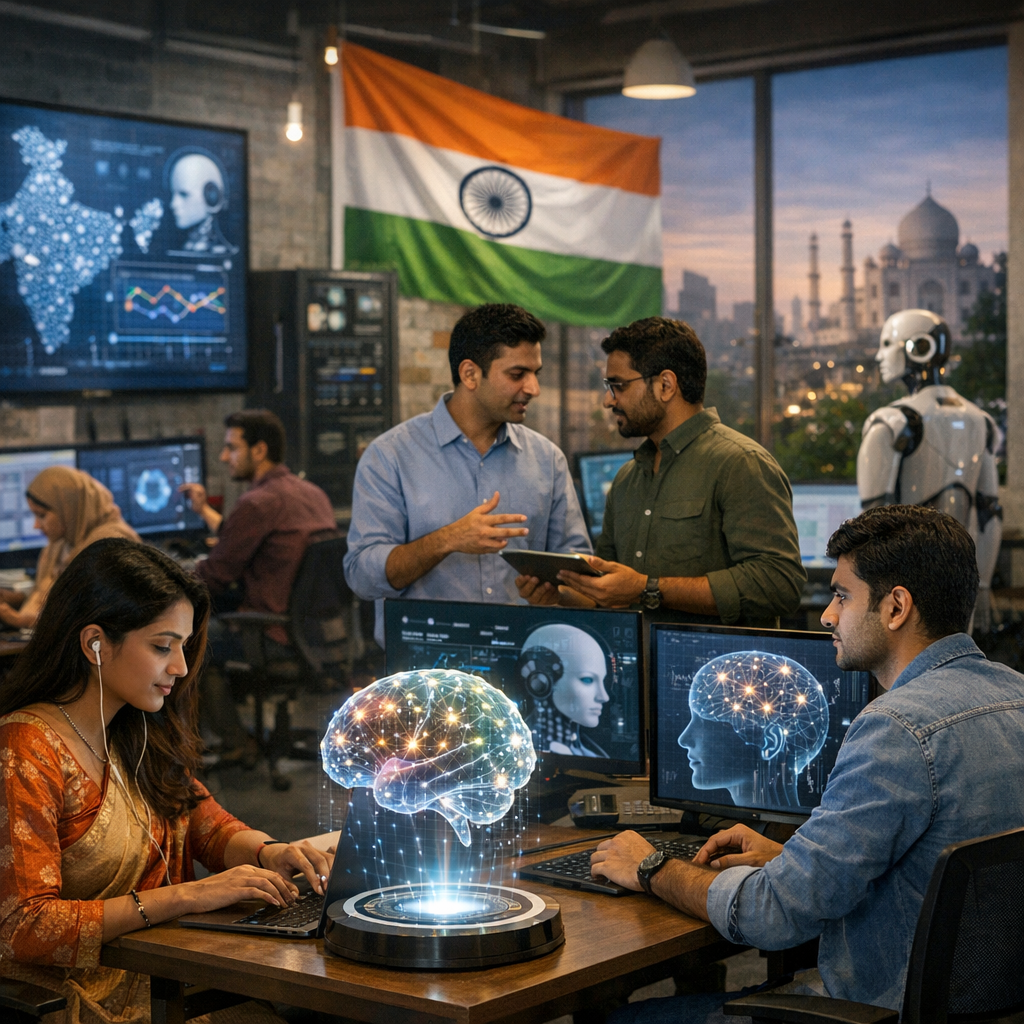
Meta’s artificial intelligence offerings are finding their most extensive adoption in India, underscoring the country’s emergence as a critical testing ground and growth engine for global AI deployment, according to remarks by WhatsApp head Will Cathcart. The development, reported in the Economic Times article titled “For Meta AI, India tops the global charts: Will Cathcart,” highlights how India’s scale, digital infrastructure, and user behavior are shaping the trajectory of AI integration at one of the world’s largest technology companies.
Cathcart’s comments reflect a broader shift in how multinational platforms prioritize markets. Rather than viewing India solely as a high-volume user base, Meta increasingly sees it as a lead indicator for product development, particularly in artificial intelligence. The country’s rapid uptake of Meta AI tools across WhatsApp, Instagram, and other services signals both a readiness among users to experiment with AI and a demand for features embedded directly into everyday communication platforms.
India’s dominance in Meta AI usage is closely tied to WhatsApp’s deep penetration in the country, where the messaging service functions as a primary digital utility. With hundreds of millions of users, India represents WhatsApp’s largest market globally. Cathcart suggested that integrating AI into such a widely used platform creates a uniquely fertile environment for testing conversational AI at scale. Features that allow users to query AI within chats or perform tasks such as drafting messages, retrieving information, or generating content are gaining traction in ways that outpace adoption in many Western markets.
The Economic Times report notes that language diversity and mobile-first internet usage have also played a role in accelerating adoption. AI models embedded in Meta’s platforms are increasingly tailored to handle multilingual inputs, a necessity in India’s linguistically complex landscape. This capability has broadened accessibility beyond English-speaking users, further expanding the reach of AI tools.
The implications extend beyond user engagement. India’s centrality to Meta’s AI strategy may influence how future models are trained and optimized. High interaction volumes provide extensive datasets that can refine AI performance, particularly in conversational contexts. At the same time, the scale raises questions about governance, data privacy, and the societal impact of deploying AI tools across such a vast user base.
Cathcart’s remarks also come at a time of intensifying competition among global tech firms to gain a foothold in emerging AI markets. Companies including Google and Microsoft have similarly targeted India for AI rollouts, recognizing its combination of large population, improving digital infrastructure, and growing developer ecosystem. Meta’s early momentum in AI usage could offer it a strategic advantage, especially if the company succeeds in embedding AI seamlessly into everyday digital interactions.
The Economic Times article underscores that Meta’s focus on India is not merely opportunistic but indicative of a broader recalibration of priorities. As AI becomes central to the next phase of internet services, markets that offer both scale and diversity are likely to shape how these technologies evolve. India, in this context, is no longer just a growth market but a proving ground whose usage patterns may influence global product design.
While Meta has not disclosed specific user figures for its AI tools in India, Cathcart’s characterization of the country as a global leader in adoption suggests that the company’s strategy of integrating AI into familiar interfaces is resonating. The coming months are likely to test whether this engagement can be sustained and translated into deeper monetization or developer ecosystems, areas where AI products are still evolving.
As AI becomes increasingly embedded in consumer platforms, India’s role in defining its real-world applications appears set to expand. Meta’s experience in the country could offer a preview of how billions of users worldwide may ultimately interact with artificial intelligence in their daily digital lives.