For decades, game theorists have studied contests the same way: fixed prizes, rational players, predictable equilibria. But a new wave of research is poking holes in that tidy framework. When the reward itself is uncertain — a lottery ticket instead of a guaranteed check — players behave in ways that classical models simply cannot explain, and the implications stretch well beyond academic economics into auction design, competitive markets, and AI decision-making.
Ars Technica reported on the findings in a piece titled “Random rewards enrich classic game-theory contests,” covering research that introduces stochastic, or randomly determined, prize structures into the canonical contest model first formalized by economists in the 1980s. The results overturn several long-held assumptions about how rational agents should invest effort when competing for a reward.
The Math Behind Uncertain Prizes
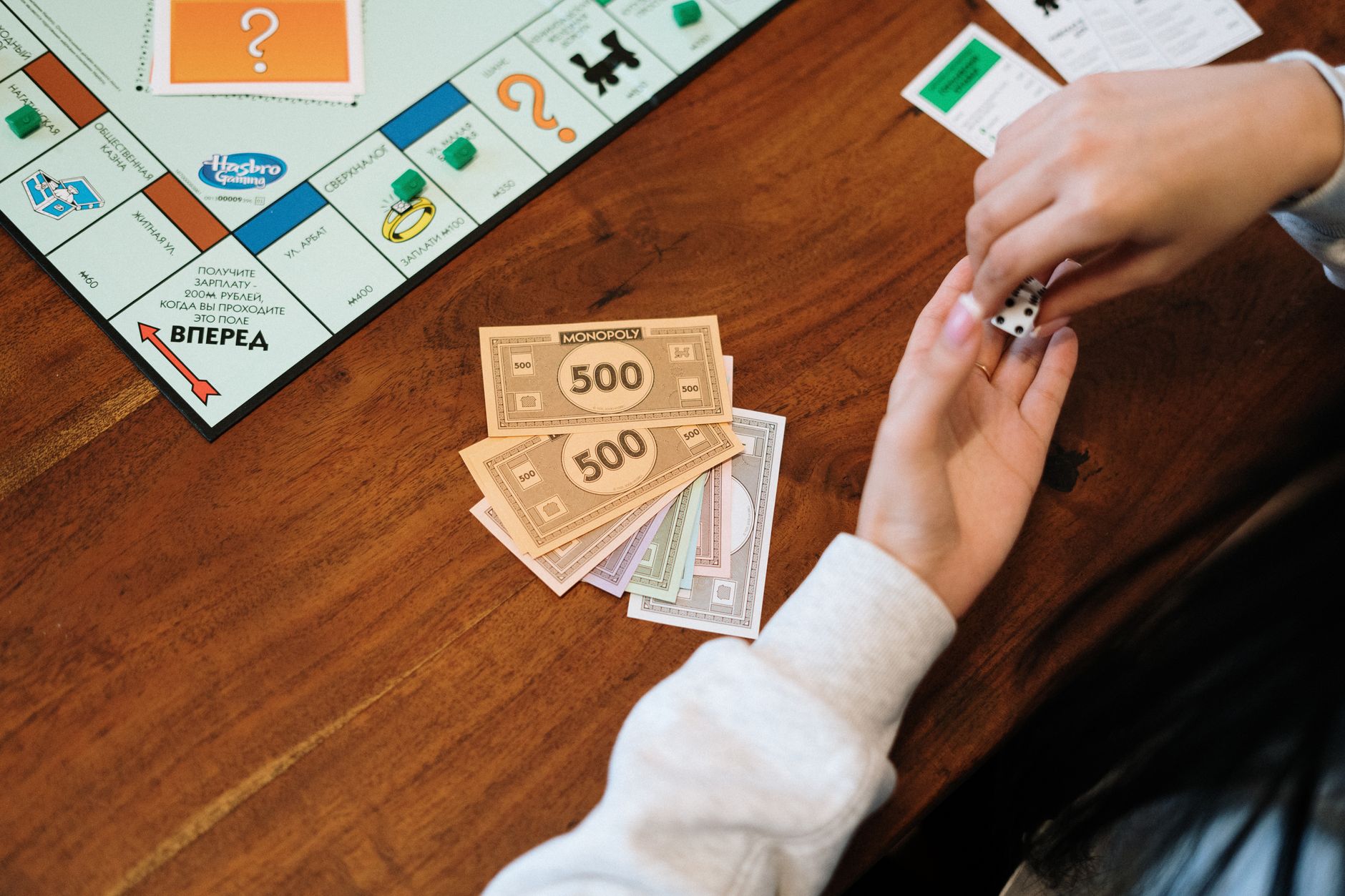
The core insight is counterintuitive: introducing randomness into the prize does not simply add noise to the outcome. It fundamentally changes how players calibrate their effort. According to the Ars Technica report, the research finds that contestants in a stochastic-reward environment can exert either systematically more or systematically less effort than their counterparts chasing a fixed prize — depending on how the random reward is structured and how risk-averse the players are.
That is a meaningful departure from the classical Tullock contest model, where total effort at equilibrium is pinned down by the prize value and the number of players. Add variance to the prize, and the equilibrium shifts in ways that depend on higher-order preferences — attitudes toward risk and uncertainty that standard models treat as irrelevant or secondary. The researchers formalize these conditions mathematically, producing closed-form solutions that predict when randomization raises aggregate effort and when it suppresses it.
The practical consequence is significant. If you are designing a competition — a procurement contest, a research grant race, a sales incentive program — knowing how prize variance shapes effort means you can engineer the incentive structure rather than just the prize level. A lottery-style reward is not inherently better or worse than a fixed one; it is a tunable parameter with predictable strategic effects.
Why This Matters Beyond the Whiteboard
The timing of this research is not accidental. As algorithmic systems increasingly run real-world contests — ad auctions, ride-share driver incentives, freelance platform bidding — the prize structures those systems deploy are growing more complex and, in many cases, more variable. A platform that offers drivers surge bonuses tied to demand forecasts is, functionally, offering a stochastic reward. Understanding the strategic equilibrium of that setup has direct operational value.
There is also a connection to how AI agents are trained to compete in multi-agent environments. Reinforcement learning systems are reward-driven by design, and the shape of that reward — deterministic versus probabilistic, sparse versus dense — is known to dramatically affect learned behavior. Game-theoretic results about human contestants in stochastic contests could inform reward-shaping decisions for AI systems navigating similar competitive structures, a crossover that researchers in both fields have been cautious to formalize until now.
Patent races offer another clear application. Technology firms competing to file first on a critical invention are, effectively, contestants in a contest where the prize — market exclusivity, licensing revenue — carries enormous variance depending on how courts interpret claims and how broadly a technology spreads. China’s recent surge in invention patent filings, highlighted in coverage of the Beijing patent summit, puts a geopolitical edge on exactly this kind of high-variance contest dynamic. If stochastic prize theory predicts that high-variance prizes can accelerate total effort, that has implications for how nations and firms think about innovation policy. The math, it turns out, has sharp teeth in the real world.