A recent analysis of cyberwarfare vulnerabilities has drawn renewed attention to the fragility of critical infrastructure in the United States, particularly local water systems, in the event of state-backed cyberattacks. The Wired article “What Happens If China Hacks the US Water Supply? Inside a War Game on Volt Typhoon” explores a simulation involving national security experts and outlines the potential consequences of such an intrusion, highlighting both technical weaknesses and institutional blind spots.
The exercise centered on Volt Typhoon, a China-linked hacking group that U.S. officials have accused of infiltrating critical infrastructure networks. Unlike more overt cyberattacks aimed at immediate disruption, Volt Typhoon has been associated with a quieter strategy: gaining persistent access to systems that could be activated during a geopolitical crisis, as described in CISA’s advisory on Volt Typhoon activity. The war game described by Wired sought to test how such pre-positioned access might be used against water utilities during a period of heightened tension between the United States and China.
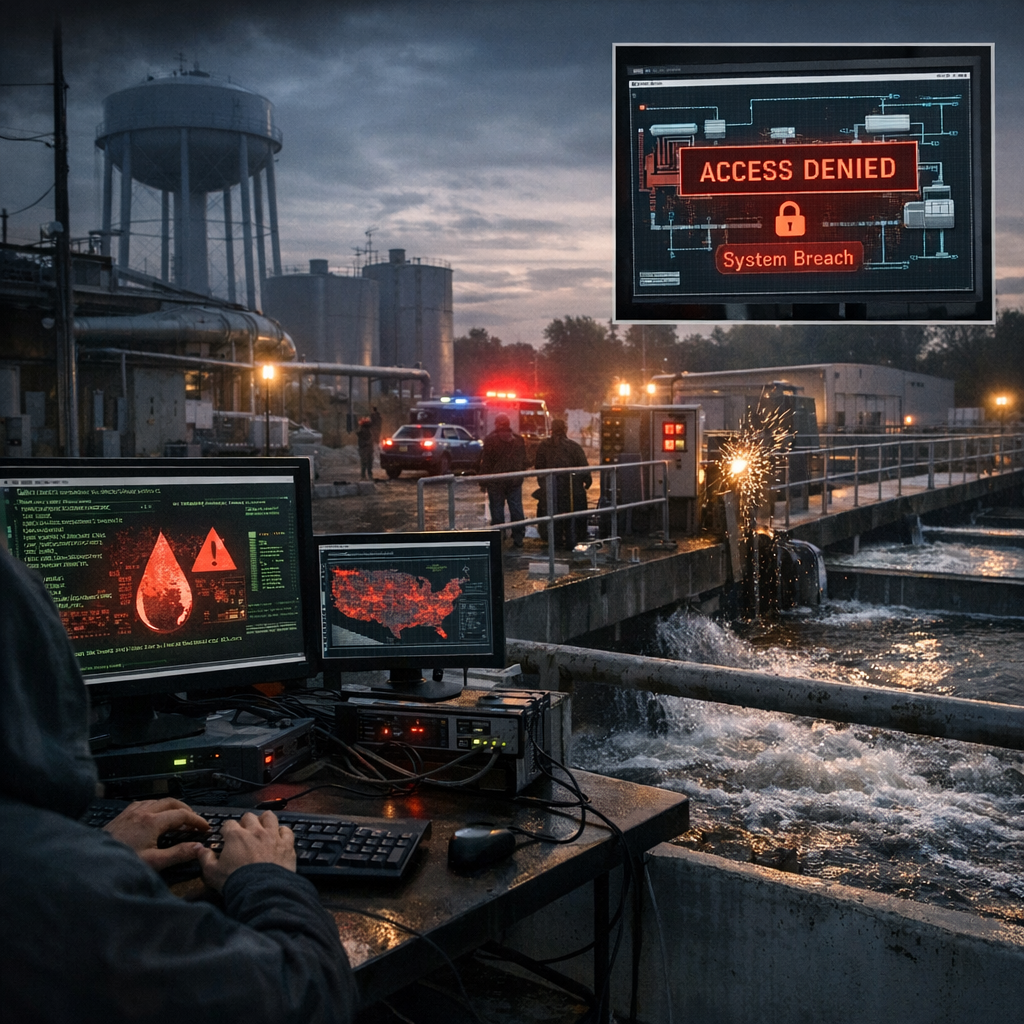
Participants in the simulation confronted a scenario in which water treatment and distribution systems were manipulated through compromised industrial control systems. While the technical means of intrusion varied, the consequences were consistent: loss of visibility over water quality, disruptions in supply, and public confusion amplified by unclear communication between agencies. The exercise underscored a key concern among experts that many water utilities, especially smaller municipal providers, lack the cybersecurity resources and expertise to detect or respond to sophisticated intrusions, an issue also noted by the EPA’s water sector cybersecurity guidance.
One of the central findings was not that catastrophic contamination would be easy to achieve, but that uncertainty itself could be weaponized. In the war game, even the suggestion of compromised water safety prompted cascading effects, including public panic, run-on supplies, and strained emergency response systems. Officials struggled to determine whether anomalies were due to cyber interference or routine operational issues, delaying coordinated action.
The Wired report emphasizes that U.S. water infrastructure is highly decentralized, comprising thousands of independently operated systems with varying levels of technological maturity. This fragmentation complicates federal oversight and slows the dissemination of threat intelligence. While agencies like the Cybersecurity and Infrastructure Security Agency (CISA) have issued guidance and warnings about Volt Typhoon and similar threats, translating that information into concrete defensive measures at the local level remains uneven.
Another issue highlighted in the war game was coordination between public and private stakeholders. Water utilities often depend on third-party vendors for software and hardware, creating additional attack surfaces. At the same time, legal and procedural barriers can limit real-time information sharing during a crisis. Participants noted that ambiguity over jurisdiction and responsibility could hinder the speed and effectiveness of a response. Industry groups such as the American Water Works Association have also emphasized these coordination challenges.
The scenario also exposed the broader strategic logic behind targeting civilian infrastructure. Rather than causing immediate physical harm, such attacks could erode public trust and divert government attention during a larger geopolitical confrontation. By exploiting quiet, persistent access rather than launching dramatic attacks, adversaries might achieve disproportionate impact.
Experts cited in the Wired article argue that improving resilience will require more than technical fixes. While upgrading legacy systems and implementing stronger authentication measures are essential steps, frameworks like NIST’s guide to industrial control systems security emphasize that they must be accompanied by clearer lines of communication, regular joint exercises, and sustained funding for local operators. The war game illustrated that preparedness depends as much on institutional coordination as on cybersecurity tools.
In the context of escalating geopolitical competition, the findings serve as a cautionary assessment of vulnerabilities that are not theoretical. The presence of advanced persistent threats like Volt Typhoon suggests that groundwork for potential disruption may already be in place. As the Wired article makes clear, the challenge now lies in addressing those risks before a crisis reveals them under far less controlled conditions.