A new approach to producing hydrogen fuel at sea could significantly reduce costs and accelerate the transition to cleaner energy, according to recent research highlighted by Tech Xplore in its article “Hydrogen fuel future could be cheap with new ship design.”
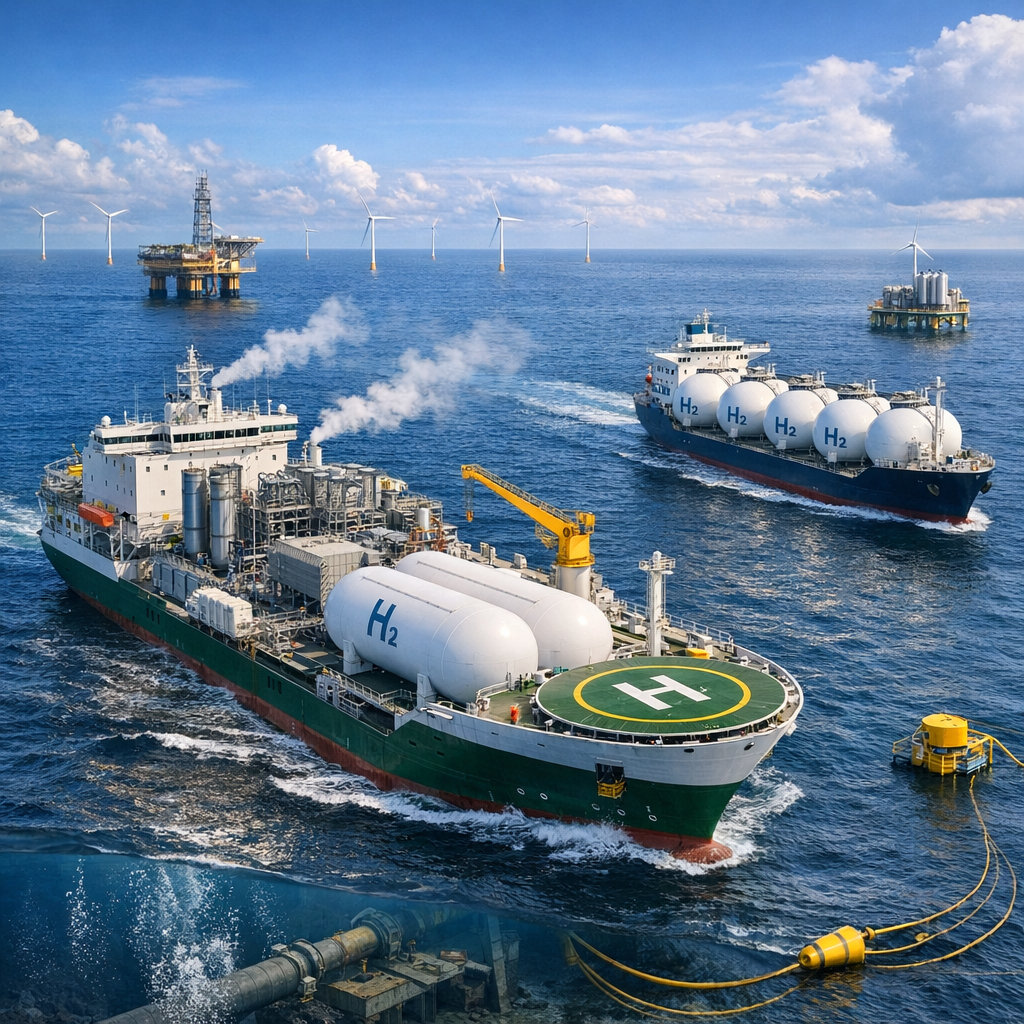
The report describes a concept in which specialized ships generate hydrogen offshore using renewable energy, rather than relying on land-based infrastructure. By integrating production, storage, and transport into a single maritime platform, researchers aim to bypass some of the most expensive and logistically complex elements of the hydrogen supply chain.
Hydrogen has long been viewed as a promising alternative to fossil fuels, particularly for industries that are difficult to electrify, such as heavy manufacturing, aviation, and shipping itself. However, high production costs and challenges in storage and transport have limited its widespread adoption. Most hydrogen today is produced using natural gas, a process that emits significant amounts of carbon dioxide, as noted by the International Energy Agency.
The proposed system seeks to change that by harnessing offshore wind energy to power electrolysis, the process that splits water into hydrogen and oxygen. Locating production at sea, near offshore wind farms, allows the system to take advantage of strong and consistent wind resources without placing additional strain on crowded land-based grids.
According to the Tech Xplore report, the ship-based design could also reduce the need for costly pipelines or port infrastructure. Instead, vessels would produce hydrogen on site, store it onboard, and deliver it directly to where it is needed. This integrated model could streamline logistics and lower overall costs, potentially making green hydrogen more competitive with fossil fuels.
Researchers involved in the project suggest that mobility is a key advantage. Ships can be positioned in optimal locations for energy generation and moved as needed, providing flexibility that fixed installations lack. This could be particularly valuable in regions with abundant offshore wind resources but limited land availability or infrastructure.
Still, significant technical hurdles remain. Producing hydrogen at sea introduces challenges related to stability, safety, and the durability of equipment in harsh marine environments. The storage of hydrogen, which requires either high pressure or extremely low temperatures, adds another layer of complexity, as outlined by the National Renewable Energy Laboratory. Scaling up such systems to commercial levels will require further engineering advances and substantial investment.
Economic viability will also depend on broader market conditions, including the cost of renewable energy, government policies, and demand for low-carbon fuels. While the concept offers a potentially cheaper pathway, it must compete with other emerging methods of hydrogen production and distribution.
The Tech Xplore article emphasizes that the idea remains in the developmental stage, but it reflects a growing push to rethink how hydrogen is produced and delivered. As countries set more ambitious climate targets, innovations like offshore hydrogen production could play an important role in reducing emissions while meeting global energy demand.
Whether ship-based hydrogen production becomes a cornerstone of the future energy system will depend on how quickly these technical and economic challenges can be addressed. For now, the concept underscores the scale of innovation underway as industries seek viable alternatives to fossil fuels.