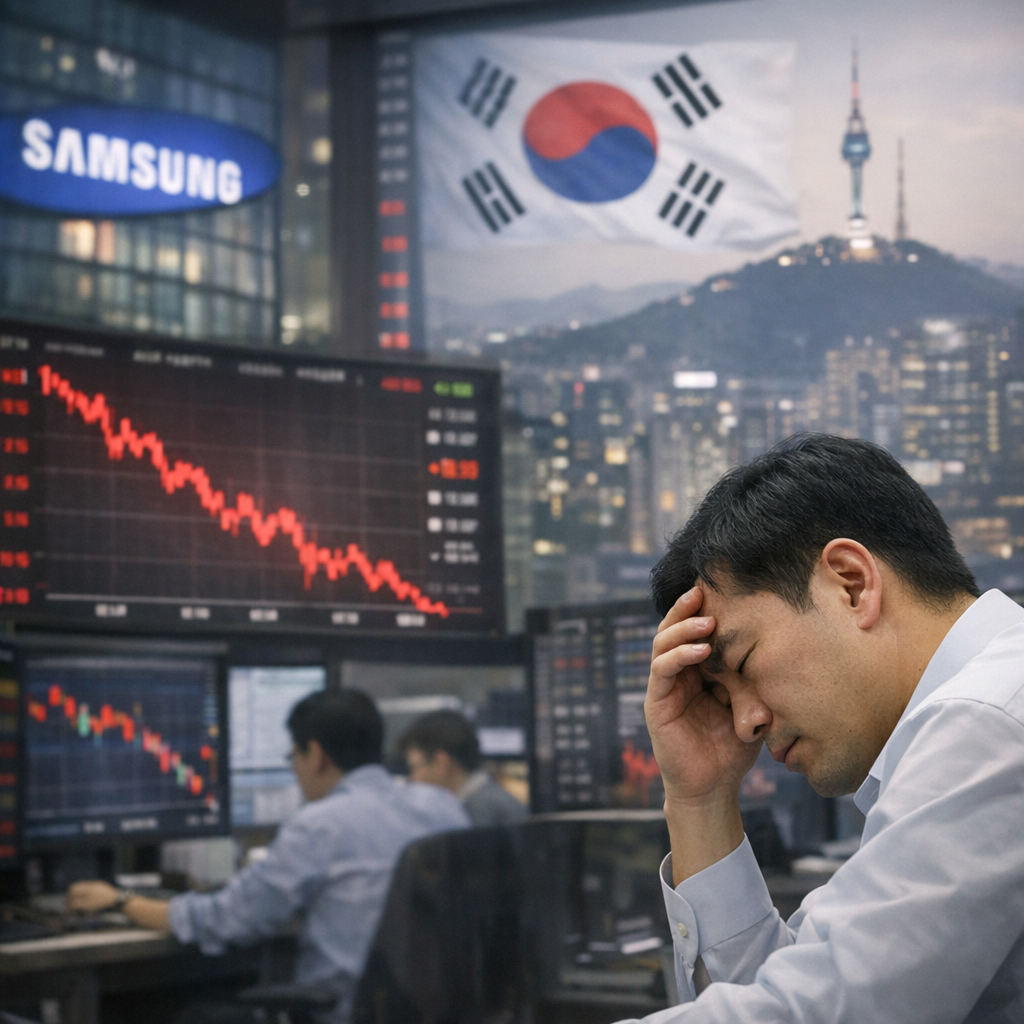
Asian markets struggled to find footing in a volatile trading session, with South Korea bearing the brunt of investor anxiety after Samsung Electronics failed to reassure markets about the outlook for the global technology sector. The developments, first reported in the Economic Times article “Seoul dives on tough day for Asia as Samsung fails to ease tech woes”, underscored the fragility of sentiment across the region as investors grapple with persistent uncertainties in demand for semiconductors and consumer electronics.
Seoul’s benchmark index declined sharply, weighed down by losses in heavyweight technology stocks, particularly Samsung Electronics, whose market influence extends well beyond South Korea. The company’s signals on demand — closely watched as a bellwether for the broader chip industry — failed to provide the confidence investors had been seeking after months of uneven recovery expectations.
Samsung’s updates suggested that while certain segments of the semiconductor market are stabilizing, a decisive rebound remains elusive. Weakness in memory chip pricing and cautious guidance on future demand reinforced concerns that the industry’s recovery could be slower and more uneven than previously anticipated. These concerns reverberated across Asia, where technology companies and export-driven economies remain heavily exposed to fluctuations in global electronics demand.
The reaction in Seoul set the tone for trading across the region. Major indices in Japan, Taiwan, and Hong Kong also slipped, reflecting broader unease about the health of the global technology cycle. Investors have been particularly sensitive to any indications that the anticipated recovery in artificial intelligence-related demand may not be sufficient to offset lingering softness in consumer electronics, such as smartphones and personal computers.
Market participants are also contending with external pressures, including elevated interest rates in major economies and ongoing geopolitical tensions, both of which have dampened risk appetite. The technology sector, which had previously benefited from expectations of a rapid rebound tied to AI investment, now faces more scrutiny as earnings and forward guidance reveal persistent structural challenges.
Analysts note that Samsung’s position at the center of global supply chains amplifies the significance of its outlook. As one of the world’s largest producers of memory chips, the company’s performance is often interpreted as a proxy for broader industry conditions. Its inability to convincingly signal a near-term turnaround has therefore had outsized effects on investor sentiment.
At the same time, some observers caution against reading the latest market reaction as a definitive signal of long-term weakness. They point out that cyclical downturns in the semiconductor industry are common and that structural drivers, including the expansion of AI infrastructure and data centers, continue to underpin longer-term demand prospects. However, the timing and pace of recovery remain uncertain, particularly given the uneven nature of global economic growth.
Currency movements and capital flows added another layer of complexity to the day’s trading. As investors shifted toward safer assets, several Asian currencies came under pressure, further weighing on equity markets. The interplay between macroeconomic conditions and sector-specific developments has created a challenging environment for policymakers and investors alike.
The broader takeaway from the session is a renewed recognition that the path to recovery for the global technology sector is unlikely to be linear. While optimism around next-generation technologies persists, near-term headwinds — including inventory adjustments, pricing pressures, and cautious corporate spending — continue to shape market dynamics.
For now, the sharp sell-off in Seoul serves as a reminder that even industry leaders like Samsung cannot single-handedly restore confidence in a sector facing multiple crosscurrents. As highlighted in the Economic Times report, the day’s market movements reflect not only company-specific concerns but also deeper uncertainties about the resilience and trajectory of one of the world’s most critical industries.