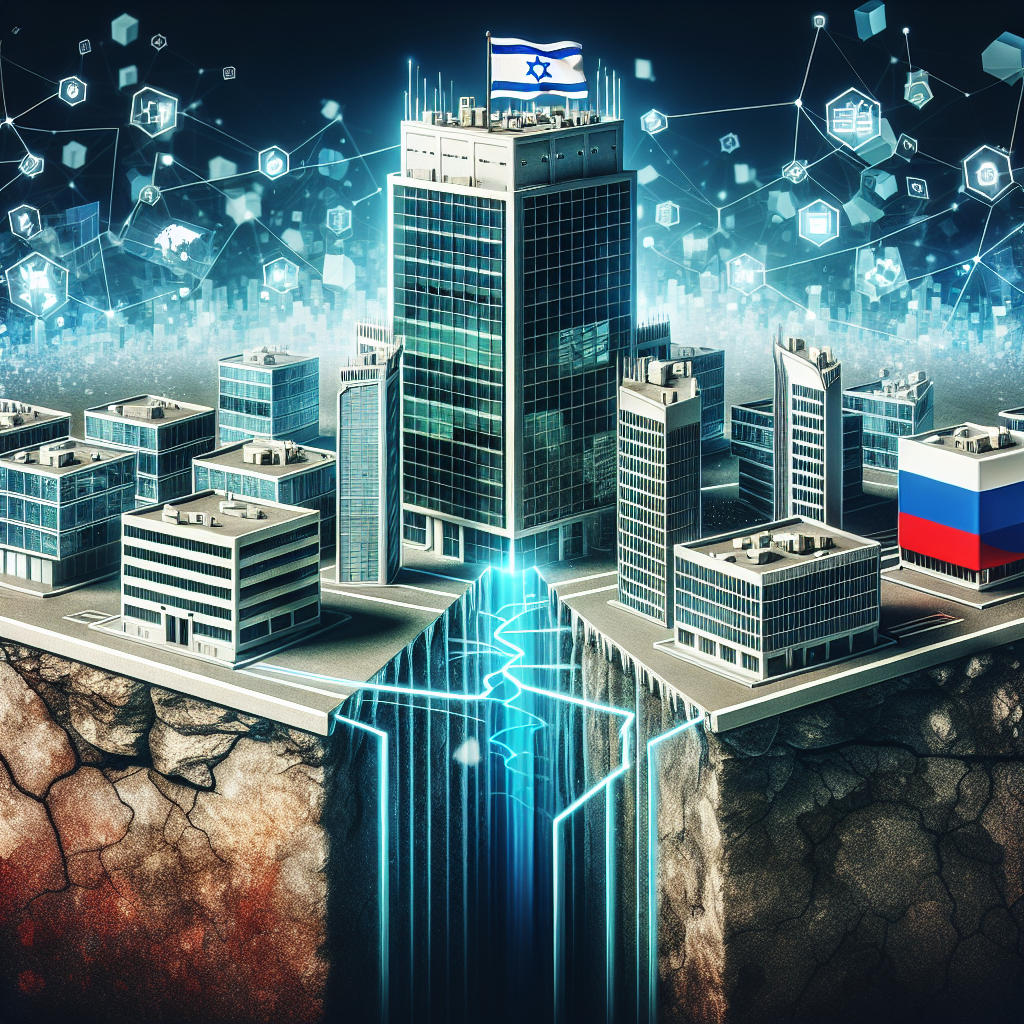
In a significant move reflecting the nuanced interplay of technology, geopolitics, and human rights, Israeli software developer Odigo has made the decision to cease its business operations in Russia. This decision comes at a time when many Western companies are reevaluating their ties with Russia amidst ongoing conflicts and international sanctions.
As initially reported by Calcalistech in their article “Odigo announces withdrawal from Russia due to war in Ukraine,” Odigo, which specializes in developing customer experience software, explicitly cited the ongoing war in Ukraine as the primary catalyst for its exit from the Russian market. This strategic pivot underscores a broader trend in the technology sector, where companies must navigate the complex web of maintaining business operations while adhering to ethical standards and regulatory mandates.
Odigo’s presence in Russia had been focused on supplying communication solutions to various local businesses, contributing significantly to the digital infrastructure in customer service technology. The company’s sudden withdrawal poses questions about the impact on its Russian clientele and the broader implications for the tech industry in geopolitania bounded areas of conflict.
This development is not isolated. Since the onset of military activities in Ukraine by Russian forces, there has been a noticeable exodus of technology firms and other multinational corporations from Russia. These departures are often in response to direct economic sanctions imposed by the West or as part of a corporate stance against the breach of international laws and norms. Companies like Odigo find themselves pressured not only by legal constraints but also by the moral and public relations calculus of doing business under such conditions.
The implications of such moves are vast. Economically, the withdrawal of tech companies from Russia deprives local businesses of advanced technologies and services, potentially stifling the technological advancement and digital transformation efforts in the region. Politically, these withdrawals serve as a form of indirect sanction, isolating Russia further from the global tech ecosystem.
Moreover, the decision by tech firms to cease operations can be viewed as part of a wider assertion of corporate responsibility. In scenarios where international bodies and governments struggle to enforce direct actions, multinational corporations can wield significant influence. Their decisions to exit markets over political issues reflect an evolving role where global businesses recognize their power and responsibility in shaping geopolitical landscapes.
In examining the broader sector, Odigo’s move might encourage other firms to take similar actions, reinforcing a trend where business decisions are increasingly influenced by global political climates and ethical considerations. This dynamic could lead to a redefinition of global trade practices, particularly in the technology sector, which is uniquely sensitive to issues of data privacy, cyber security, and governance.
As companies like Odigo navigate these complex waters, the international community watches closely. The actions of such firms might not only affect the commercial and technological capacities of nations like Russia but also reshape the principles of international business engagements in technology and beyond. This scenario is a vivid illustration of how intertwined and reactive the global business environment has become, where company policies might react and adapt to geopolitical shifts rapidly and decisively.