
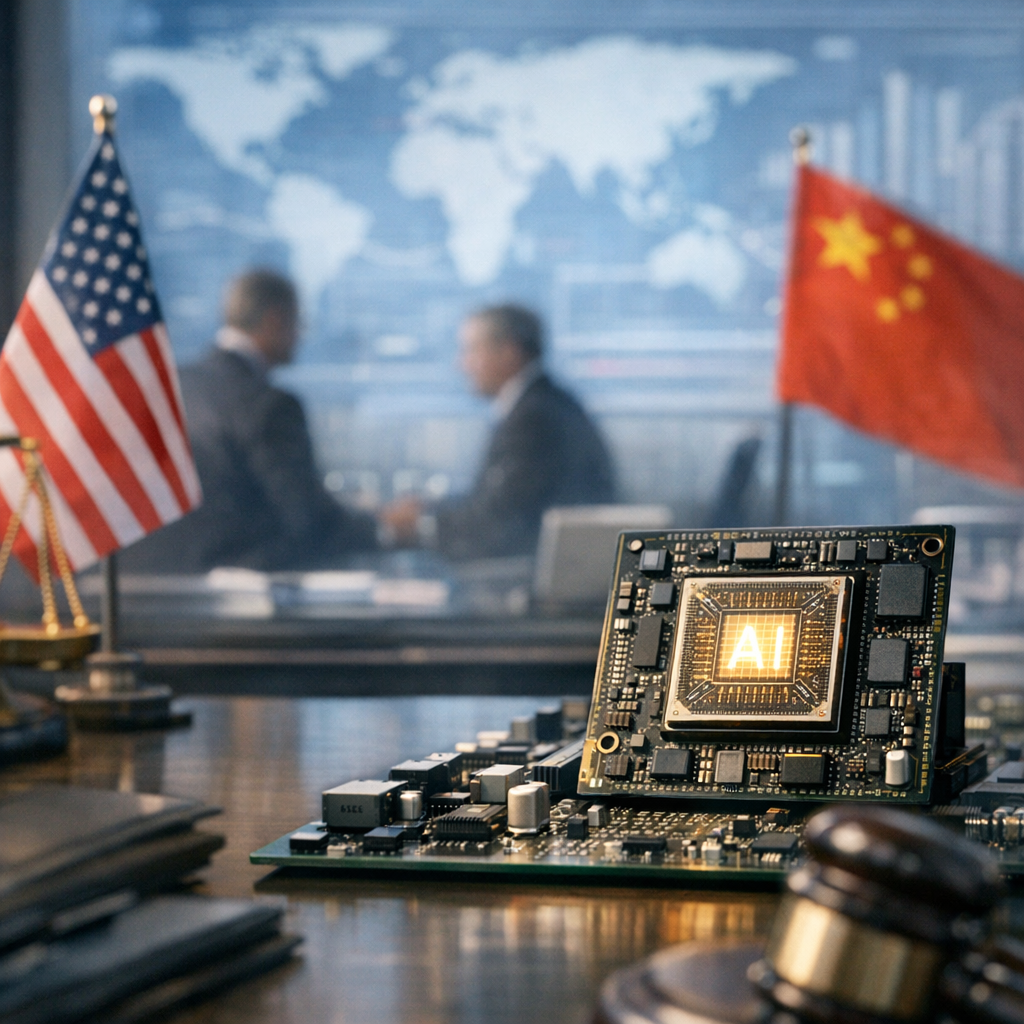
The U.S. Commerce Department has withdrawn a planned rule concerning export restrictions on advanced artificial intelligence chips, a development that reflects the rapidly shifting policy landscape surrounding one of the most strategically sensitive technologies in the global economy.
According to a report titled “US Commerce Department withdraws planned rule on AI chip exports,” published by the Economic Times, the department stepped back from a proposal that had been under consideration as part of the United States’ broader effort to regulate the overseas flow of high-end semiconductors used for artificial intelligence workloads. The move comes as Washington continues to balance national security priorities with concerns from industry about regulatory predictability and global competitiveness.
Advanced AI chips—primarily designed by companies such as Nvidia and used to power large-scale machine learning models—have become central to geopolitical competition, particularly between the United States and China. Over the past several years, the U.S. government has implemented a series of export controls intended to limit China’s access to the most powerful computing hardware. These measures have aimed to slow the development of advanced military or surveillance applications derived from cutting-edge AI capabilities.
The now-withdrawn rule would have added another layer to the regulatory framework governing such exports. While details of the proposal were still taking shape, it was expected to refine how U.S. authorities control the transfer of advanced semiconductors and related technologies to certain destinations or entities. By withdrawing the rule, the Commerce Department signaled that it may revisit or redesign the approach before moving forward with new restrictions.
Industry stakeholders have repeatedly warned that overly broad or rapidly changing regulations could disrupt global supply chains and undermine U.S. semiconductor firms. American chipmakers dominate parts of the AI accelerator market but rely heavily on international customers for revenue. Restrictive export measures, critics argue, risk accelerating efforts by foreign competitors to build alternative technologies and supply networks outside the reach of U.S. controls.
At the same time, policymakers in Washington increasingly view advanced computing power as a central component of national security. AI systems capable of processing vast datasets or performing complex simulations could enhance military planning, cyber operations, and intelligence analysis. As a result, semiconductor policy has become a critical tool in the broader strategy to maintain technological leadership while limiting the military benefits available to rival powers.
The withdrawal of the proposed rule does not signal a retreat from that strategy. Instead, analysts say it reflects the iterative nature of technology policy at a time when AI capabilities, semiconductor architectures, and international alliances are evolving quickly. U.S. officials have repeatedly indicated that export controls will continue to be updated to address emerging technological breakthroughs and geopolitical risks.
For now, the decision adds another chapter to the ongoing debate over how far governments should go in restricting the global flow of advanced technology. As the Economic Times noted in its report on the Commerce Department’s decision, the challenge for policymakers remains crafting rules precise enough to protect national interests without stifling innovation and global competitiveness in one of the world’s fastest-moving technological sectors.

