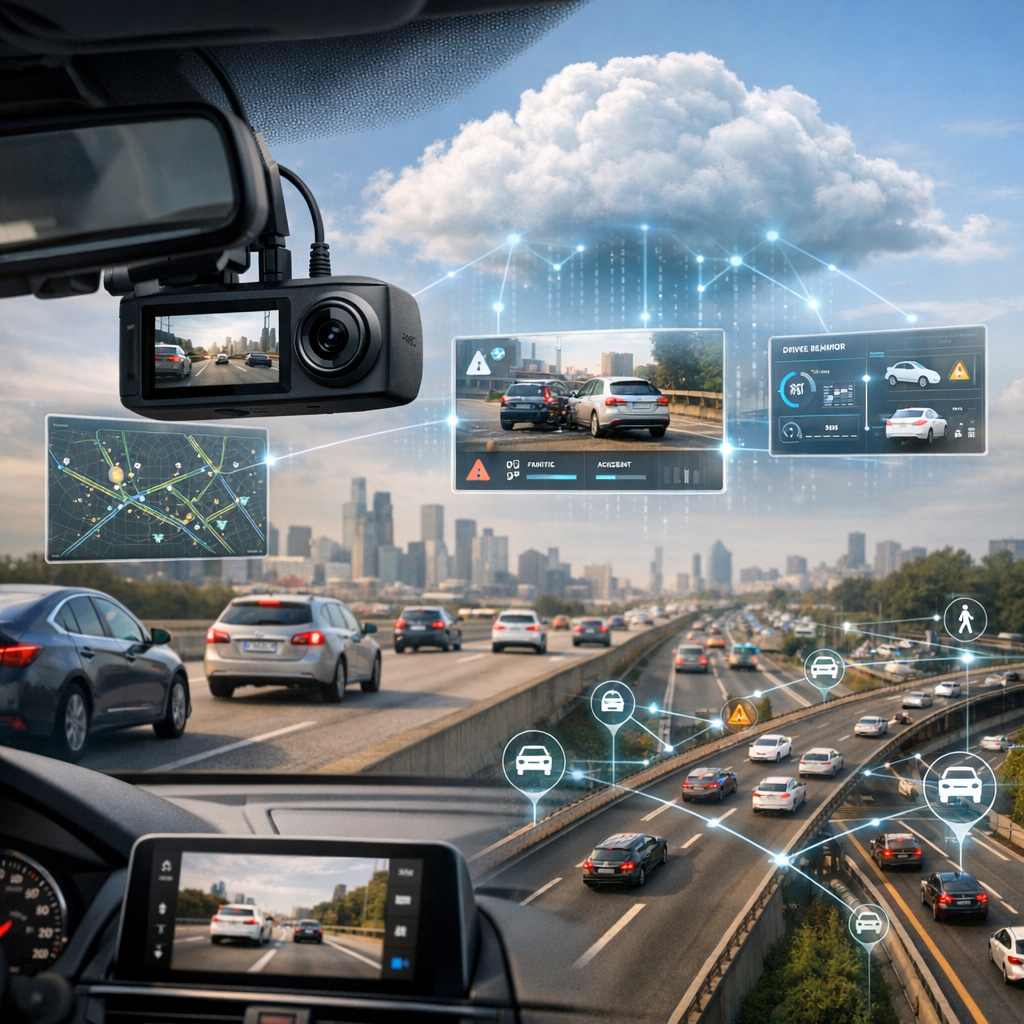
The rapid evolution of in-car sensing technology is moving beyond basic collision alerts and lane keeping, toward systems that promise broader awareness of road conditions and driver behavior. That shift was underscored this week by TechTime News in an article titled “Nexar 6,” which reported on the latest developments around Nexar’s newest dashcam-focused platform and its efforts to combine consumer video hardware with large-scale, cloud-based analytics.
According to TechTime News, the thrust of the Nexar 6 push is not simply better video capture, but a tighter integration of on-device sensing, automated incident detection, and post-drive analysis. The approach reflects a wider industry trend: dashcams are increasingly positioned as data-generating devices that can feed insurance claims, fleet safety programs, and aggregated mapping of road hazards. In that context, the value proposition shifts from sharper resolution alone to the ability to interpret what the camera sees, standardize event reporting, and translate raw footage into actionable signals.
The TechTime News report describes a system architecture aimed at making video more immediately useful in the moments before and after an incident. Features highlighted include faster event recognition, streamlined upload and retrieval workflows, and tools intended to reduce the friction of turning footage into documentation. For drivers, that can mean quicker access to clips after a crash or near-miss; for insurers and fleet managers, it can mean a more structured record of what happened, when it happened, and under what conditions.
The article also points to Nexar’s continuing emphasis on network effects, where individual vehicles contribute to a broader picture of roadway conditions. In principle, aggregated, anonymized observations from many cars can help identify recurring bottlenecks, dangerous intersections, or sudden disruptions such as debris, flooding, or accidents. Yet as the usefulness of such systems grows, so do the questions they raise about privacy, consent, and data governance. A platform that links video, location, and time can be powerful for safety and accountability, but it requires clear limits on retention, sharing, and secondary uses, particularly when consumer devices are involved.
Another key theme in TechTime News’ “Nexar 6” is the push to make advanced capabilities more automated. Automation is appealing because it reduces driver workload and can ensure incidents are cataloged even when a driver is distracted, injured, or unable to operate the device. But automation also brings the familiar challenges of false positives, missed detections, and disputes over interpretation. For any provider in this space, credibility will depend on how transparently it communicates system performance, how often it updates models, and how it handles edge cases such as poor lighting, heavy weather, or unusual driving environments.
The dashcam market has become more crowded, with established electronics brands, telematics companies, and insurance-linked offerings competing to define the standard for “smart” recording. TechTime News suggests Nexar is seeking differentiation through a combination of hardware refinement and a software and cloud layer designed to scale. The stakes are significant: if video-based systems can reliably reduce claims friction and improve driver coaching, they can become embedded not as optional accessories but as foundational components of fleet operations and personal insurance ecosystems.
Still, success will likely depend on trade-offs that are not purely technical. Consumer adoption requires trust, simple setup, and predictable costs. Fleet adoption requires integration with existing management tools, consistent uptime, and defensible data practices. Regulators, meanwhile, are increasingly attentive to in-vehicle data collection, particularly when it intersects with biometric inference, location tracking, or third-party sharing. Companies in this segment will have to navigate not only product development but also evolving expectations around transparency and accountability.
As portrayed in TechTime News’ “Nexar 6,” the next phase of dashcam innovation appears less about recording the road and more about interpreting it at scale. Whether that vision becomes a widely accepted safety upgrade or a contested expansion of roadside surveillance will hinge on the balance between demonstrable benefits and the safeguards built around the data that makes those benefits possible.