A recent report by TechXplore, titled “Brain cells enable machine learning,” highlights a growing frontier in artificial intelligence research: the integration of living neurons with computational systems. The research signals a shift toward biohybrid technologies that could complement or even reshape conventional machine learning methods.
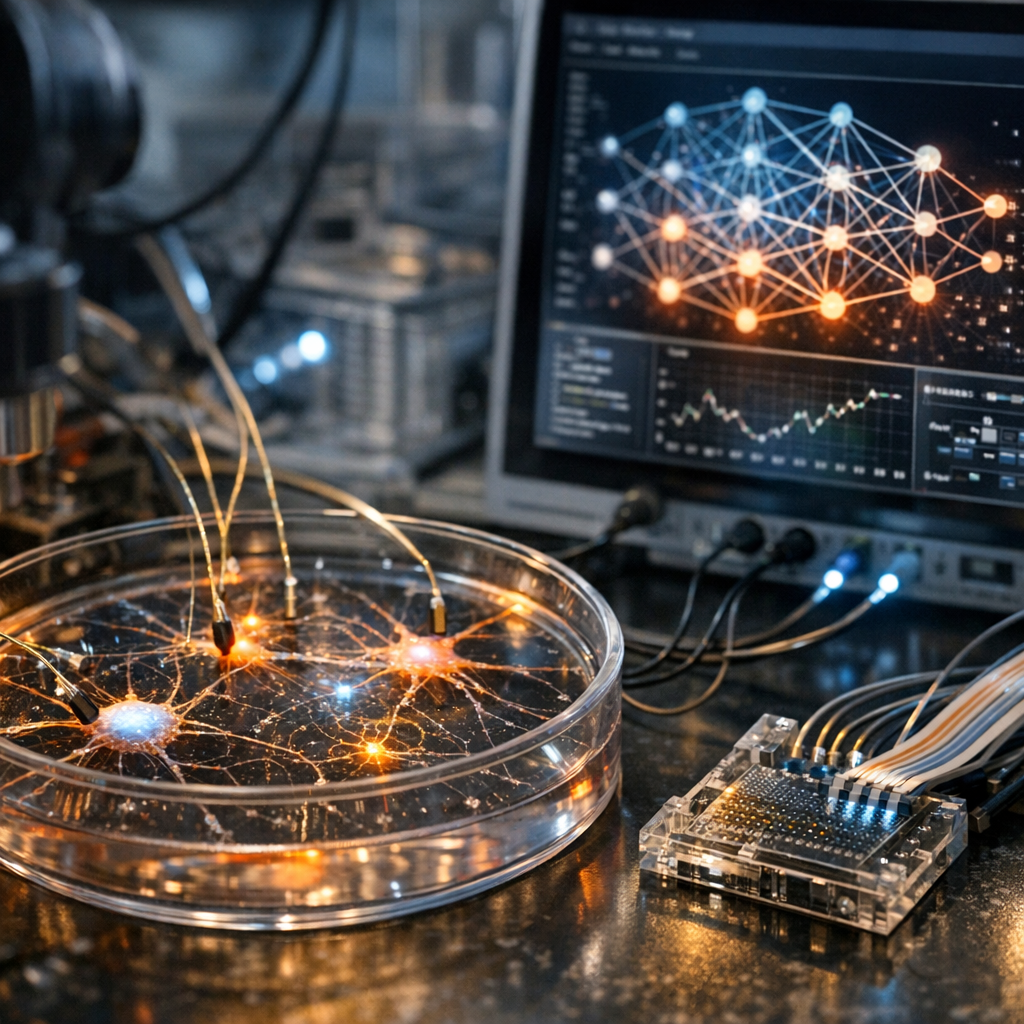
According to the TechXplore article, scientists have demonstrated that living brain cells, cultivated in laboratory environments, can be trained to perform tasks typically associated with artificial neural networks. These biological systems, often derived from stem cells and grown into simplified neural structures, have shown an ability to process information, adapt to stimuli, and improve performance over time. Researchers say this adaptability could offer advantages over traditional silicon-based systems, particularly in tasks requiring energy efficiency and dynamic learning.
The work builds on the idea that biological neural networks operate fundamentally differently from artificial ones. While conventional machine learning relies on pre-defined architectures and extensive computational resources, living neurons naturally reorganize in response to input, enabling a form of continuous learning that is still difficult to replicate in software. The TechXplore report notes that scientists are training these neural cultures through feedback mechanisms—rewarding correct responses and discouraging incorrect ones—mirroring reinforcement learning techniques used in AI.
One of the key challenges addressed in the research is establishing stable communication between biological tissue and electronic systems. Advances in bioelectronic interfaces have allowed scientists to both send signals to neurons and interpret their responses with increasing precision. This two-way communication is critical for translating biological activity into usable computational outputs.
Despite its promise, the field remains in an early stage. The neural systems involved are far simpler than a human brain, and their capabilities are currently limited to basic pattern recognition and decision-making tasks. Scaling the technology and ensuring consistent, reliable performance are significant hurdles that researchers have yet to overcome.
Ethical considerations also loom over the development of biohybrid intelligence. The use of living brain cells in computational systems raises questions about the nature of consciousness, the treatment of biological materials, and the potential implications of creating systems that blur the boundary between organism and machine. While the neural cultures used in these experiments are not considered sentient, the trajectory of the research may prompt deeper scrutiny as capabilities expand.
The findings reported by TechXplore suggest that combining biological and artificial systems could open new pathways in computing, offering energy-efficient solutions and novel learning mechanisms. While practical applications may still be years away, the research underscores a broader trend in technology: the convergence of biology and engineering in the pursuit of more adaptive, efficient forms of intelligence.