
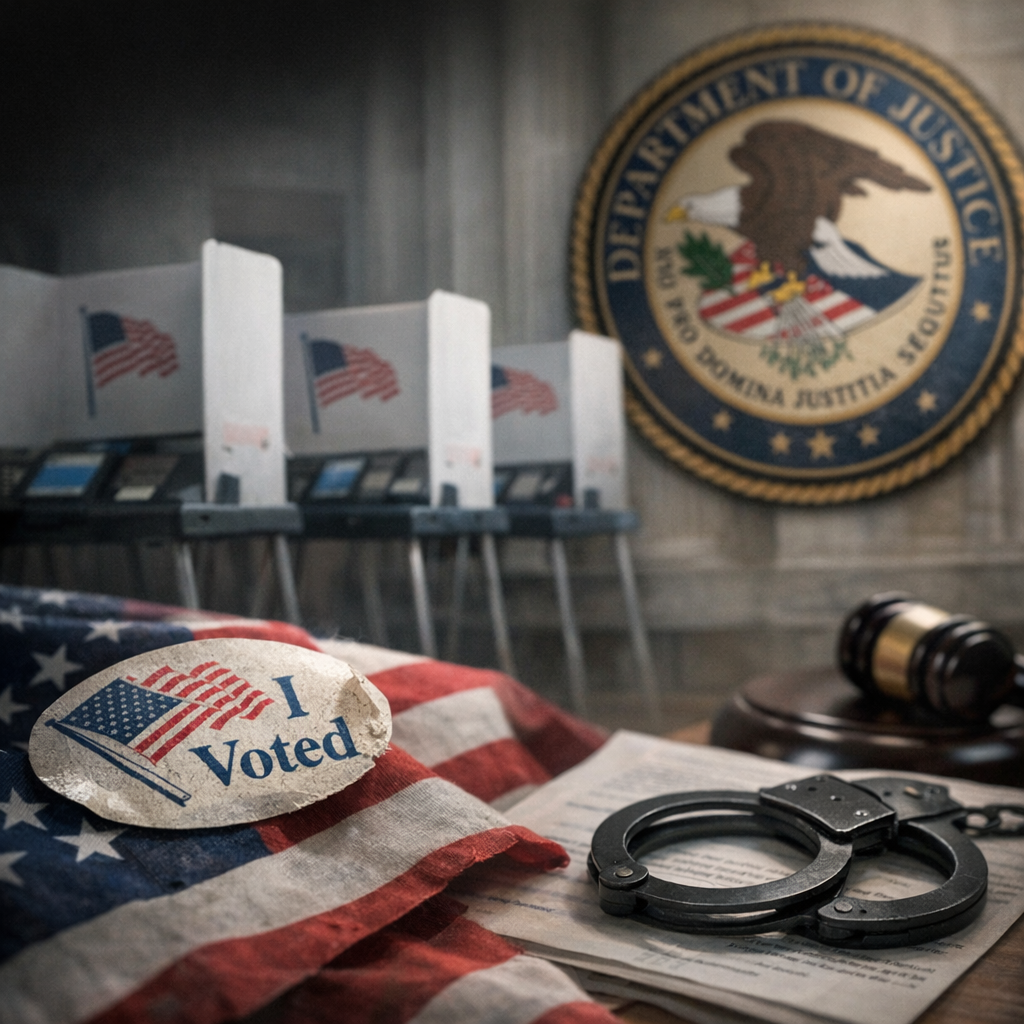
A recent report in Wired, titled “The Justice Department Has Destroyed Its Voting Rights Section,” raises sharp concerns about the current state of the US Department of Justice’s capacity to enforce federal voting protections. Drawing on interviews with current and former officials, the article depicts an agency unit that once played a central role in safeguarding access to the ballot as diminished in both staffing and mission.
The Voting Section of the Justice Department’s Civil Rights Division has historically been responsible for enforcing key statutes such as the Voting Rights Act of 1965, including provisions designed to prevent discrimination in election administration. According to Wired’s reporting, however, that role has been weakened significantly in recent years, with experienced attorneys departing and fewer new cases being brought to challenge restrictive voting measures.
Former officials cited in the article describe a shift away from proactive enforcement. Rather than initiating complex, resource-intensive litigation targeting systemic barriers to voting, the section is said to be focusing more narrowly on less controversial or less politically sensitive matters. Critics argue this approach has left major changes in state election laws—many enacted following the Supreme Court’s 2013 Shelby County v. Holder decision—largely unchallenged at the federal level.
The Wired article also highlights concerns that institutional knowledge within the unit has eroded as veteran lawyers have left. That loss, combined with reduced hiring, has strained the section’s ability to pursue long-term investigations and litigation. Some former staff members characterize the situation as a structural decline, rather than a temporary shift tied to a single administration.
Supporters of the current direction within the Justice Department may argue that enforcement priorities naturally evolve and that states retain primary authority over election administration. However, voting rights advocates contend that the federal government’s retreat has had tangible consequences, particularly in jurisdictions where new laws have imposed stricter identification requirements, limited mail voting, or altered district boundaries in ways that critics say dilute minority voting power.
The Wired report situates these developments within a broader national debate over election integrity and access. As states continue to revise voting procedures, the degree to which federal authorities intervene—or decline to do so—remains a critical factor shaping the landscape. The portrayal of a diminished Voting Section underscores concerns among civil rights groups that one of the federal government’s most important tools for protecting democratic participation may no longer be operating at full strength.

