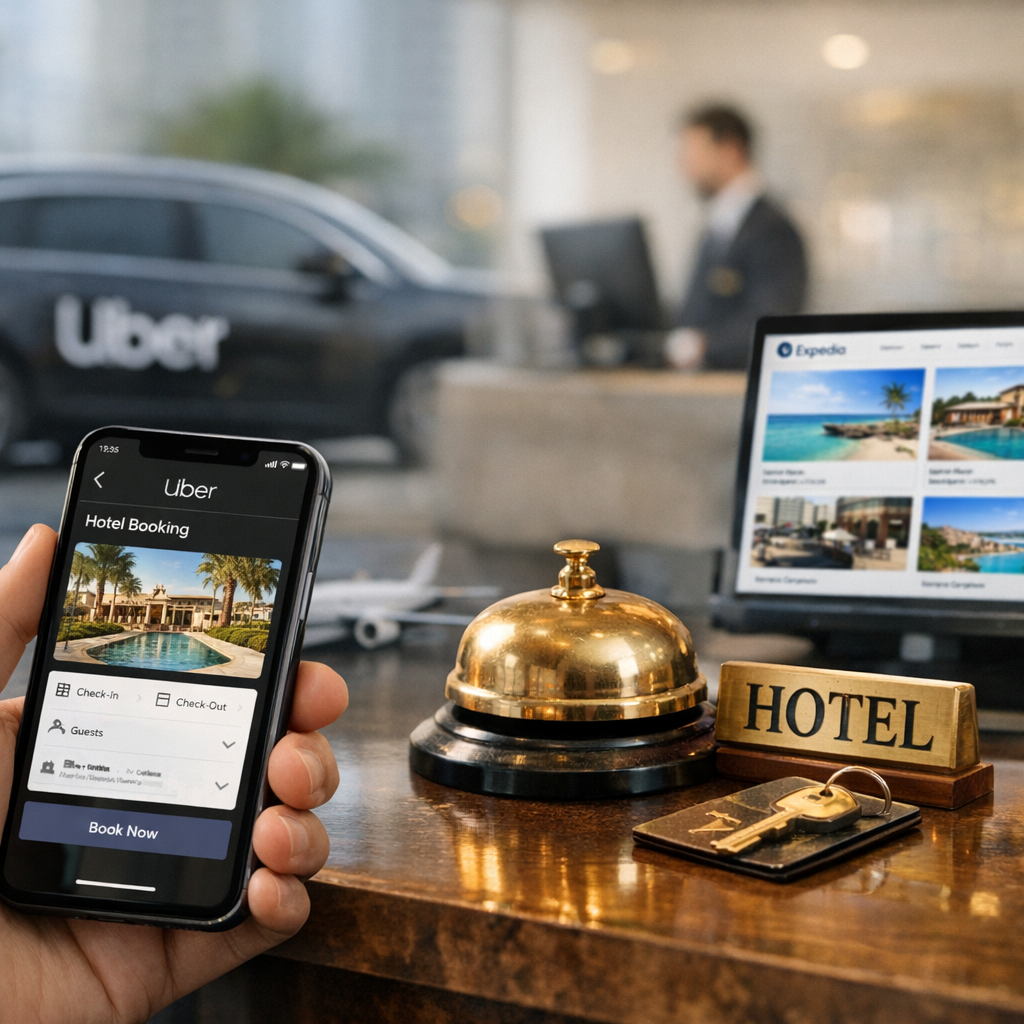
Uber is expanding its ambitions beyond ride-hailing by moving deeper into travel services, partnering with Expedia to introduce hotel bookings within its platform. The development, first reported by The Economic Times in its article “Uber taps Expedia to add hotel bookings in super app push,” underscores the company’s continued effort to evolve into a broader “super app” offering multiple services through a single interface.
According to the report, the collaboration will enable Uber users to browse and book hotels directly within the app, leveraging Expedia’s extensive global inventory. The feature is expected to integrate seamlessly with Uber’s existing ecosystem, allowing users to plan and manage travel without leaving the platform. This move reflects a strategic push by Uber to increase user engagement and open new revenue streams beyond its core mobility business.
The partnership comes at a time when competition is intensifying among technology platforms to become comprehensive digital hubs. Companies across sectors are seeking to consolidate services—ranging from transportation and food delivery to financial tools and travel planning—into unified applications. For Uber, adding hotel bookings represents a logical next step after earlier expansions into food delivery, freight, and other services.
Industry observers note that the collaboration benefits both parties. Uber gains access to Expedia’s established backend infrastructure and global supply of accommodations, avoiding the need to build its own booking network from scratch. Meanwhile, Expedia gains exposure to Uber’s large and active user base, potentially driving incremental bookings.
The initiative also aligns with broader shifts in consumer behavior, where convenience and integration are increasingly valued. By embedding travel planning within a ride-hailing app, Uber aims to position itself as a one-stop solution for mobility and travel needs, particularly appealing to users seeking streamlined digital experiences.
While it remains to be seen how strongly the feature will resonate with customers, the move signals Uber’s continued willingness to diversify. As highlighted by The Economic Times, the company’s super app strategy reflects a longer-term vision of becoming a central platform in users’ daily lives, extending far beyond its original identity as a ride-hailing service.