A new approach to cooling small modular nuclear reactors (SMRs), described in a recent TechXplore article titled “New cooling strategy could improve efficiency of small modular reactors,” highlights a potentially important step toward making next-generation nuclear systems more practical and cost-effective.
The report outlines how researchers are exploring alternative cooling designs intended to address one of the most persistent challenges in nuclear engineering: safely and efficiently removing heat from a reactor core while maintaining economic viability. SMRs, which are designed to be smaller, factory-built alternatives to conventional nuclear plants, have been promoted for their flexibility and lower upfront costs. However, their compact size intensifies engineering constraints, particularly in thermal management.
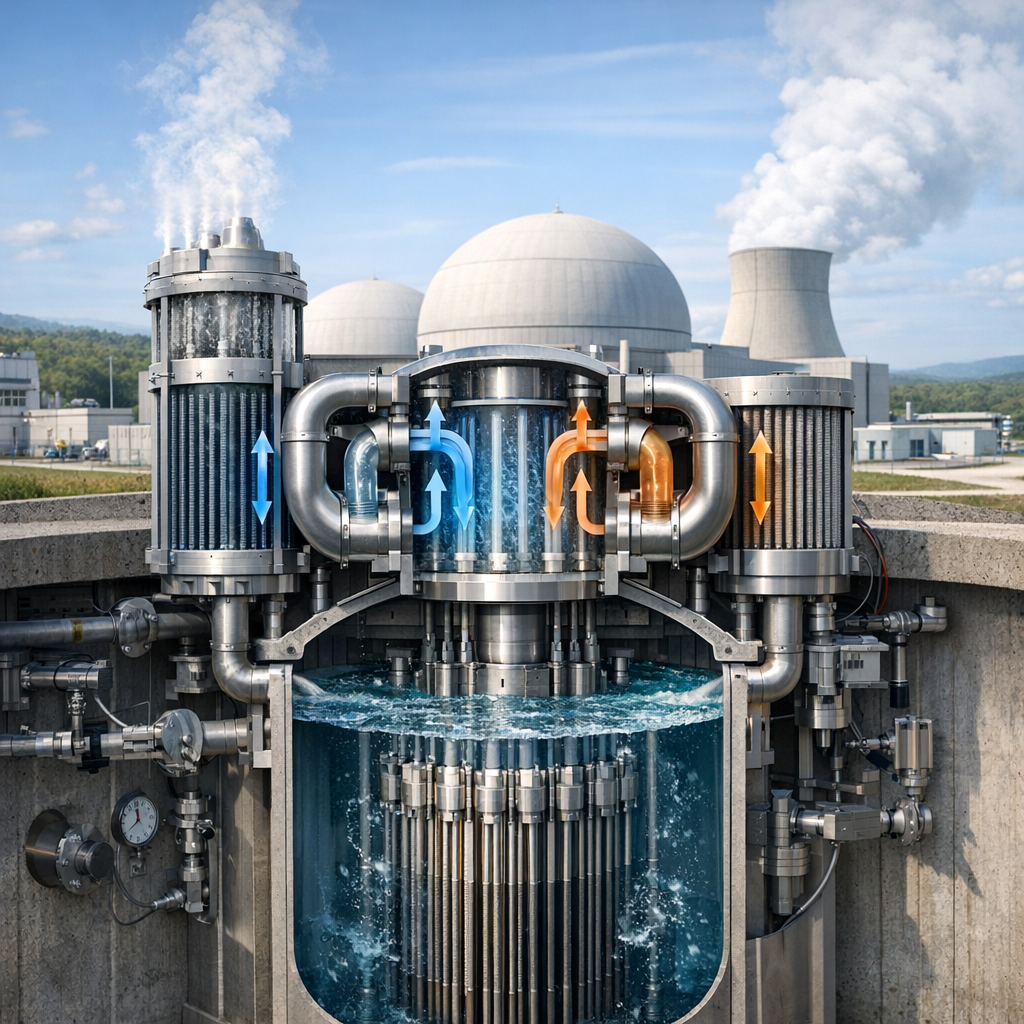
According to the TechXplore coverage, the proposed cooling concept focuses on improving heat transfer mechanisms to reduce reliance on complex active cooling systems. Traditional large-scale reactors typically depend on extensive infrastructure, including pumps and external cooling loops, to maintain stable temperatures. In contrast, many SMR designs aim to incorporate passive safety features—systems that operate without external power or human intervention. The new strategy builds on this principle by enhancing natural circulation and heat dissipation, potentially increasing both safety margins and operational simplicity.
Researchers involved in the work suggest that optimizing coolant flow paths and materials could significantly improve thermal performance. By enabling more efficient heat removal, reactors could operate at higher output levels without exceeding safety thresholds. This, in turn, may improve the overall economics of SMRs, an area where the technology has faced skepticism despite strong policy support in several countries.
The TechXplore article notes that the innovation could also reduce mechanical stress on reactor components. Lower temperature gradients and more stable cooling dynamics can extend the lifespan of critical materials, decreasing maintenance needs and long-term costs. These factors are particularly important for SMRs, which are often envisioned for deployment in remote locations or as part of distributed energy systems where reliability is paramount.
At the same time, the research remains at a developmental stage. Scaling laboratory or simulation-based findings into commercially viable reactor designs presents significant regulatory and engineering hurdles. Nuclear systems must undergo rigorous testing and certification processes, and even incremental design changes can trigger extensive review.
Energy analysts point out that while improvements in cooling technology are promising, they represent only one piece of the broader SMR puzzle. Questions remain about supply chains, construction timelines, and waste management, all of which will shape the ultimate role of SMRs in the global energy mix.
Nevertheless, the work highlighted by TechXplore reflects continued momentum in nuclear innovation, driven by the need for low-carbon, reliable energy sources. As countries seek to balance climate goals with energy security concerns, advancements in reactor design—including more efficient cooling systems—are likely to play an increasingly visible role in discussions about the future of power generation.