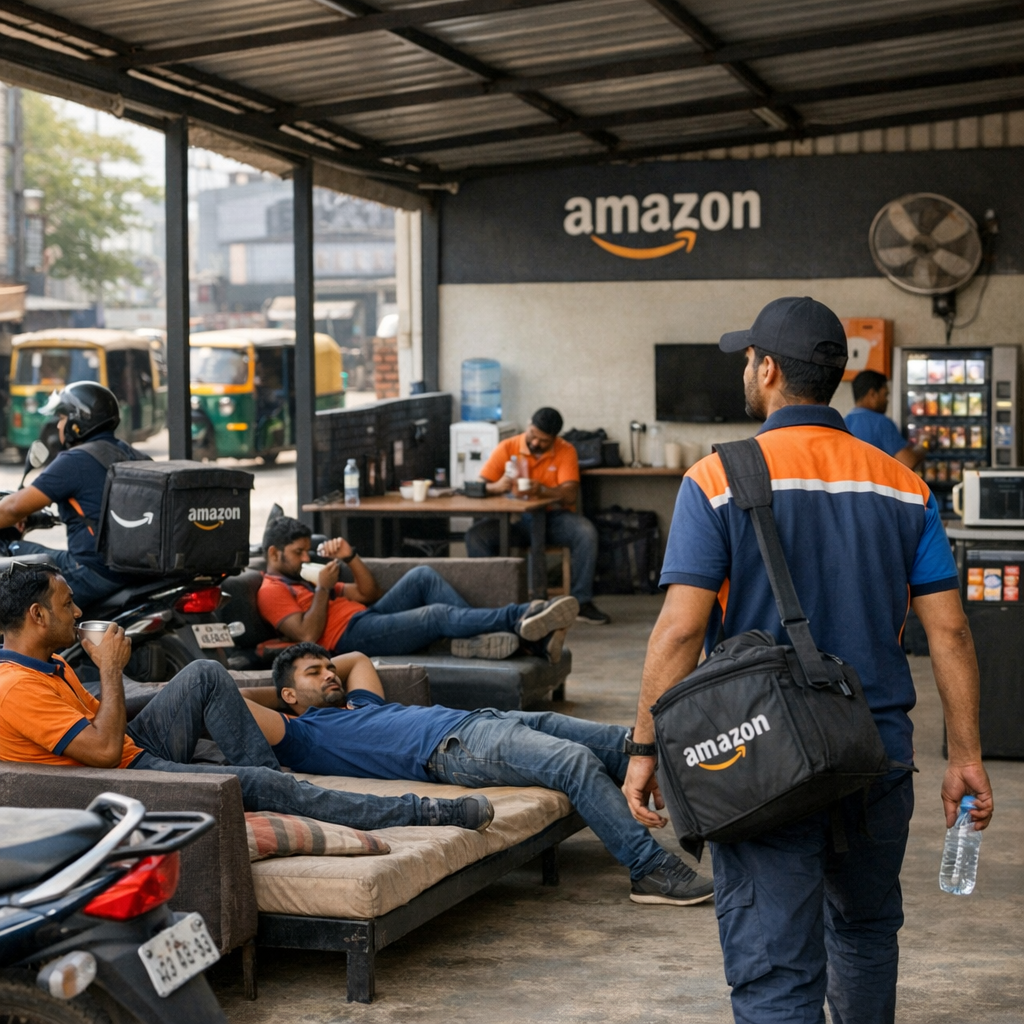
Amazon India plans a significant expansion of its rest infrastructure for delivery workers, aiming to scale up the number of rest centres to 250 across the country by 2026, according to a report titled “Amazon India to expand rest centres for delivery partners to 250 in 2026” published by The Economic Times. The move reflects a broader shift within the company toward improving working conditions for its growing logistics workforce as e-commerce demand continues to rise.
The proposed expansion builds on a network of existing facilities designed to provide delivery personnel with access to basic amenities, including seating, drinking water, charging points for mobile devices, and sanitation facilities. These centres are intended to offer a structured space for rest during long delivery shifts, particularly in dense urban areas where accessible public infrastructure is often limited.
Amazon’s delivery ecosystem in India relies heavily on a vast network of independent contractors and small logistics partners, making workforce welfare an increasingly prominent issue as the company scales operations. The initiative signals an effort to address long-standing concerns about the physical demands placed on delivery workers, especially during peak seasons marked by high volumes and tight delivery timelines.
The Economic Times report indicates that the company is looking to strategically place these centres in high-traffic delivery zones across major cities, as well as in emerging logistics hubs. By expanding coverage, Amazon aims to reduce the distance workers must travel to access rest facilities, potentially improving both efficiency and worker satisfaction.
This development also comes amid growing scrutiny of labor practices in the gig economy. While delivery platforms have historically emphasized flexibility and earning opportunities, workers and labor advocates have increasingly called for better protections, infrastructure, and support systems. Amazon’s expansion of rest centres can be read as part of a broader industry response to these pressures, as companies balance rapid growth with evolving expectations around worker welfare.
The investment in physical infrastructure suggests a recognition that operational sustainability is closely tied to workforce conditions. As last-mile delivery continues to be a key competitive differentiator in India’s e-commerce market, companies may find that improvements in worker experience contribute not only to retention but also to service reliability.
Although Amazon has not disclosed the total investment associated with the expansion, the scale of the plan indicates a long-term commitment to enhancing delivery operations. The move may also prompt competitors to adopt similar measures, potentially setting new benchmarks for worker support in the sector.
The report underscores how logistical innovation in India is no longer limited to technology and speed, but is increasingly shaped by considerations around human infrastructure and the realities of on-the-ground delivery work.