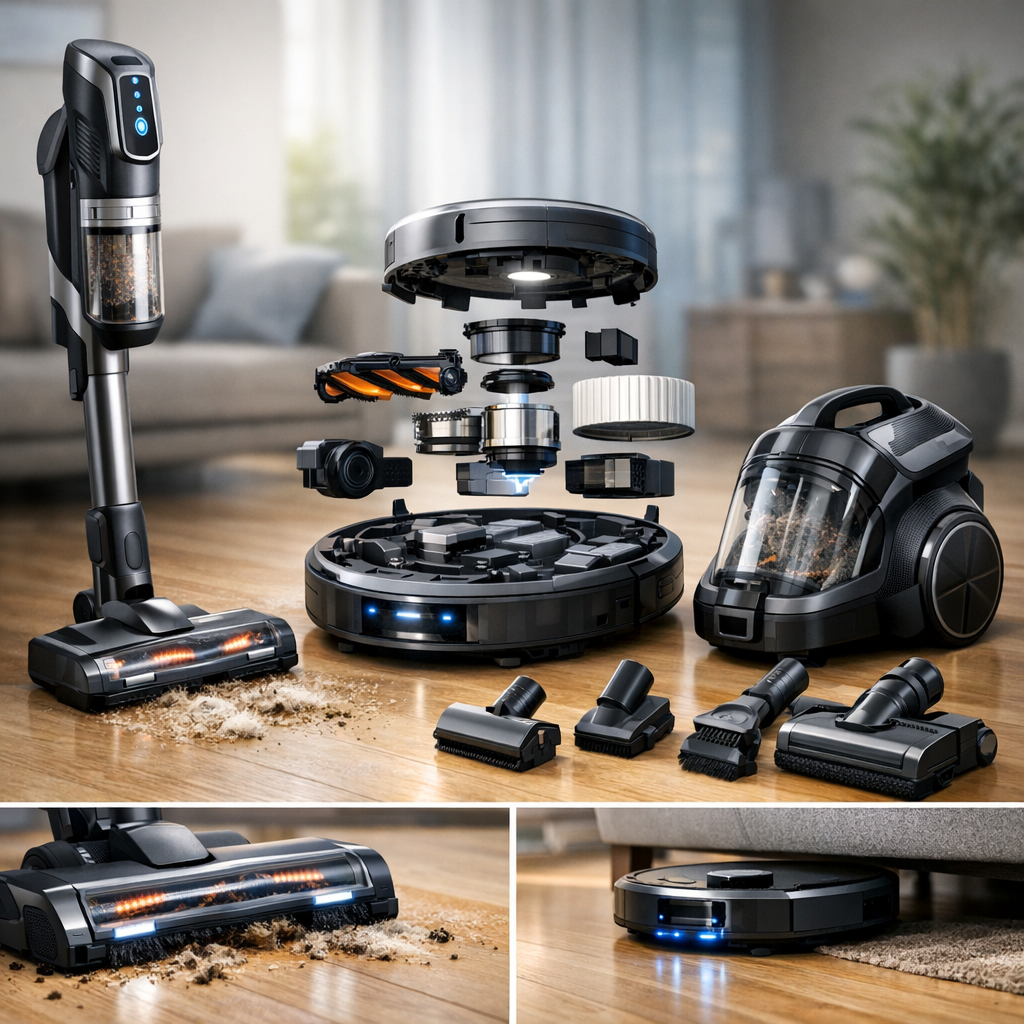
A recent guide published by Wired, titled “The Best Vacuum Cleaners,” offers a detailed look at how rapidly evolving household technology is reshaping a seemingly mundane appliance. The article underscores that vacuum cleaners, once defined primarily by suction power and durability, are now part of a broader ecosystem of smart, ergonomic, and highly specialized home tools.
Drawing on extensive hands-on testing, Wired identifies a range of models that reflect shifting consumer priorities, particularly toward convenience and adaptability. Cordless stick vacuums, for example, continue to dominate recommendations, not because they necessarily outperform traditional upright machines in raw power, but because they align with modern expectations of portability and ease of use. Lightweight designs and detachable components allow users to move seamlessly between floor types and even into tight or elevated spaces.
At the same time, the article notes that traditional corded vacuums have not become obsolete. In fact, they remain a preferred option for larger homes and heavier cleaning demands. Their consistent suction and longer runtime make them more reliable for deep-cleaning carpets and handling significant debris, reinforcing the idea that the “best” vacuum depends as much on context as on performance metrics.
Wired’s analysis also reflects a growing emphasis on multifunctionality. Many of the top-rated models double as handheld devices or include attachments tailored for pet hair, upholstery, and hard-to-reach areas. These features are no longer seen as premium add-ons but as expected components of a competitive product. For pet owners in particular, specialized brush heads and filtration systems have become a decisive factor in purchasing decisions.
Another notable trend highlighted in the Wired article is the maturation of robot vacuums. Once regarded as convenient but limited, newer models demonstrate improved navigation, mapping capabilities, and integration with smart home systems. While they are still not positioned as complete replacements for manual cleaning, their role as maintenance tools is increasingly well established. The article suggests that, for many households, robot vacuums represent a shift toward continuous, low-effort upkeep rather than periodic intensive cleaning.
Battery technology and filtration systems are also central to Wired’s evaluation. Advances in lithium-ion batteries have extended runtimes for cordless models, though the article points out that performance can still vary widely depending on usage settings. Similarly, high-efficiency particulate air (HEPA) filtration is becoming more common, reflecting rising consumer awareness of indoor air quality and allergens.
Price remains a significant consideration throughout the guide. While premium models often offer superior build quality and features, Wired emphasizes that midrange options can deliver strong performance for most households. The publication’s recommendations suggest that value is determined less by brand prestige than by how well a vacuum meets specific cleaning needs.
Ultimately, “The Best Vacuum Cleaners,” published by Wired, presents a portrait of a market defined by specialization rather than one-size-fits-all solutions. The modern consumer is faced with a broad spectrum of choices, each tailored to different living environments, cleaning habits, and expectations of convenience. In this landscape, the most effective purchase is not necessarily the most advanced or expensive machine, but the one that aligns most closely with how—and how often—it will be used.