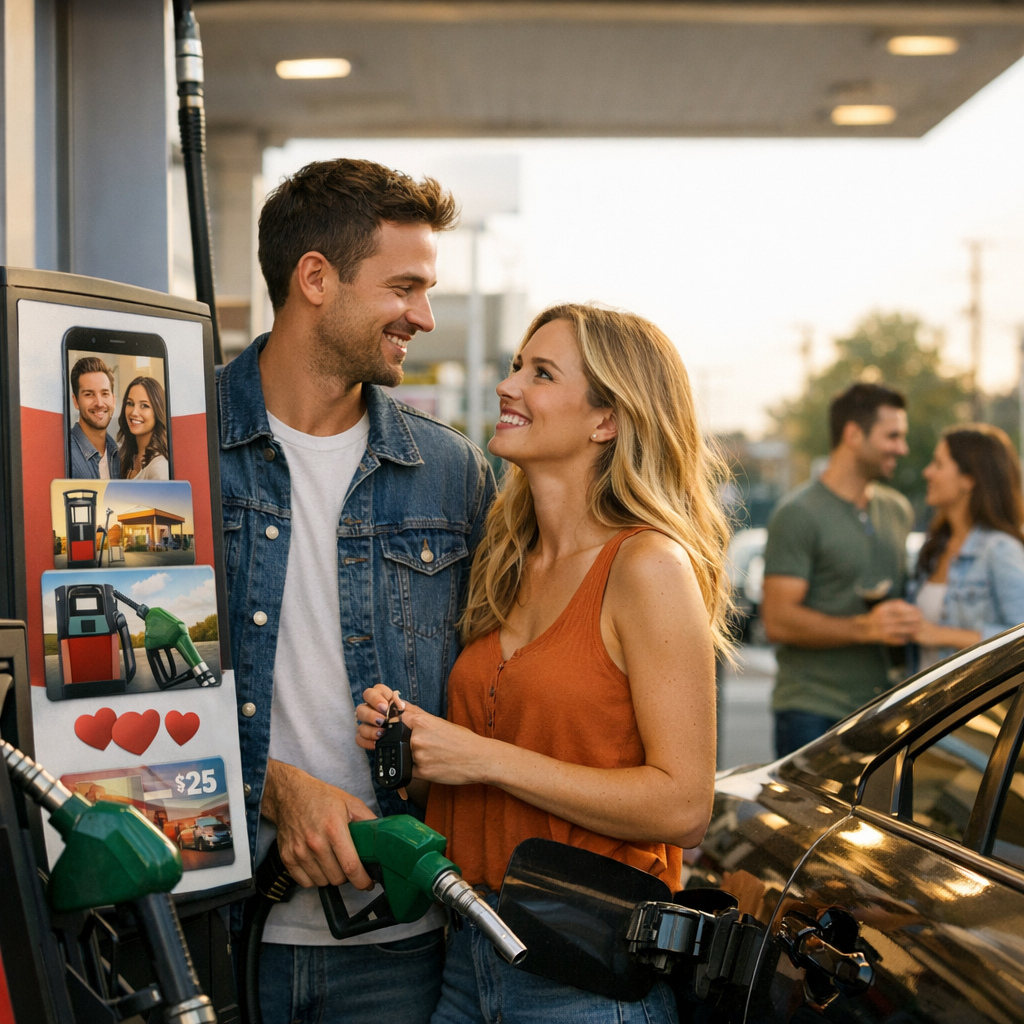
A dating app is turning to a distinctly economic incentive to nudge users back into face-to-face interactions, as rising costs and shifting social habits continue to reshape how people meet. According to the Wired article “Dating App BLK Is Giving Away Free Gas to Convince People to Get Out of the House,” the platform BLK has launched a campaign offering gas reimbursements to encourage users to go on in-person dates.
BLK, a dating app aimed at Black singles, is positioning the initiative as both a practical response to inflation and a cultural intervention. The company argues that financial pressures, including the cost of fuel, have become a meaningful barrier to offline dating. By offering to cover gas expenses for select outings, BLK hopes to lower that barrier and revive what it frames as a more intentional dating culture.
The promotion reflects a broader tension within the online dating industry. While apps have made romantic connections more accessible than ever, they have also contributed to a pattern of prolonged messaging, “situationships,” and hesitancy around committing to in-person meetings. Industry observers have noted that many users now report fatigue with digital-first interactions that fail to translate into real-world relationships.
BLK’s approach implicitly acknowledges that convenience alone is no longer enough to sustain engagement. Instead, the company is betting that tangible incentives can prompt behavioral change. By tying the reward specifically to travel, the campaign emphasizes the act of physically showing up, a step that has become less routine in an era shaped by remote work, economic uncertainty, and lingering post-pandemic habits.
The choice of gas as the incentive is also symbolically pointed. Transportation costs have been particularly volatile in recent years, and for younger users—one of BLK’s core demographics—these expenses can weigh heavily on discretionary decisions, including dating. Covering that cost reframes a date not just as a personal risk but a subsidized experience, potentially lowering both financial and psychological barriers.
At the same time, the campaign underscores how competitive and experimental the dating app market has become. Platforms are increasingly seeking ways to differentiate themselves beyond algorithms and interface design. Incentive-based strategies, while not entirely new, are gaining prominence as companies look for measurable ways to increase user engagement and success rates.
Whether such initiatives can produce lasting change remains uncertain. Incentives may succeed in prompting initial behavior, but they do not necessarily address deeper issues associated with app-based dating, such as mismatched expectations, safety concerns, or emotional fatigue. There is also the question of scalability; programs that rely on financial subsidies can be difficult to sustain over time.
Still, BLK’s campaign highlights a growing recognition within the industry that digital connection alone may not be sufficient. As the Wired report suggests, the challenge for dating platforms is no longer simply to facilitate matches, but to bridge the gap between online interaction and real-world relationships. By attaching a monetary value to that transition, BLK is making a bet that, for some users at least, the path back to in-person connection may run through the gas pump.