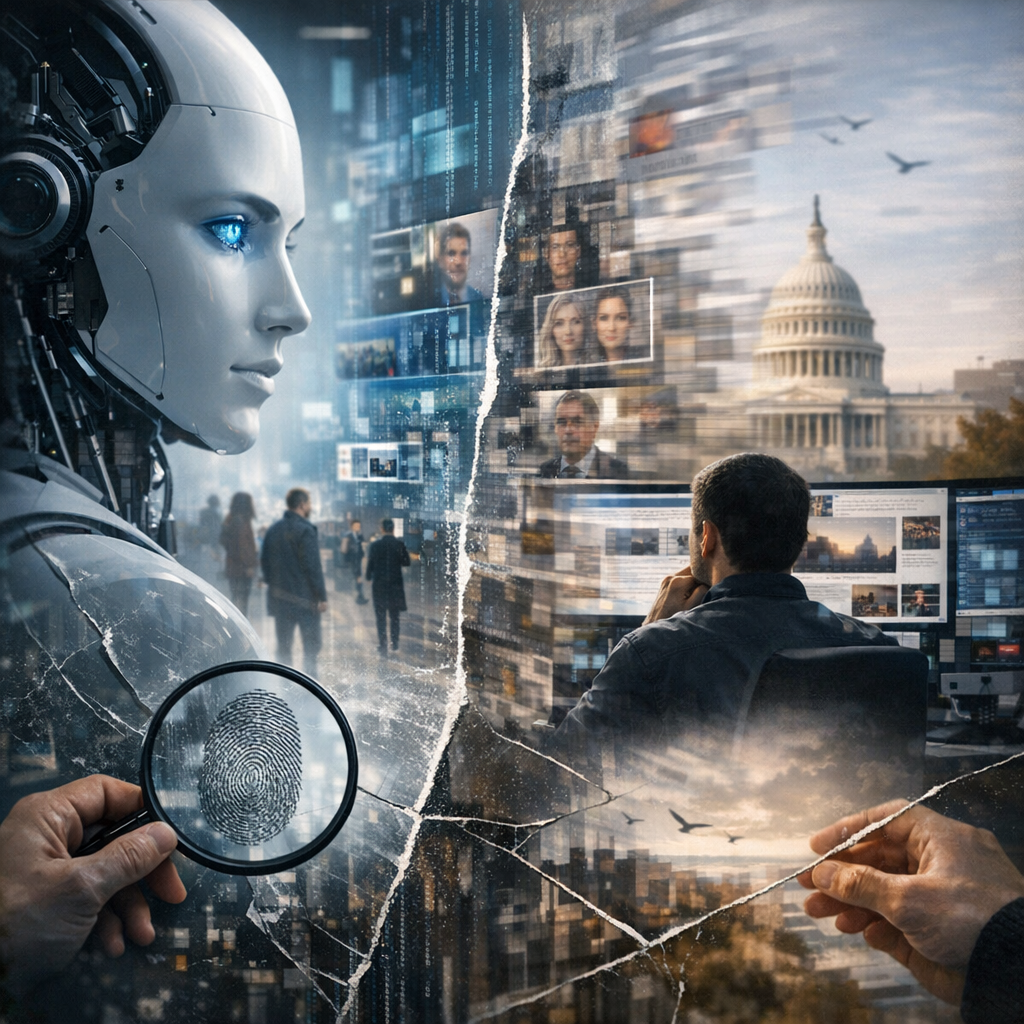
In its article “The Future of Truth in the Age of AI,” Wired presents a sobering examination of how rapidly advancing artificial intelligence systems are reshaping the boundaries between fact and fabrication. Through an extended interview with a leading voice in technology and information ethics, the publication explores how generative AI is poised to challenge long-standing assumptions about trust, verification, and the reliability of digital content.
At the center of the discussion is a growing concern: that tools capable of producing fluent, authoritative text, images, and audio can just as easily generate convincing falsehoods as they can provide useful information. The interview subject argues that society is entering a new phase in which the cost of producing misinformation has dropped dramatically, while the difficulty of distinguishing truth from fiction has increased. Unlike earlier periods of media disruption, the scale and speed enabled by AI systems create a fundamentally different information environment.
The conversation underscores that the issue is not merely technical but deeply social. AI models are trained on vast bodies of human-generated content, inheriting both its knowledge and its biases. As a result, they do not possess an inherent mechanism for truth verification. Instead, they generate outputs based on patterns, which can lead to confident-sounding inaccuracies. The interview highlights how this dynamic risks eroding public trust, particularly when users encounter polished misinformation that appears indistinguishable from credible reporting.
Wired’s interview also emphasizes the limitations of current safeguards. While developers have introduced content filters, citation tools, and alignment strategies, these measures remain imperfect. The interviewee notes that even well-intentioned systems can produce misleading or fabricated information under certain conditions, raising questions about the adequacy of existing oversight approaches. The challenge is compounded by the global accessibility of AI tools, which makes coordinated regulation difficult.
At the same time, the article does not present the future as entirely bleak. The discussion points to emerging efforts aimed at reinforcing information integrity, including the development of verification technologies, digital watermarking, and new forms of media literacy. The interviewee suggests that addressing the problem will require a combination of technical innovation, institutional accountability, and cultural adaptation. In this view, the responsibility does not rest solely with AI developers but extends to governments, educators, and users themselves.
A recurring theme in the Wired piece is the shifting role of trust. Traditionally, audiences have relied on established institutions, such as news organizations and academic bodies, to help arbitrate truth. In a landscape saturated with AI-generated content, those intermediaries may become even more crucial, though they too must adapt to the new realities. The interview suggests that transparency about how information is produced and verified will play a central role in maintaining credibility.
Ultimately, “The Future of Truth in the Age of AI,” published by Wired, frames the current moment as a pivotal turning point. The technologies now emerging have the potential to democratize knowledge production, but they also carry the risk of destabilizing the shared factual foundation on which public discourse depends. Whether societies can navigate this tension, the article implies, will determine not only the trajectory of AI development but also the resilience of democratic institutions in the years ahead.