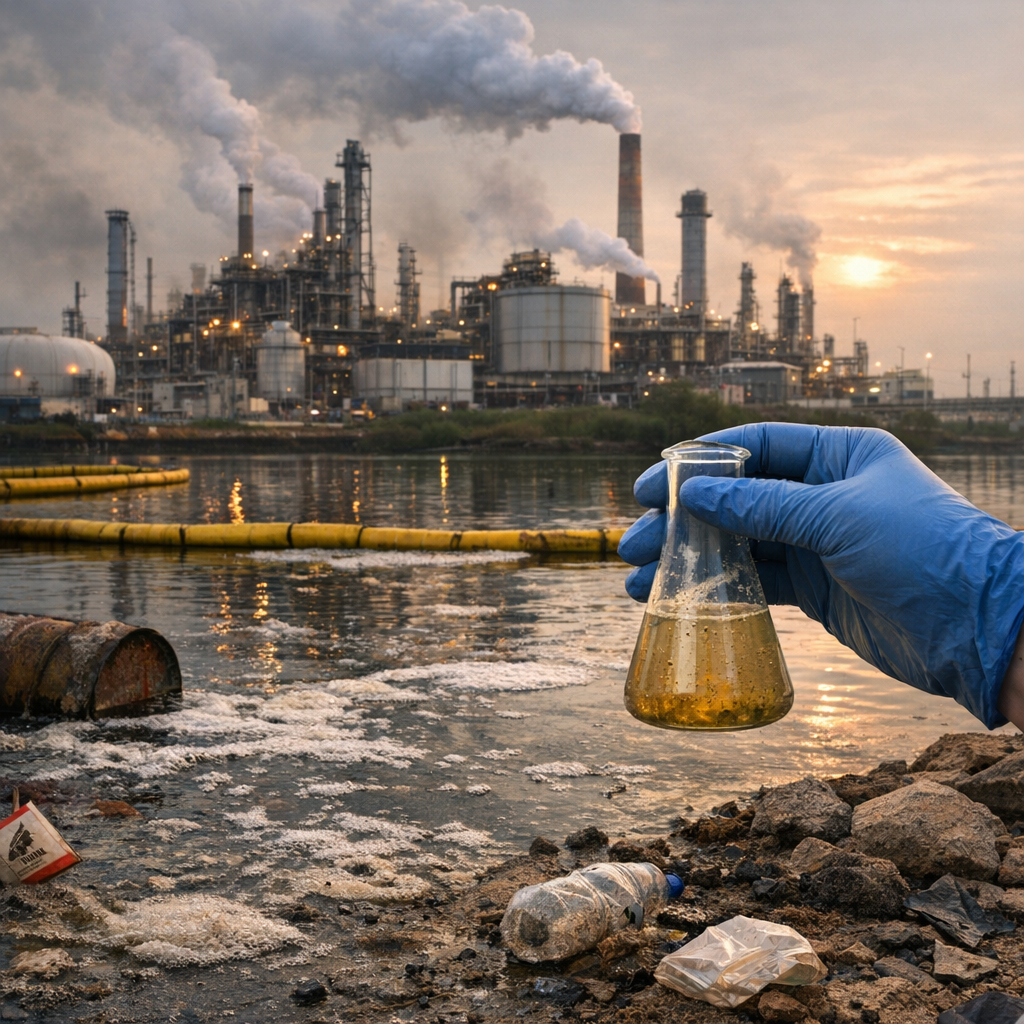
Chemours has agreed to pay more than $450 million in penalties, environmental projects, and water treatment measures to resolve allegations of widespread per- and polyfluoroalkyl substances (PFAS) contamination, in what regulators describe as one of the most significant enforcement actions involving so-called “forever chemicals” in recent years.
According to a report titled “Chemours pays over $450m in penalties and relief over PFAS pollution,” published by Innovation News Network, the settlement addresses claims that the company discharged PFAS compounds from its manufacturing facility in North Carolina, contaminating surrounding waterways and drinking water sources. The agreement, reached with US federal and state authorities, includes both financial penalties and extensive remediation commitments designed to curb ongoing pollution and mitigate long-term environmental damage.
PFAS, a class of synthetic chemicals used in industrial applications for their resistance to heat, water, and oil, have drawn increasing scrutiny due to their persistence in the environment and links to adverse health outcomes. Exposure has been associated with a range of issues, including immune system disruption, developmental effects, and certain cancers, prompting regulators worldwide to tighten controls and pursue enforcement actions. More information on PFAS risks can be found from the U.S. Environmental Protection Agency and the Centers for Disease Control and Prevention.
Under the terms of the settlement, Chemours will fund infrastructure upgrades aimed at capturing and reducing PFAS emissions into air and water. The company is also required to provide financial support for public water systems impacted by contamination, including treatment systems designed to remove PFAS from drinking water supplies. In addition, civil penalties form a substantial portion of the agreement, reflecting what authorities characterize as violations of environmental laws governing hazardous discharges, as outlined under frameworks like the Clean Water Act.
Regulators have emphasized that the scale of the settlement reflects both the severity of the contamination and the broader urgency of addressing PFAS pollution across the United States. The case underscores a growing willingness by federal agencies to pursue corporate accountability for legacy chemical releases, particularly as scientific understanding of PFAS risks continues to evolve, with ongoing research supported by institutions such as the National Institute of Environmental Health Sciences.
Chemours, which was spun off from DuPont in 2015, has stated that it is committed to addressing environmental concerns and complying with regulatory requirements. The company has previously taken steps to reduce emissions and has invested in technologies aimed at lowering its PFAS footprint, as noted on its sustainability reporting page. However, critics argue that the measures come after years of insufficient oversight and delayed action.
The agreement also highlights a broader challenge facing regulators: managing widespread PFAS contamination that often stems from decades of industrial activity. Cleanup efforts can be costly and technically complex, with contamination frequently extending beyond facility boundaries into groundwater, rivers, and municipal systems, an issue tracked by agencies like the North Carolina Department of Environmental Quality.
Environmental advocates have welcomed the settlement as a meaningful step but caution that it represents only part of a much larger issue. They argue that stronger national standards and more aggressive enforcement will be necessary to prevent future contamination and to address existing pollution comprehensively.
As legal and regulatory frameworks around PFAS continue to develop, the Chemours case may serve as a benchmark for future enforcement actions. It signals a shift toward larger financial penalties and more comprehensive remediation requirements, reflecting mounting public and political pressure to confront the long-term environmental and health consequences of these persistent chemicals.