OpenAI has unveiled a new enterprise-focused product aimed at streamlining workplace productivity through automation, positioning it as a significant step toward more autonomous software systems. The announcement, detailed in VentureBeat’s article “OpenAI introduces ChatGPT Work, a cloud-based AI agent that manages tasks across email, Slack, and calendars,” outlines how the company is expanding beyond conversational AI into tools designed to execute complex, ongoing workflows. You can read the original report here: OpenAI introduces ChatGPT Work.
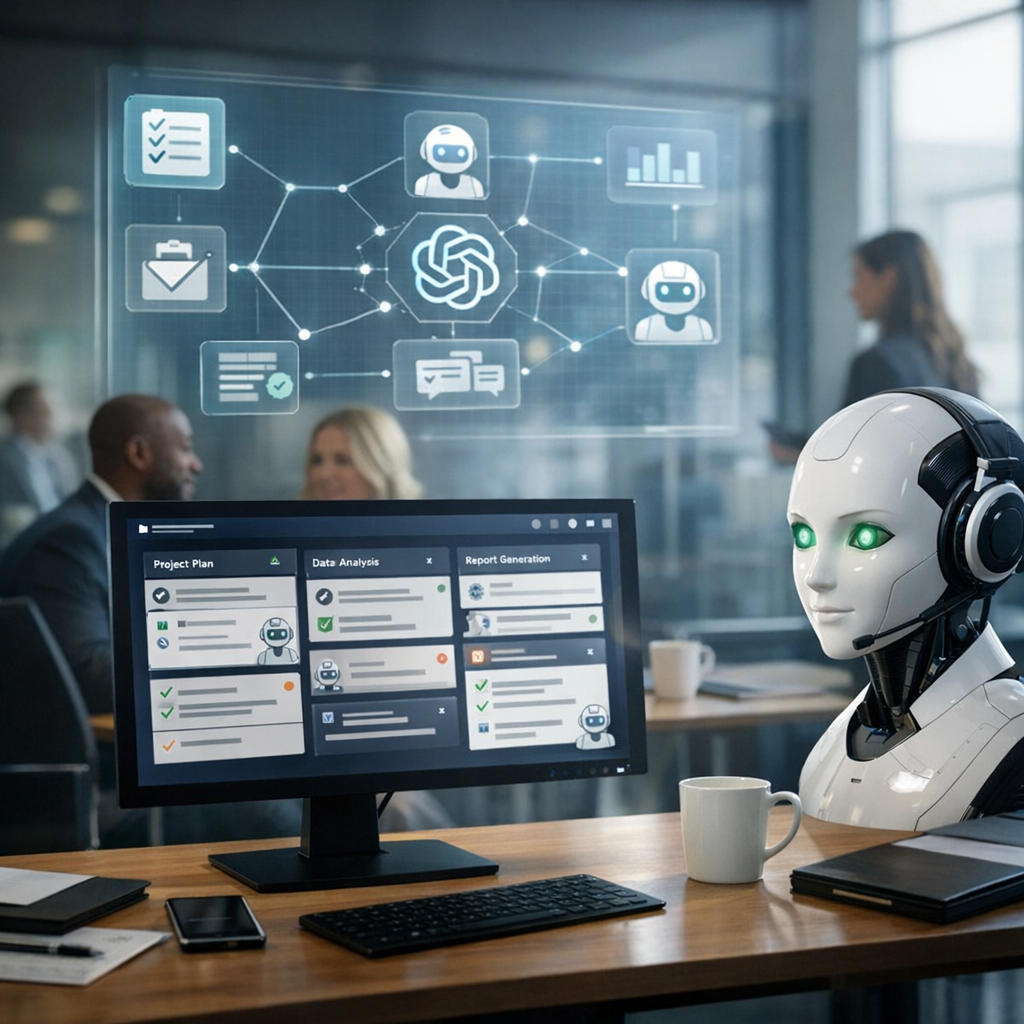
ChatGPT Work is described as a cloud-based agent capable of interacting across commonly used workplace platforms, including email, Slack, and calendar services such as Google Calendar. Unlike traditional chat interfaces that require direct prompts for each task, the system is intended to operate with a greater degree of autonomy, handling scheduling, drafting communications, and coordinating activities based on user intent and organizational context. This marks a shift toward AI systems that function less as reactive assistants and more as proactive digital collaborators.
The move reflects increasing competition in the emerging category of agentic AI tools, where technology companies are racing to develop systems that can carry out multi-step tasks with minimal human intervention. OpenAI’s approach appears focused on integration and continuity, embedding the agent into existing enterprise workflows rather than requiring entirely new environments or software ecosystems. By working across widely adopted platforms like Slack and email services such as Gmail, the company is seeking to reduce friction in adoption while demonstrating immediate practical value.
One of the key differentiators highlighted in the VentureBeat report is the system’s ability to maintain context across tasks and applications. Rather than treating each request as an isolated interaction, ChatGPT Work is designed to build an ongoing understanding of user preferences, priorities, and organizational structures. This allows it to perform actions such as scheduling meetings based on participants’ availability, drafting follow-up messages, and adjusting plans dynamically as new information emerges.
The introduction of such capabilities raises questions about oversight, data security, and reliability. Enterprise adoption of AI agents hinges not only on performance but also on trust, particularly when systems are granted access to sensitive communications and internal workflows. OpenAI has indicated that safeguards and user controls are central to the design, though the long-term effectiveness of these measures will likely be tested as usage expands. Industry frameworks like the NIST AI Risk Management Framework highlight how organizations can approach these challenges.
The broader significance of ChatGPT Work lies in its potential to reshape how routine knowledge work is conducted. By automating coordination-heavy tasks that often consume significant time, the system could allow workers to focus more on strategic and creative functions. At the same time, it may alter expectations around responsiveness and productivity, as AI systems handle an increasing share of day-to-day operations.
As detailed in VentureBeat’s coverage, OpenAI’s release signals a continued push toward embedding AI deeply within enterprise infrastructure. Whether ChatGPT Work becomes a foundational workplace tool or faces challenges common to early-stage automation technologies will depend on how effectively it balances autonomy with control, and convenience with reliability.