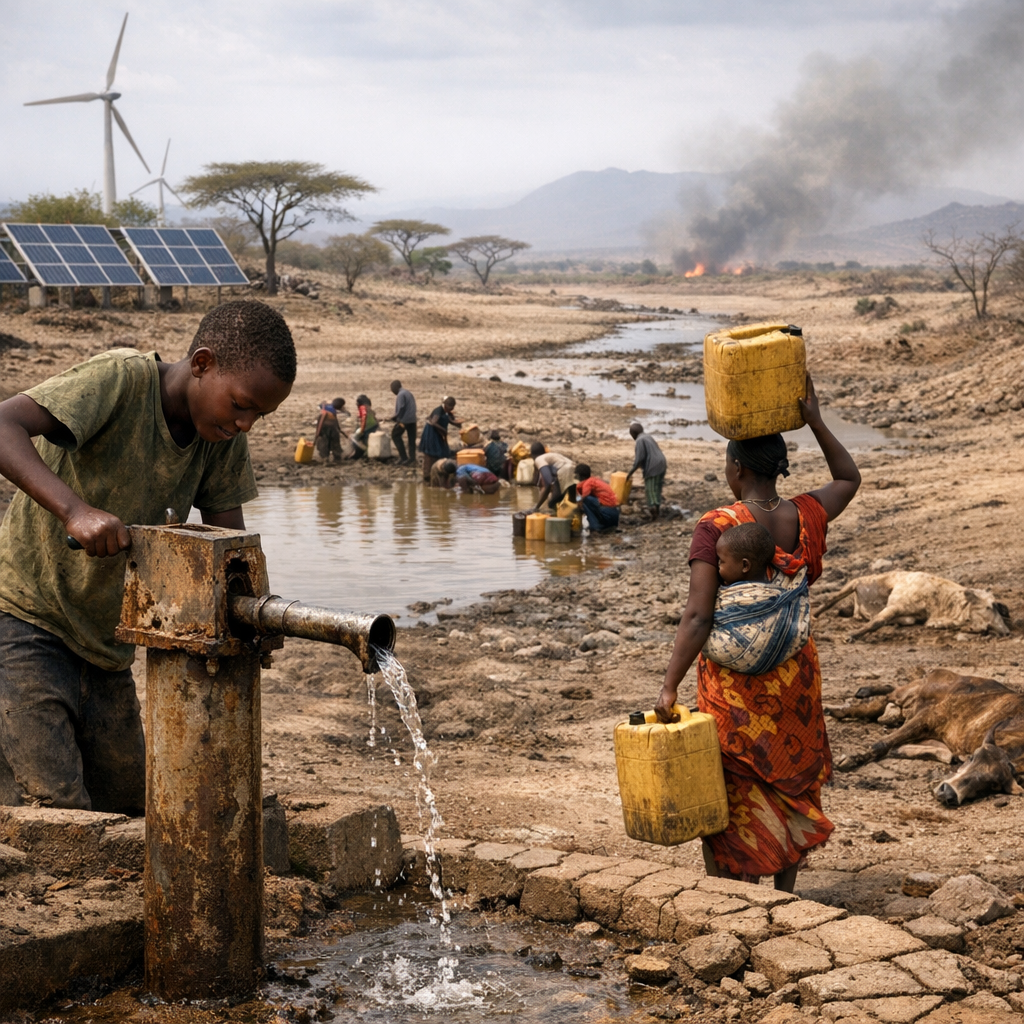
A growing crisis over water security across Africa is sharpening the focus of governments, development agencies, and private investors on the structural challenges that threaten the continent’s long-term stability. A recent report, “Every last drop: the race to secure Africa’s water future,” published by Innovation News Network, highlights how climate pressures, population growth, and underinvestment in infrastructure are converging to create unprecedented strain on freshwater resources.
Across much of Africa, water access remains uneven and fragile. Rapid urbanisation is intensifying demand in cities where supply systems are already overstretched, while rural regions continue to rely on unreliable or unsafe sources. The Innovation News Network article underscores that although Africa is home to significant freshwater reserves, much of this potential remains untapped due to inadequate storage, distribution, and management systems.
Climate change is compounding these structural weaknesses. Prolonged droughts in regions such as the Horn of Africa, alongside increasingly erratic rainfall patterns elsewhere, are making water availability less predictable. At the same time, flooding events—often occurring in quick succession after dry periods—highlight the lack of infrastructure needed to capture and store excess water. This variability is placing pressure on agriculture, energy production, and public health systems, all of which depend heavily on reliable water supplies.
The article points to a persistent financing gap as a central obstacle. Large-scale infrastructure projects, including dams, pipelines, and treatment facilities, require sustained capital investment that many countries struggle to secure. While international donors and development banks play a role, there is growing recognition that private sector participation will be essential. However, regulatory uncertainty and governance concerns continue to deter investors in some markets.
Technological innovation is emerging as a potential part of the solution. Advances in desalination, water recycling, and digital monitoring systems are being explored to improve efficiency and expand supply. Yet the adoption of such technologies is uneven, often limited by cost and capacity constraints. The report suggests that without stronger institutional frameworks and technical expertise, many countries will find it difficult to scale these solutions effectively.
Water governance also remains a critical issue. Fragmented management structures and weak enforcement mechanisms can lead to over-extraction, pollution, and inequitable distribution. Transboundary water resources, such as major river basins shared by multiple nations, add an additional layer of complexity, requiring coordinated policies and diplomatic cooperation to avoid conflict.
Despite these challenges, the Innovation News Network analysis emphasizes that there is still an opportunity to change course. Strategic investment, improved governance, and regional collaboration could help build more resilient systems. In particular, integrating water management into broader economic and climate planning is seen as essential to ensuring long-term sustainability.
As pressures intensify, the race described in “Every last drop: the race to secure Africa’s water future” is becoming more urgent. The decisions made in the coming years will likely determine not only water access for millions of people, but also the trajectory of economic development and stability across the continent.