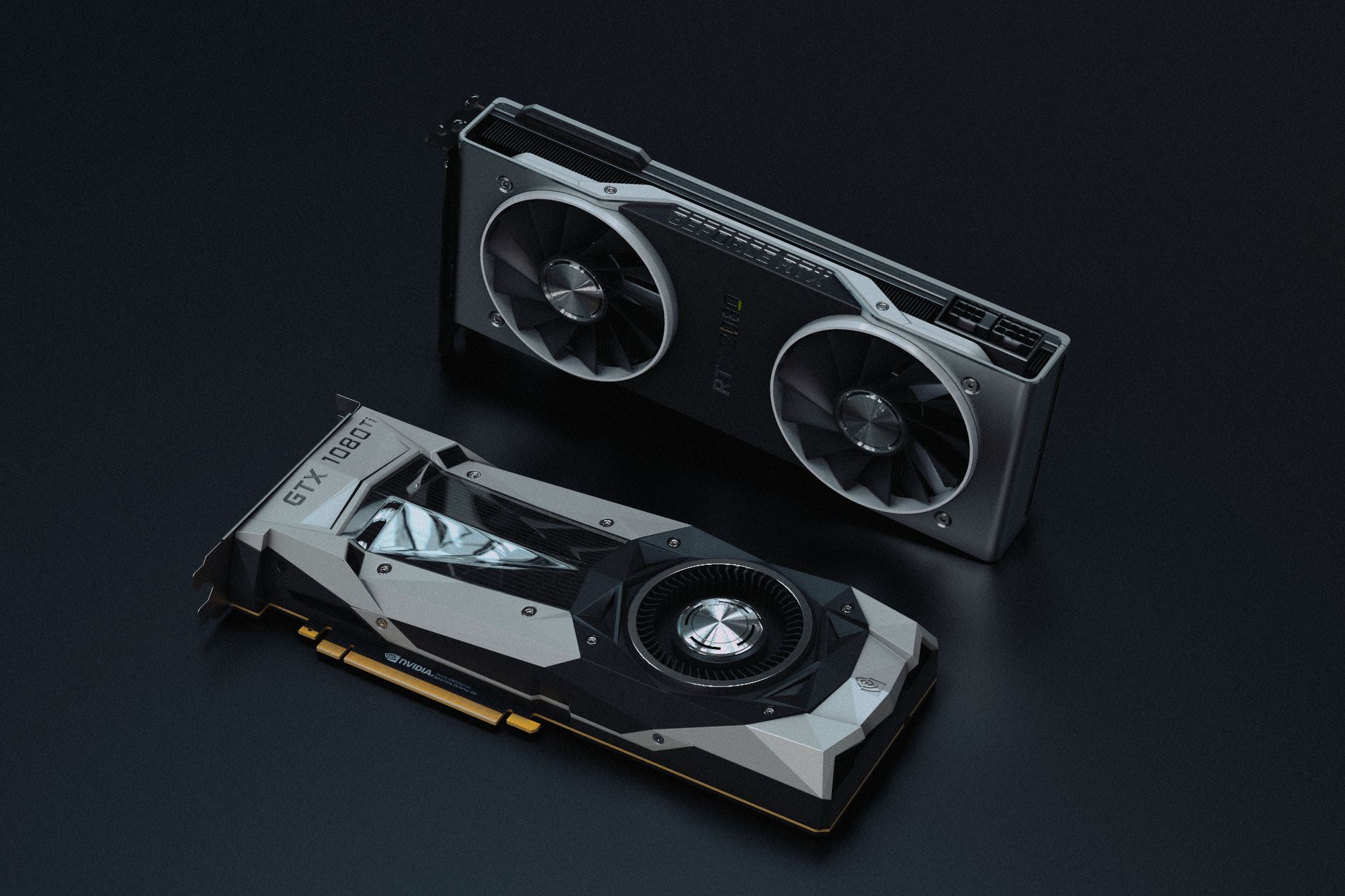
The rapid ascent of Nvidia has become a defining feature of the artificial intelligence boom, but for a growing number of investors and executives the more consequential question is what happens when the market’s most crowded trade begins to look fully priced. That is the premise explored by the Globes article “Nvidia’s ceiling is an opportunity for Israeli cos,” which argues that as Nvidia’s valuation stretches and expectations harden, attention is starting to pivot toward companies that can capture AI-driven demand without relying on a single dominant chipmaker’s continued outperformance.
The logic is less about betting against Nvidia than about broadening exposure to the infrastructure and application layers being built on top of its platforms. Nvidia’s graphics processing units remain central to training and running many of today’s most advanced AI models, but the wider ecosystem includes networking, data-center optimization, storage, power management, cybersecurity, observability, and specialized software. As AI projects move from experimentation to deployment, the spending mix can shift from headline-grabbing accelerators to the less visible components that determine whether systems run securely, reliably, and at sustainable cost.
Israeli technology companies are particularly well positioned for that transition because of their concentration in enterprise software, cybersecurity, semiconductors, and communications—fields that sit adjacent to, rather than in direct competition with, Nvidia’s core. In recent years, multinational chip and cloud firms have expanded R&D operations in Israel, deepening the local talent pool in hardware design, silicon validation, networking, and low-level software. That foundation has helped Israeli firms sell into global data-center supply chains, often by solving specific bottlenecks that become more acute as AI workloads scale.
Investors looking for “second-order” beneficiaries are often drawn to businesses that profit when AI usage grows regardless of which model wins or which chip dominates. Those include companies providing tools to manage AI compute, improve utilization rates, reduce latency between servers, and secure increasingly complex environments where sensitive data and proprietary models must be protected. As enterprises begin to treat AI as a production capability rather than a research novelty, demand tends to rise for compliance, monitoring, governance, and protection against model theft and prompt-based attacks—areas where Israeli cybersecurity and enterprise software firms have long focused.
The shift in attention is also driven by portfolio mechanics. When one stock becomes a heavyweight in indices and institutional allocations, incremental gains require ever larger inflows, while any disappointment can reverberate widely. Even without a reversal, a period of consolidation in a market leader can send capital searching for under-owned names with credible AI narratives and revenues that can scale. The Globes analysis contends that this rotation could benefit Israeli-listed and Israel-connected companies that have not yet been priced as “AI winners” to the same extent as the megacap U.S. leaders.
Still, the opportunity comes with constraints. Many firms that stand to gain from AI infrastructure spending are exposed to enterprise budget cycles and procurement scrutiny, especially as customers seek measurable returns and lower costs per training run or inference query. Competition is intensifying as U.S. and European vendors target the same needs, and as open-source tools commoditize parts of the software stack. Moreover, Israel’s technology sector continues to operate under geopolitical and macroeconomic uncertainty that can affect hiring, operations, and investor sentiment, even for companies with global customer bases.
What may ultimately determine whether Israel’s AI-adjacent companies outperform is execution rather than proximity to the trend. Winning in this phase requires proof that products are embedded in production environments, not merely piloted, and that revenue is recurring rather than project-based. It also requires demonstrating that offerings remain valuable in a market where customers may diversify away from a single hardware platform, introducing more heterogeneity into data centers. Vendors that can operate across chips, clouds, and model frameworks are likely to be better insulated from shifts in the competitive balance between Nvidia and emerging alternatives.
The argument set out in Globes’ “Nvidia’s ceiling is an opportunity for Israeli cos” is, in essence, a call to look beyond the obvious beneficiary of the AI surge and toward the broader industrial buildout it is catalyzing. If AI continues to spread through the economy as promised, the next wave of value creation may accrue less to the company selling the most coveted processors and more to the firms that make those processors—and the systems built around them—usable at scale. For Israel’s technology sector, the moment could be significant: a chance to translate deep specialization in security, networking, and enterprise software into outsized gains as the market’s focus shifts from who powers AI to who makes AI work.