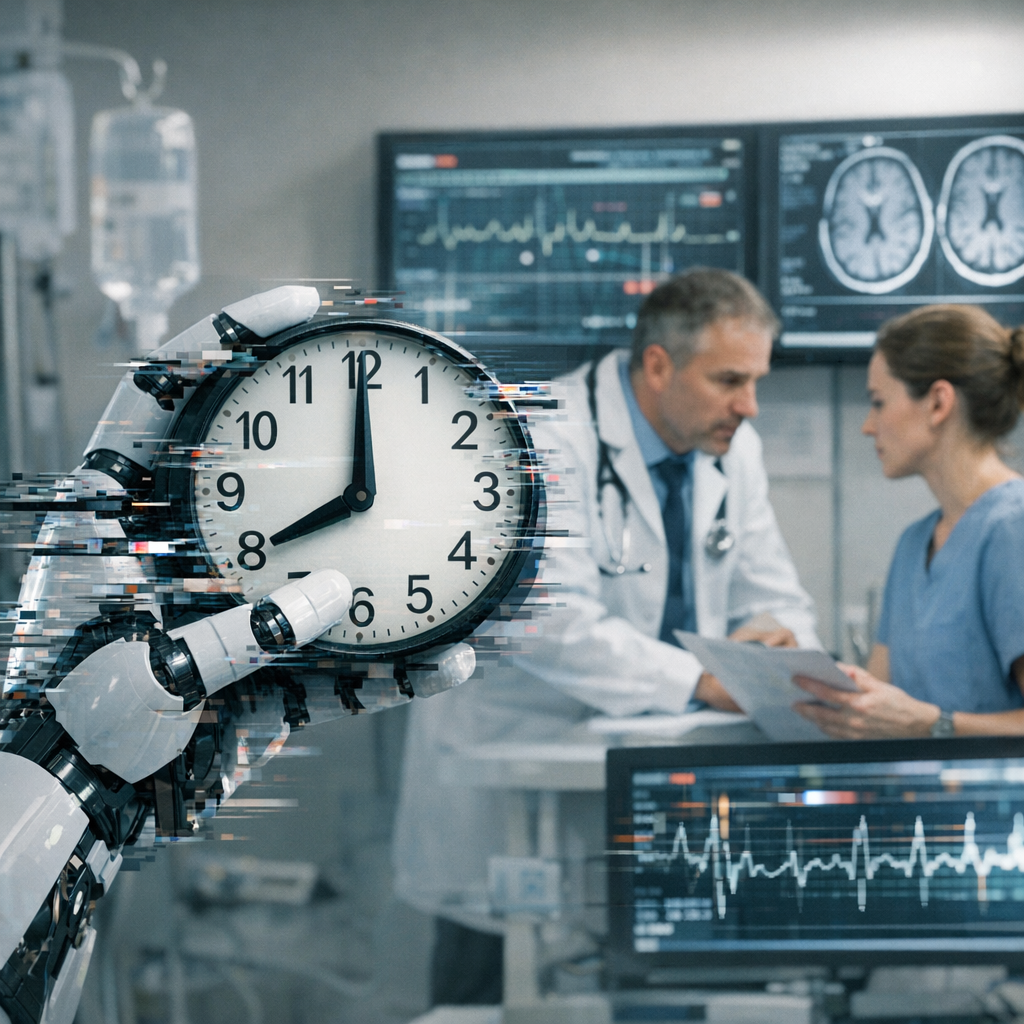
Concerns are growing within the medical and artificial intelligence communities over a class of system failures known as temporal errors, which researchers say could undermine the reliability of AI-assisted healthcare tools if left unaddressed.
A recent report published by Tech Xplore, titled “AI temporal errors threaten reliability in medical systems,” highlights how advanced AI models can struggle to correctly interpret time-dependent data, an issue with potentially serious consequences in clinical settings. These temporal errors occur when systems misinterpret the sequence, timing, or progression of medical information—such as patient histories, symptom development, or treatment timelines.
Unlike more familiar AI shortcomings, such as bias or data gaps, temporal errors are subtler and harder to detect. They can arise even when models are trained on large, high-quality datasets. In healthcare, where decisions often depend on precise chronology, even small misinterpretations can lead to flawed diagnoses, inappropriate treatments, or missed warning signs.
Researchers cited in the Tech Xplore report note that many modern AI systems process medical records as static snapshots rather than evolving narratives. This can cause models to incorrectly weigh older information against more recent developments or fail to recognize critical changes in a patient’s condition over time. In complex cases—such as chronic illness management or post-operative monitoring—these timing misjudgments can significantly affect clinical decision-making.
The issue is compounded by the growing integration of AI into hospital workflows, from diagnostic imaging to predictive analytics. While these systems promise efficiency and improved outcomes, the presence of temporal inconsistencies raises questions about how much clinicians should rely on automated recommendations without careful oversight.
Efforts are underway to address the problem. Researchers are exploring new training methods and architectures designed to better account for temporal context, including models that explicitly track sequences and time intervals. Others are advocating for stricter evaluation protocols that test how AI systems handle longitudinal data before they are deployed in real-world settings.
The findings underscore a broader challenge in the development of trustworthy AI for healthcare: ensuring that systems not only process vast amounts of information but also understand how that information unfolds over time. As the Tech Xplore article emphasizes, improving temporal reasoning may be essential to making AI a dependable partner in medicine rather than a potential source of hidden risk.
For now, experts stress the importance of maintaining human oversight and clinical judgment, particularly in high-stakes environments. While AI continues to advance rapidly, its limitations—especially those involving time-sensitive interpretation—remain a critical area of scrutiny for both developers and healthcare providers.