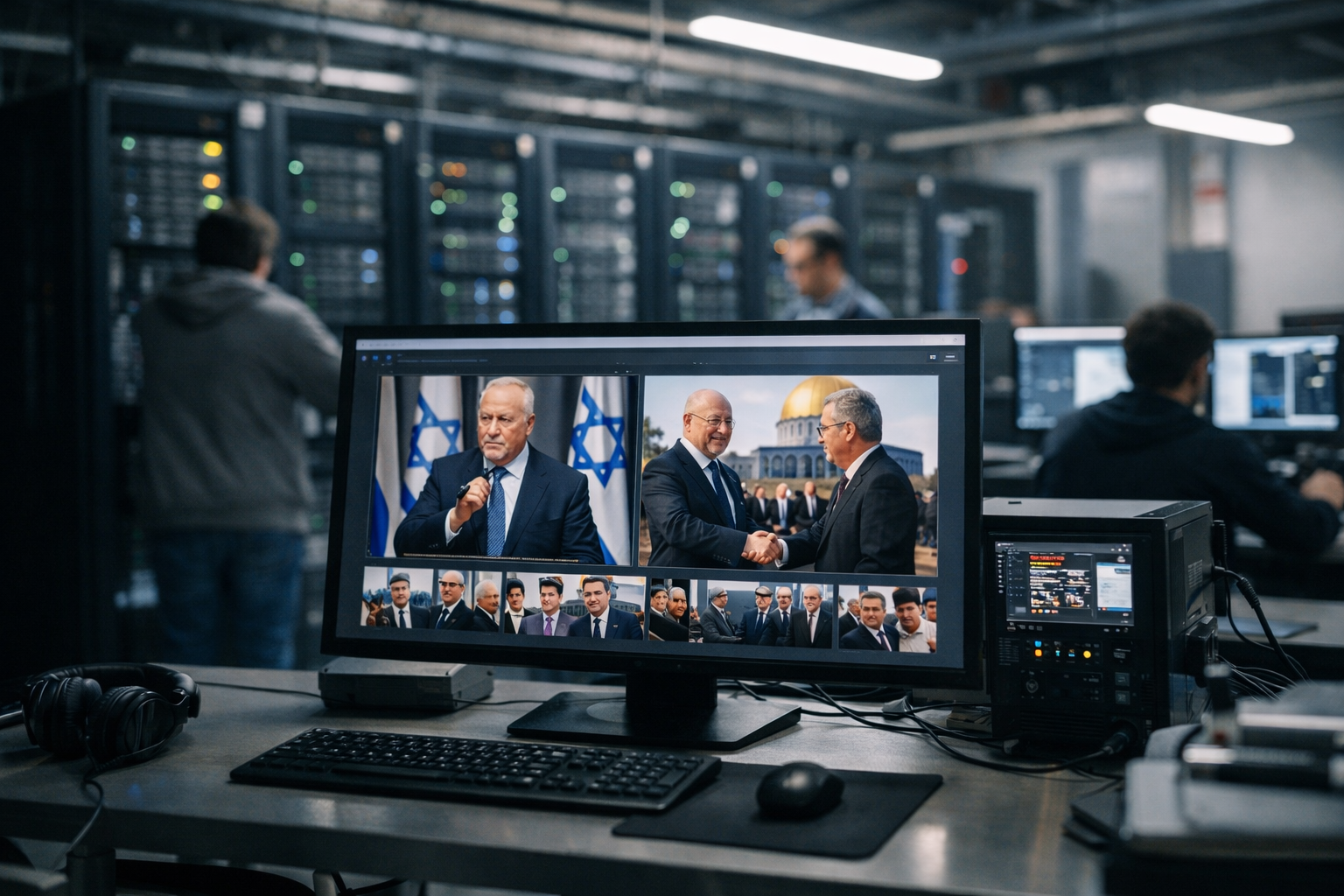
More than 1,097 AI-generated posts. That is the documented volume of synthetic political content published by Israeli politicians on social media platforms in the run-up to national elections, according to a Calcalist investigation into the growing use of generative AI tools inside political campaigns. The number is not a leak or an estimate — it is a traceable count, and it signals something much bigger than a single election cycle: the industrialization of AI-assisted political messaging is already here, and it is moving faster than the regulatory frameworks meant to contain it.
The pattern mirrors concerns emerging across democratic systems worldwide, where generative AI tools are being stress-tested not in labs but in live political environments. What makes the Israeli case notable is the scale and transparency of the data — researchers were able to identify and catalog these posts, offering one of the clearest windows yet into how campaigns are operationalizing AI at volume.
What the Posts Actually Look Like
The AI-generated content spans a range of formats: fabricated images, synthetic video clips, and text posts crafted to mimic organic political speech. Politicians across the spectrum have used these tools to accelerate content output, targeting specific voter demographics with tailored messaging at a pace no human copywriting team could match. Some of the content was disclosed as AI-generated; much of it was not, raising immediate questions about transparency and voter awareness.
The Calcalist report identifies this as a structural shift in how campaigns allocate resources. Rather than investing heavily in traditional media buys or field operations, parties are now able to generate hundreds of individualized or regionally targeted posts with minimal marginal cost. The 1,097-post figure represents only what researchers could confirm — the actual volume of AI-assisted content in circulation is almost certainly higher.

Regulation Is Chasing a Moving Target
Israel currently lacks specific legislation governing the use of AI in political advertising, leaving campaigns operating in a legal gray zone. Disclosure requirements for AI-generated political content are either absent or unenforced at the level of granularity this new wave of content demands. That gap is not unique to Israel — most democracies are scrambling to define rules for synthetic political media before the next major election cycle, not after.
The implications for platform governance are equally unresolved. Social media companies have rolled out varying levels of AI-content labeling, but enforcement is inconsistent, and detection tools have not kept pace with generation tools. As threat intelligence frameworks developed for cybersecurity are increasingly being borrowed to detect influence operations, the line between disinformation defense and political surveillance is becoming harder to draw cleanly.
What the Calcalist data makes undeniable is that AI-powered political content is no longer a hypothetical risk to be managed in advance — it is an active feature of contemporary electioneering. The question regulators and platform trust-and-safety teams now face is not whether to respond, but whether they can move fast enough to matter before the next ballot box opens.