OpenAI has a math problem, and it knows it. The company is now moving to assemble a panel of elite mathematicians to advise on how its models handle complex reasoning — a direct response to the string of high-profile failures that have dogged its most advanced systems. The effort, The Verge reported, reflects a growing internal acknowledgment that raw benchmark scores are not the same thing as actual mathematical competence. That distinction matters enormously as OpenAI pushes its models deeper into scientific research, coding, and finance.
This is the kind of accountability structure the AI industry has been slow to build. OpenAI has faced mounting scrutiny over whether its o-series reasoning models truly understand mathematics or simply pattern-match their way to answers that occasionally look correct. The gap between those two things can be catastrophic in real-world deployments — and it has been, repeatedly. The proposed panel would give working mathematicians a formal role in evaluating model outputs, flagging failure modes, and shaping how OpenAI designs future training and evaluation pipelines. For a company navigating an intensely competitive landscape, it is also a credibility play, coming at a moment when rivals like Google DeepMind are making aggressive claims about their own math-reasoning capabilities. The AI safety arena is increasingly where reputations are won and lost.
Why Math Keeps Breaking AI Models
The core issue is not that large language models cannot produce correct answers to math problems — they often can. The problem is that they fail in unpredictable ways on problems that require multi-step logical rigor, and they do so without signaling uncertainty. A model that confidently states a wrong proof is considerably more dangerous than one that simply says it does not know. OpenAI’s o3 and o4-mini models were marketed heavily on their reasoning improvements, yet independent researchers have documented cases where those models hallucinate intermediate steps in mathematical derivations, sometimes arriving at correct final answers through incorrect logic.
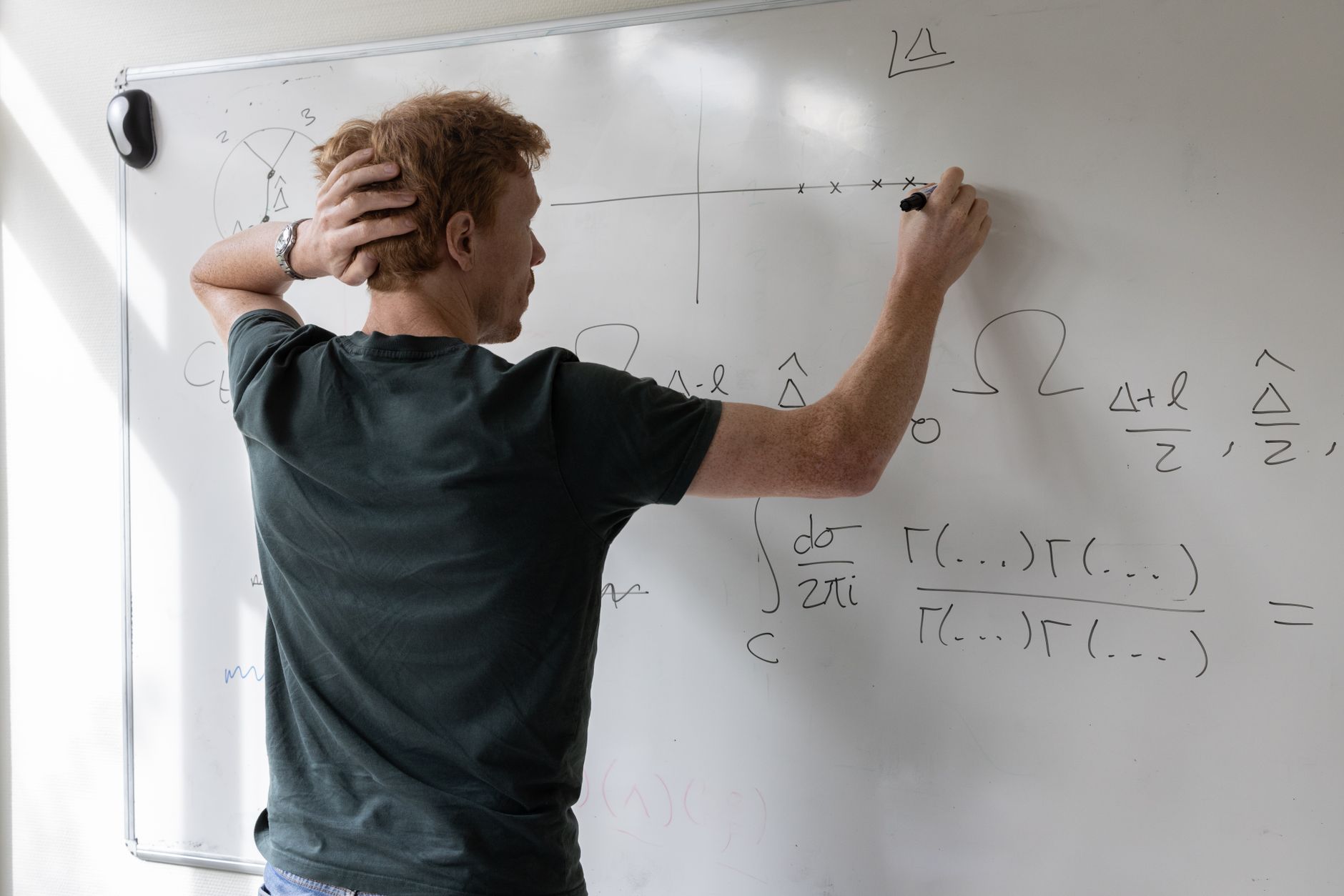
The proposed mathematician panel is designed to address exactly that gap. Rather than relying purely on automated benchmarks like MATH, AIME, or FrontierMath — which measure answer accuracy but not reasoning quality — OpenAI wants human experts who can audit the process, not just the output. That is a meaningful shift in evaluation philosophy. Benchmarks have driven the last two years of reasoning-model development, and they have also driven a fair amount of overfitting. Getting mathematicians into the loop earlier, at the model design and evaluation stage rather than just the press-release stage, could pressure-test claims before they reach users.
What an Advisory Panel Can and Cannot Fix
The practical impact of an advisory panel depends entirely on how much authority it actually carries. If mathematicians are brought in to review outputs after training decisions have already been made, the panel becomes a reputation shield rather than a corrective mechanism. OpenAI has not yet disclosed the panel’s exact mandate, the names of any participants, or how its recommendations would be incorporated into model development cycles — all details that will determine whether this is structural reform or institutional optics.
What is clear is that the stakes are rising fast. OpenAI has been pitching its models to enterprises in sectors where mathematical accuracy is not optional — quantitative finance, pharmaceutical research, materials science, and software verification among them. A single confident wrong answer in those contexts can cascade into real harm. The company’s move to bring in domain experts echoes a broader pattern across the AI industry, where the limits of self-evaluation are becoming obvious to everyone. As Future Wire has tracked, concerns about AI harm across multiple domains are pushing companies toward external oversight structures they previously resisted. Whether OpenAI’s mathematician panel ends up with genuine teeth or becomes a talking point is the question worth watching.