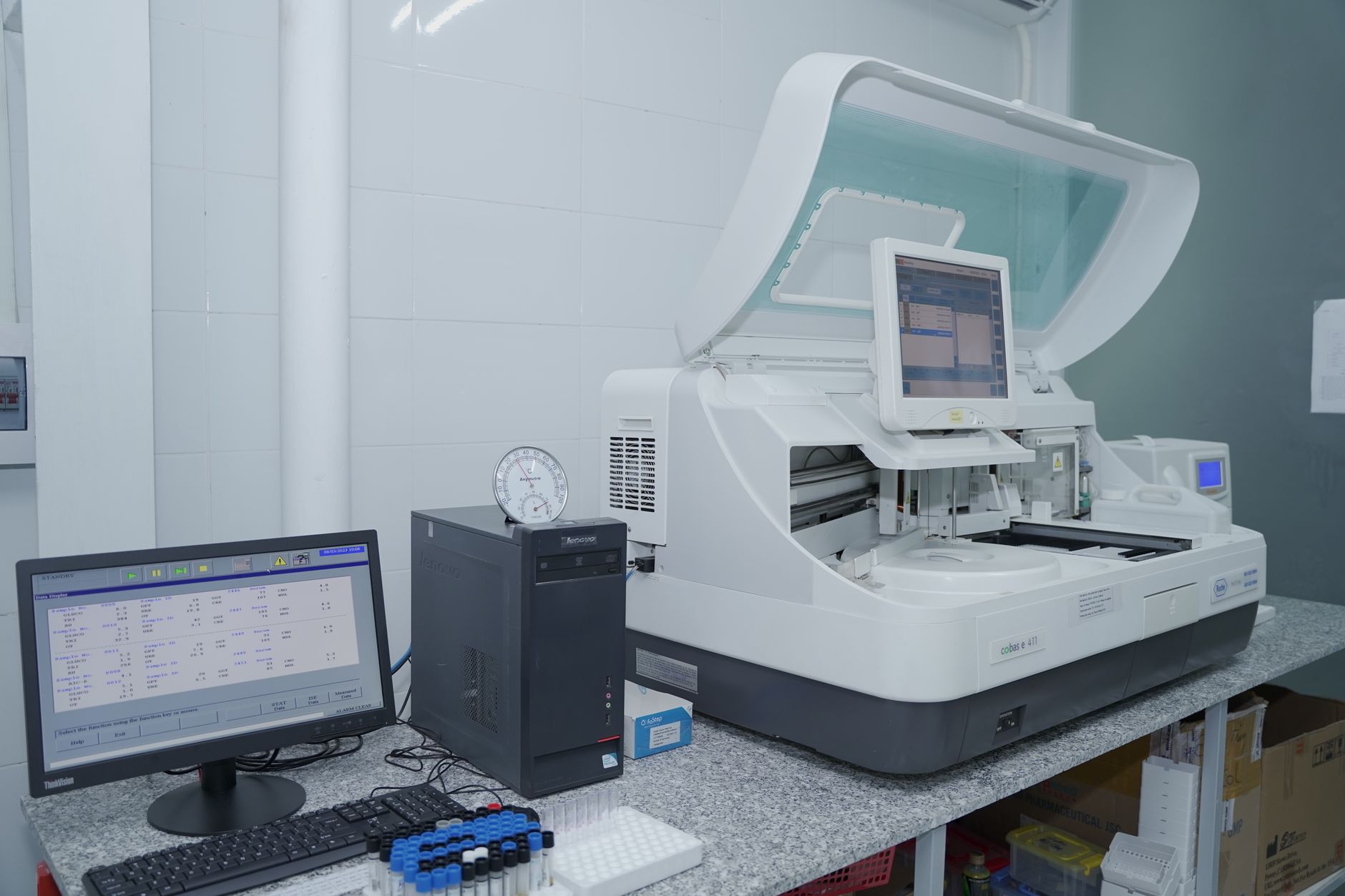
Anthropic hasn’t finished naming its biology operation, and it’s already claiming a breakthrough. The AI safety company disclosed this week that its nascent wet lab — stood up with almost no public fanfare — has produced a significant scientific finding, according to a TechCrunch report published September 23. The company hasn’t specified what the discovery is, but the speed at which it arrived is the story: the lab is barely off the ground. For anyone tracking how seriously AI companies are pushing into drug discovery and life sciences, this is a signal worth paying attention to — right alongside efforts like Toronto’s cancer moonshot, which is betting $2.5 billion on ending the disease within a generation.
Anthropic CEO Dario Amodei shared details in an X announcement confirming the lab’s early result and hinting at its ambitions for AI-accelerated biological research.
A Lab Built in Quiet, Moving Fast
CNBC first reported that Anthropic had biology lab setup details, noting the company was ramping an AI drug program alongside its physical research infrastructure — an unusual combination for a company whose primary product is a large language model. Most AI labs contract out wet-lab work or partner with pharma. Anthropic is apparently doing some of it itself, which implies a level of vertical ambition that goes well beyond prompt engineering and benchmark chasing.
The setup is notable partly because of how quietly it happened. There was no splashy launch event, no named research director announced to the press, no partnership deck. The lab materialized, ran experiments, and — according to Anthropic — produced something worth flagging publicly. Whether that discovery involves a novel protein interaction, a candidate molecule, or something further upstream in the research pipeline remains unspecified. Anthropic has not released a preprint or technical writeup as of publication time.
Why This Is Bigger Than One Finding
The real question isn’t what Anthropic found — it’s what this model of research looks like at scale. If an AI company can spin up a biology lab, integrate its own frontier models into experimental design and analysis, and surface meaningful results within months, the traditional pharmaceutical R&D timeline starts to look structurally vulnerable. Drug discovery historically takes over a decade and costs billions of dollars per approved therapy. Anthropic is implicitly betting that Claude-class models can collapse parts of that cycle dramatically.
That bet is landing at a complicated moment for AI governance. The broader industry is navigating intense scrutiny over where AI decision-making should and shouldn’t be trusted — including in high-stakes scientific domains. Regulatory frameworks for AI in drug discovery remain thin, and as recruit top mathematicians illustrates, frontier labs are increasingly building domain-expert pipelines in-house rather than waiting for academic collaboration. Anthropic doing the same in biology suggests a broader pattern: the most capable AI companies aren’t just building tools anymore. They’re running the experiments themselves.
Anthropic has not said when it will disclose the specific finding or whether it will publish through a peer-reviewed journal. But the disclosure itself — that something significant has already emerged — is clearly intentional. The company is making a case that its models are not just impressive on benchmarks but useful in the actual world of scientific discovery. That case will need receipts. For now, the biology lab is putting them together.