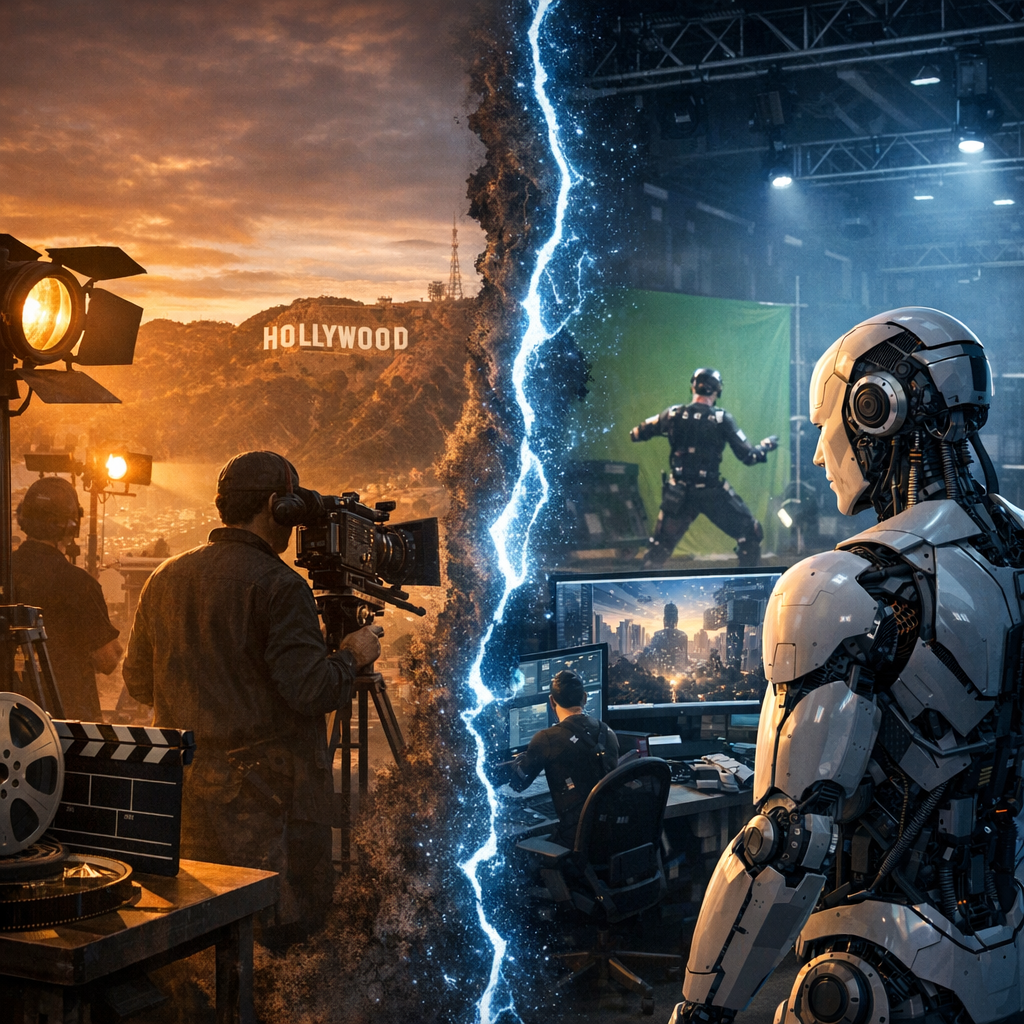
In recent years, Hollywood’s relationship with artificial intelligence has shifted from cautious curiosity to enthusiastic embrace, even as broader concerns about labor, creativity, and control continue to shape the debate. A recent Wired article, “Thank You for Generating With Us: Hollywood’s AI Acolytes Stay on the Hype Train,” highlights how a growing group of industry insiders is doubling down on the technology despite lingering skepticism from writers, actors, and other creatives.
Studio executives, producers, and technology advocates increasingly frame generative AI as an inevitable evolution of filmmaking rather than a disruptive threat. According to Wired, these proponents argue that AI tools can accelerate workflows, reduce production costs, and unlock new forms of storytelling. From script development to visual effects, the promise is not replacement but augmentation—though that distinction remains contested.
The article points to a widening cultural divide within the industry. On one side are those who see AI as a pragmatic solution to rising costs and competitive pressures in a streaming-saturated market. On the other are guild members and artists who fear that efficiency gains could translate into fewer jobs, diminished creative control, and the erosion of authorship. Labor disputes in recent years, particularly involving writers and actors, have already forced studios to confront these tensions, with AI emerging as one of the most contentious issues at the bargaining table.
Despite these concerns, AI advocates in Hollywood are not retreating. Instead, as Wired reports, they are becoming more organized and vocal, hosting demonstrations, investing in startups, and promoting success stories that cast the technology in an optimistic light. The language surrounding AI adoption often emphasizes collaboration—positioning machines as creative partners rather than replacements—yet critics argue that such framing can obscure the underlying economic incentives.
Another factor sustaining momentum is the broader tech industry’s influence. Venture capital investment and partnerships between studios and AI firms continue to expand, reinforcing a narrative of inevitability. For executives navigating a rapidly changing entertainment landscape, the pressure to experiment with new tools is difficult to ignore, particularly as global competitors explore similar technologies.
Still, the long-term implications remain uncertain. Questions about copyright, data usage, and artistic ownership have yet to be fully resolved, and the regulatory environment is evolving slowly. Meanwhile, audience reception to AI-assisted content is still largely untested, adding another layer of unpredictability.
What emerges from Wired’s reporting is not a consensus but a coexistence of competing visions. Hollywood’s AI proponents are pressing forward with confidence, buoyed by technological optimism and economic incentives. At the same time, resistance from within the creative community ensures that the debate remains unsettled. As the industry continues to experiment, the balance between innovation and preservation of human artistry is likely to define the next phase of entertainment’s evolution.