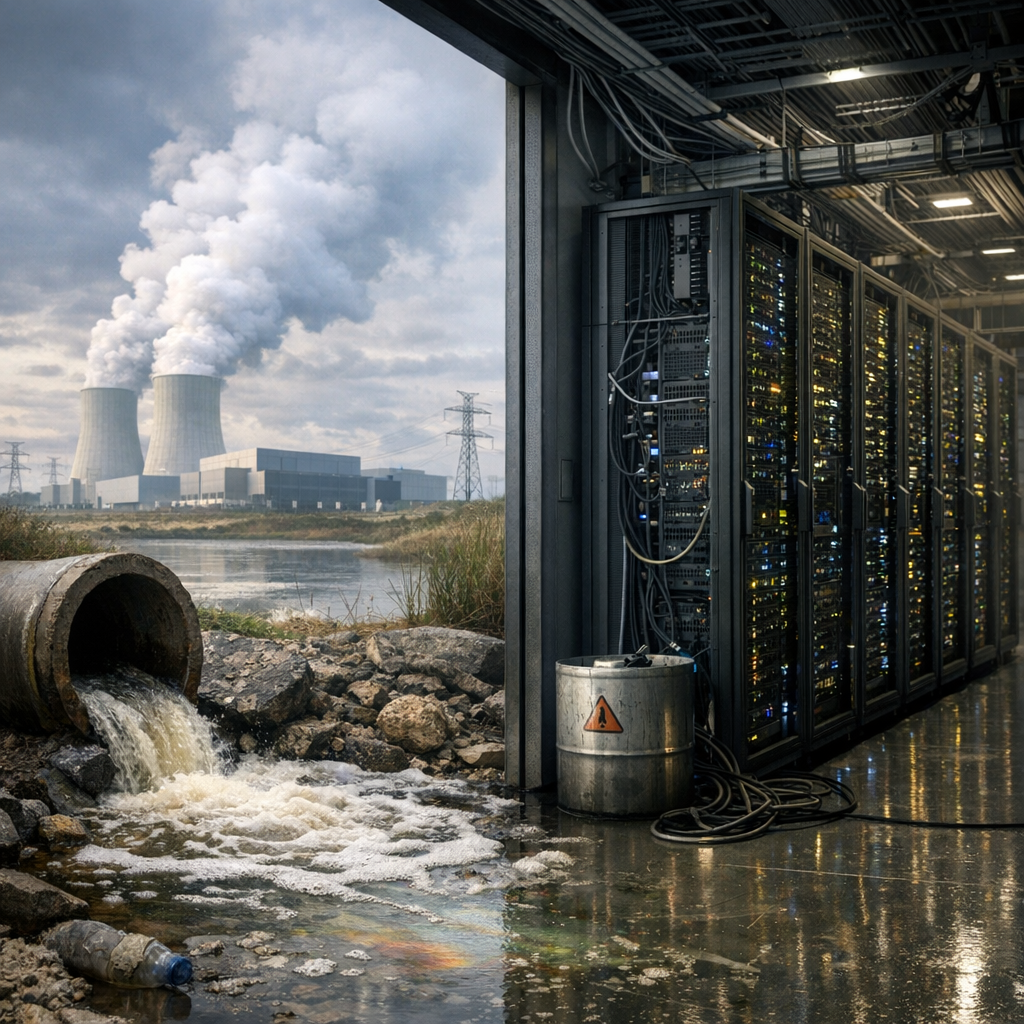
Growing concern over the environmental footprint of digital infrastructure is drawing attention to an overlooked source of contamination: data centres. As highlighted in the article “Data centre infrastructure has a PFAS pollution problem,” published by Innovation News Network, the rapid expansion of these facilities may be contributing to the spread of per- and polyfluoroalkyl substances (PFAS), a class of persistent chemicals increasingly linked to health and environmental risks.
Data centres, which underpin cloud computing and digital services, rely on complex infrastructure to ensure continuous operation. Among the key systems are fire suppression technologies and cooling mechanisms, both of which have historically incorporated PFAS-based materials. These substances are valued for their resistance to heat and chemical degradation, but those same properties make them highly persistent in the environment.
The Innovation News Network report notes that aqueous film-forming foams (AFFF), commonly used in fire suppression systems, are a primary concern. These foams often contain PFAS compounds that can leach into soil and groundwater during testing, maintenance, or accidental discharge. Once released, PFAS are difficult to break down and can accumulate over time, posing potential risks to ecosystems and human health.
Cooling systems present another pathway for contamination. Some industrial cooling fluids and components have been manufactured using PFAS, raising the possibility of chemical release through leaks or disposal. While not all data centres use PFAS-containing materials, the scale of infrastructure deployment means even limited use could have widespread environmental consequences.
The issue is gaining urgency as governments and regulators around the world move to restrict PFAS usage. In the European Union and parts of the United States, regulatory frameworks are tightening, reflecting growing scientific consensus around the risks associated with long-term exposure. For data centre operators, this introduces both compliance challenges and reputational considerations.
Industry responses are beginning to emerge. Some operators are exploring PFAS-free alternatives for fire suppression and investing in system redesigns that reduce reliance on hazardous chemicals. However, transitioning away from established technologies can be complex and costly, particularly for facilities designed under older standards.
The broader context is the accelerating expansion of data centre capacity driven by artificial intelligence, cloud computing, and global digitalisation. As demand rises, so too does scrutiny of the environmental impacts of supporting infrastructure, from energy consumption to chemical use.
The findings outlined in Innovation News Network underscore a growing tension within the technology sector: balancing the benefits of digital growth with the environmental costs embedded in its physical foundations. Addressing PFAS contamination risks in data centres will likely require coordinated action among operators, regulators, and manufacturers, as well as increased transparency around materials and practices.
As awareness builds, the issue may become a defining test of how the digital economy confronts emerging environmental challenges tied not to its outputs, but to the infrastructure that makes them possible.