Debates over suspending gasoline taxes have resurfaced in periods of economic strain, often framed as a straightforward way to ease pressure on household budgets. But as explored in the Wired article “Why Gas Tax Holiday Is Risky Idea,” policy experts warn that such measures may offer limited relief while introducing longer-term economic and infrastructure risks.
At first glance, a temporary suspension of gas taxes appears politically attractive. Fuel costs are highly visible to consumers, and even modest price shifts can influence public sentiment. Proposals at both state and federal levels have aimed to temporarily remove fuel taxes to counter rising prices, particularly during periods of inflation or geopolitical disruption affecting energy markets.
However, economists and transportation analysts point out that the intended savings for consumers may not fully materialize. Gasoline prices are shaped by global oil markets, refining capacity, and distribution costs, meaning tax reductions do not necessarily translate into equivalent price drops at the pump. Retailers and suppliers may absorb some of the benefit, diluting the impact on consumers.
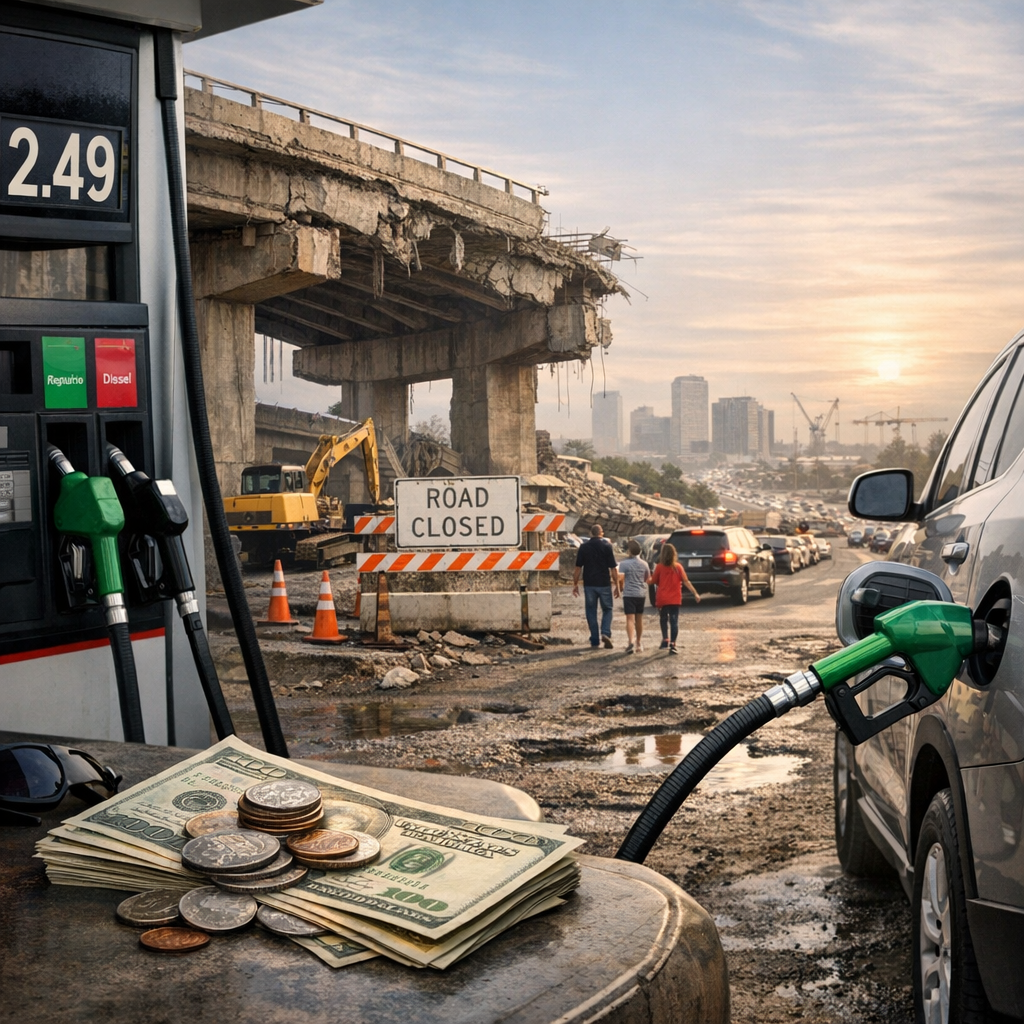
More critically, gas taxes serve as a primary funding source for transportation infrastructure, including road maintenance, bridge repairs, and public transit systems. Suspending these taxes, even temporarily, can create funding gaps that are difficult to close. Infrastructure budgets are often planned years in advance, and unexpected revenue shortfalls can delay essential projects or shift costs onto future taxpayers.
The Wired article also notes that reducing gas taxes can undermine broader policy goals related to energy consumption and climate change. Lower fuel prices may encourage increased driving, leading to higher emissions at a time when policymakers are attempting to promote energy efficiency and reduce reliance on fossil fuels. In that sense, a gas tax holiday can work at cross-purposes with environmental and long-term sustainability objectives.
Furthermore, critics argue that such policies are poorly targeted. Higher-income households, which tend to drive more and own less fuel-efficient vehicles, may capture a disproportionate share of the benefits. Lower-income families, who might rely more on public transportation or drive less frequently, may see comparatively limited relief.
Some policymakers have proposed alternative approaches, such as direct financial assistance or targeted rebates, which can more effectively support households without undermining infrastructure funding. Others suggest investing in public transit and energy efficiency measures to address systemic challenges rather than offering temporary price relief.
While the appeal of immediate action during periods of rising costs is understandable, the analysis presented in Wired underscores the complexity of fuel pricing and infrastructure finance. A gas tax holiday, though politically expedient, risks trading short-term visibility for long-term consequences, raising questions about whether it ultimately serves the public interest.