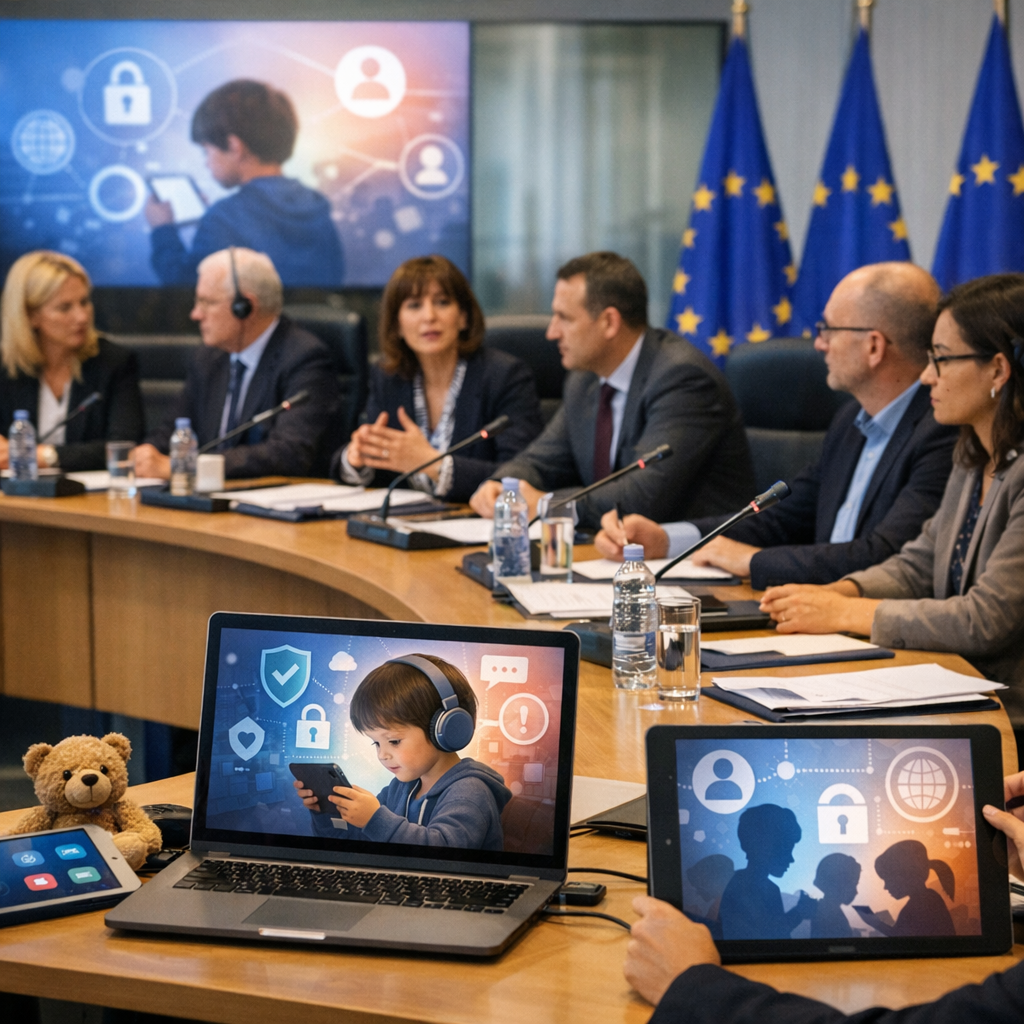
The European Commission has intensified its focus on protecting minors in digital spaces, convening a second meeting of a special advisory panel tasked with shaping policy recommendations for Commission President Ursula von der Leyen. According to an update published on the European Commission’s Digital Strategy website titled “Second meeting of the Special Panel to advise President von der Leyen on child online safety,” the gathering brought together experts from across sectors to assess emerging risks and refine proposed safeguards.
The panel, which includes academics, child protection specialists, technology representatives, and policymakers, is part of a broader effort by the Commission to respond to mounting concern over the impact of digital platforms on young users. Discussions at the second meeting concentrated on practical measures to mitigate exposure to harmful content, reduce addictive platform design, and ensure that digital services prioritize minors’ well-being by default.
Participants examined the effectiveness of existing European Union regulations, including the Digital Services Act, and considered how enforcement and future legislation could be strengthened. Particular attention was given to age verification systems, transparency requirements for platforms, and the role of algorithms in amplifying potentially harmful material. The panel also explored how to balance safety with rights such as privacy and freedom of expression, a persistent tension in digital governance.
The Commission signaled that insights from the group will inform upcoming policy initiatives, as Brussels seeks to position itself as a global standard-setter in online safety. The involvement of diverse stakeholders reflects an attempt to ground policy in both technical feasibility and child welfare expertise, though disagreements remain over how far regulation should extend into platform design and business models.
The meeting also underscored the need for coordinated action among EU member states, industry actors, and civil society. While companies have introduced voluntary tools such as parental controls and content filters, regulators argue these measures are inconsistent and insufficient. The panel is expected to continue evaluating whether stricter obligations, including standardized safety-by-design principles, are required.
As concerns over social media’s impact on mental health and exposure to harmful material continue to grow, the Commission’s initiative signals a more assertive regulatory posture. The recommendations that emerge from the panel are likely to shape the next phase of European digital policy, with implications not only for companies operating within the EU but also for global debates about child online safety.