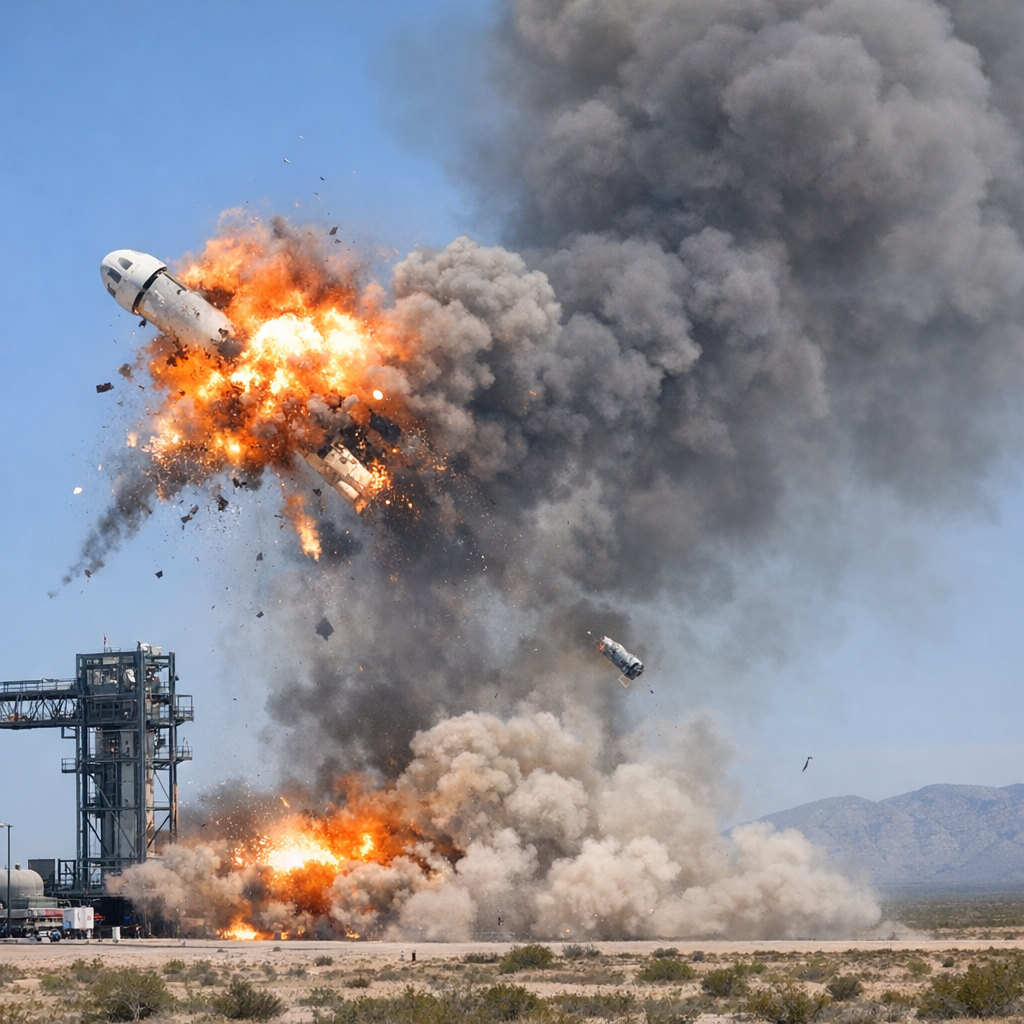
A rocket developed by Jeff Bezos’s aerospace company Blue Origin suffered a catastrophic failure during testing, marking one of the most significant setbacks in the company’s efforts to compete in the increasingly crowded commercial space industry. The incident, first detailed in Wired’s article “Blue Origin Rocket Explodes in Major Setback,” raises fresh questions about the pace and reliability of Blue Origin’s development programs as rivals continue to accelerate their launch capabilities.
According to reporting by Wired, the explosion occurred during a critical phase of testing, destroying hardware and forcing the company to reassess elements of its design and safety protocols. While no injuries were reported, the loss of the vehicle represents a substantial financial and technical blow. Blue Origin had been working to refine its next-generation launch systems, which are intended not only for satellite deployment but also to support broader ambitions, including crewed missions and lunar exploration.
The company has yet to release a comprehensive public explanation of the cause, but early indications suggest a failure within the propulsion system or associated ground support infrastructure. Such failures, while not uncommon in rocket development, can significantly delay timelines, especially when they involve core components that require redesign or extensive investigation.
The setback comes at a time when Blue Origin is under growing pressure to demonstrate progress. Competitors such as SpaceX have established a steady cadence of launches and achieved key milestones in reusability, while United Launch Alliance continues to serve government and commercial clients with established systems. Blue Origin, in contrast, has faced criticism for slower development cycles and limited orbital launch activity.
In its coverage, Wired notes that this incident could have ripple effects beyond a single program. Blue Origin’s broader ambitions—including participation in NASA’s Artemis program and the development of heavy-lift launch capabilities—depend on proving reliability and meeting increasingly tight schedules. Any prolonged delay could complicate partnerships and erode confidence among customers and institutional stakeholders.
Despite the setback, the company is likely to frame the event as part of the iterative process inherent to advanced aerospace engineering. Explosions and test failures have historically played a role in refining rocket designs, particularly during early or transitional phases of development. However, the scale of the loss and the competitive context in which it occurs may amplify its impact.
Blue Origin has emphasized safety as a guiding principle, particularly in its human spaceflight initiatives. The latest failure will likely intensify scrutiny from regulators and industry observers, especially as the company works to expand its portfolio of crewed and uncrewed missions. Investigations into the incident are expected to proceed in collaboration with federal authorities, with findings that could inform both internal practices and broader industry standards.
As Wired’s reporting underscores, the explosion represents more than a technical malfunction; it is a moment that could shape the trajectory of one of the space industry’s most closely watched companies. Whether Blue Origin can recover quickly and translate lessons learned into more resilient systems will be a key measure of its ability to remain competitive in an era defined by rapid innovation and high stakes.