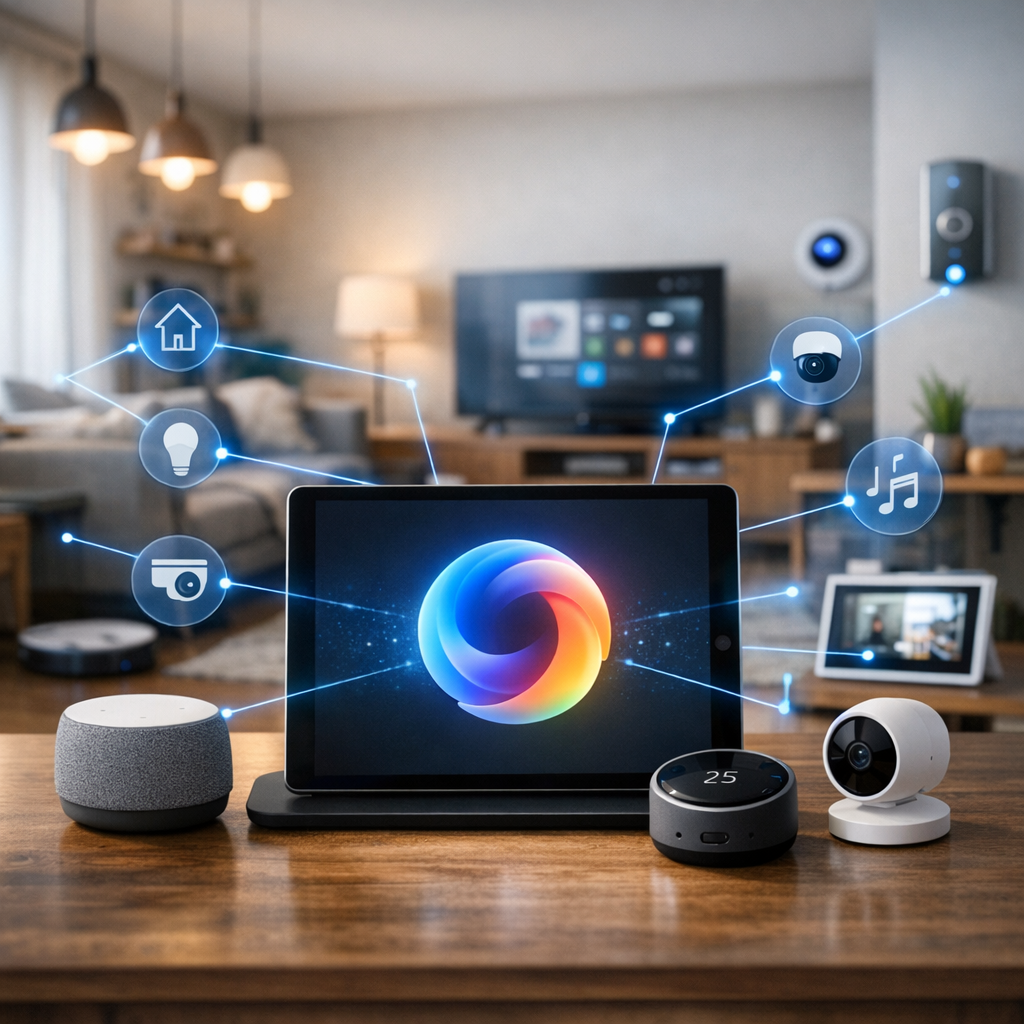
Google is preparing to extend its Gemini artificial intelligence platform beyond phones and computers into the domestic sphere, according to a report published by StartupNews.fyi titled “Google’s Gemini AI Coming to Every Home via Free Blueprints.” The initiative signals a broader strategic shift toward making advanced AI systems a foundational layer of everyday life, particularly inside connected households.
The report describes a plan centered on “free blueprints,” which appear to be standardized frameworks that developers, device manufacturers, and potentially consumers could use to integrate Gemini-powered capabilities into home environments. Rather than requiring proprietary hardware or tightly controlled ecosystems, the approach suggests Google is aiming for wide compatibility and rapid adoption by lowering technical and financial barriers.
At its core, the effort reflects an evolution in how AI is deployed. Instead of existing as a standalone assistant accessed through smartphones or web interfaces, Gemini would function as a distributed intelligence layer embedded across appliances, speakers, security systems, and other connected devices. This could allow for more coordinated automation, where systems communicate seamlessly to manage tasks such as energy use, scheduling, home monitoring, and personalized assistance.
The emphasis on free blueprints is particularly notable in a competitive landscape where major technology companies are vying to define the future of consumer AI. By offering open or low-cost integration tools, Google may be attempting to accelerate ecosystem growth in a way that mirrors the early expansion of Android. Such a move could attract developers and hardware partners seeking flexibility, while also positioning Gemini as a default standard within smart home infrastructure.
However, the approach raises questions about data privacy, security, and interoperability. Embedding AI deeply into household systems would require continuous data flows from personal environments, increasing the stakes for how information is collected, stored, and used. Regulators and consumer advocates are likely to scrutinize how Google addresses these concerns, especially as AI capabilities become more autonomous and predictive.
There are also practical challenges. While the concept of unified, AI-driven home management is not new, adoption has historically been fragmented due to incompatible platforms and user hesitation around complexity. Google’s success will depend on whether its blueprint model can meaningfully simplify integration without sacrificing reliability or user control.
The report from StartupNews.fyi suggests that Google views this initiative as part of a longer-term effort to embed AI into everyday infrastructure rather than treating it as an optional add-on. If implemented effectively, it could mark a shift in how consumers interact with technology in their homes, moving from discrete tools to a more ambient, continuously operating system.
As competition intensifies among major AI developers, the race is increasingly about not just building powerful models, but ensuring those models are present wherever users live and work. Google’s Gemini expansion, as described in the StartupNews.fyi article, indicates that the home may become the next critical frontier in that contest.