Researchers have developed a new generation of soft, stretchable wearable technology enhanced by artificial intelligence, promising more accurate and continuous health monitoring, according to an article titled “AI-powered stretchable patch with advanced algorithms improves health monitoring” published by Tech Xplore.
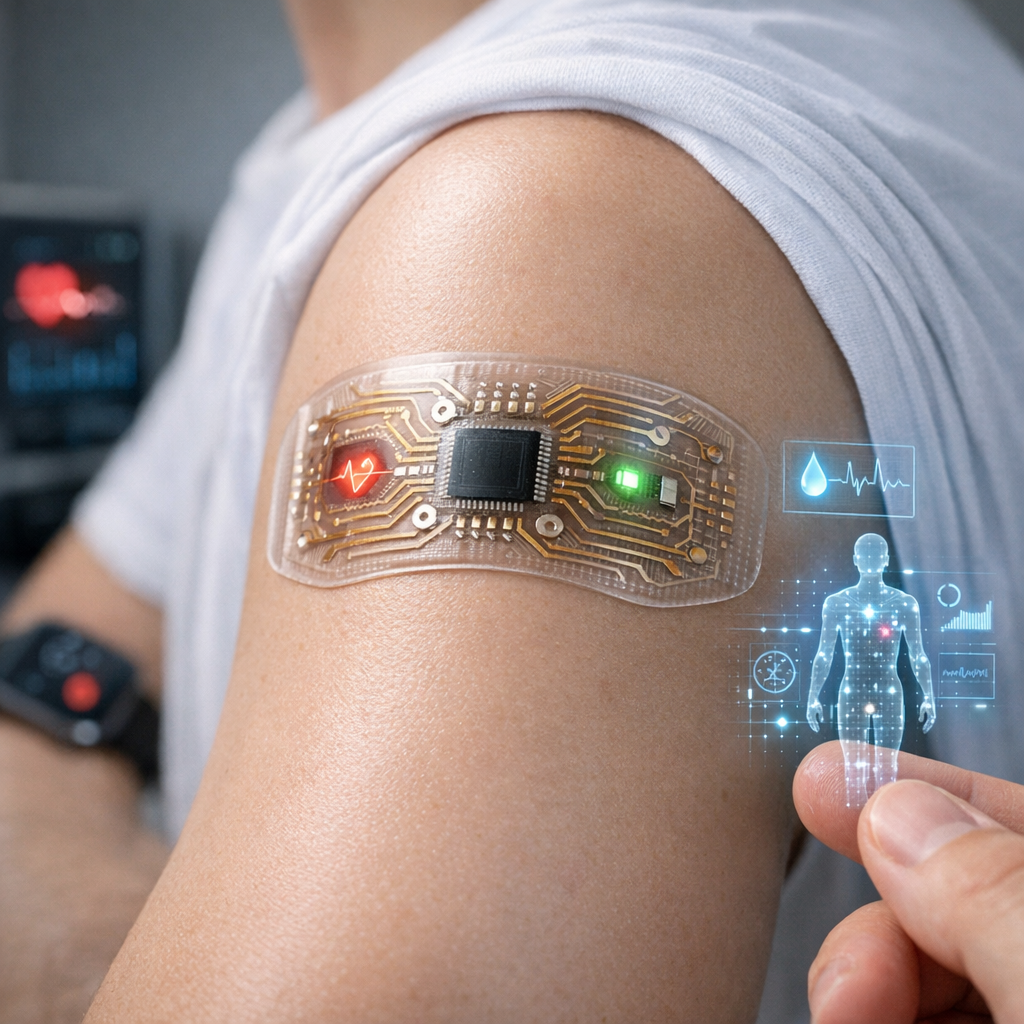
The innovation centers on a flexible electronic patch designed to conform closely to the human body while collecting physiological data such as heart rate, muscle activity, and movement patterns. Unlike conventional rigid sensors, the stretchable device maintains reliable skin contact even during motion, reducing signal noise and improving data quality. What distinguishes this development is the integration of machine learning algorithms that can interpret complex biological signals in real time.
The research team focused on overcoming a persistent challenge in wearable health technology: extracting meaningful insights from large volumes of noisy, variable data. Stretchable sensors are particularly susceptible to signal distortion due to bending and stretching. To address this, the scientists embedded AI-driven models capable of filtering out artifacts and distinguishing between true physiological changes and mechanical interference.
According to the Tech Xplore report, the algorithms were trained to recognize patterns across multiple data streams simultaneously, enabling the system to deliver more precise readings than traditional single-sensor devices. This multi-modal approach allows the patch not only to monitor vital signs but also to detect subtle physiological changes that could indicate early stages of illness or fatigue.
The implications for healthcare are significant. Continuous, real-time monitoring could allow clinicians to track patients remotely with greater confidence, potentially reducing hospital visits and enabling earlier intervention. The technology may also find applications in sports science, rehabilitation, and workplace safety, where accurate tracking of physical exertion and recovery is critical.
Despite its promise, the system is still in the experimental stage. Researchers noted that further validation is needed across diverse populations and real-world conditions to confirm reliability and scalability. Battery life, long-term durability, and data privacy are additional considerations that will need to be addressed before widespread adoption.
The work reflects a broader trend in wearable technology, where advances in materials science are increasingly paired with sophisticated data processing techniques. As highlighted in the Tech Xplore article, the combination of flexible electronics and AI-driven analytics could redefine how health data is collected and interpreted, moving toward more personalized and proactive models of care.
While challenges remain, the development signals a step forward in integrating intelligent systems into everyday medical monitoring, with the potential to shift healthcare from reactive treatment to continuous, data-informed prevention.