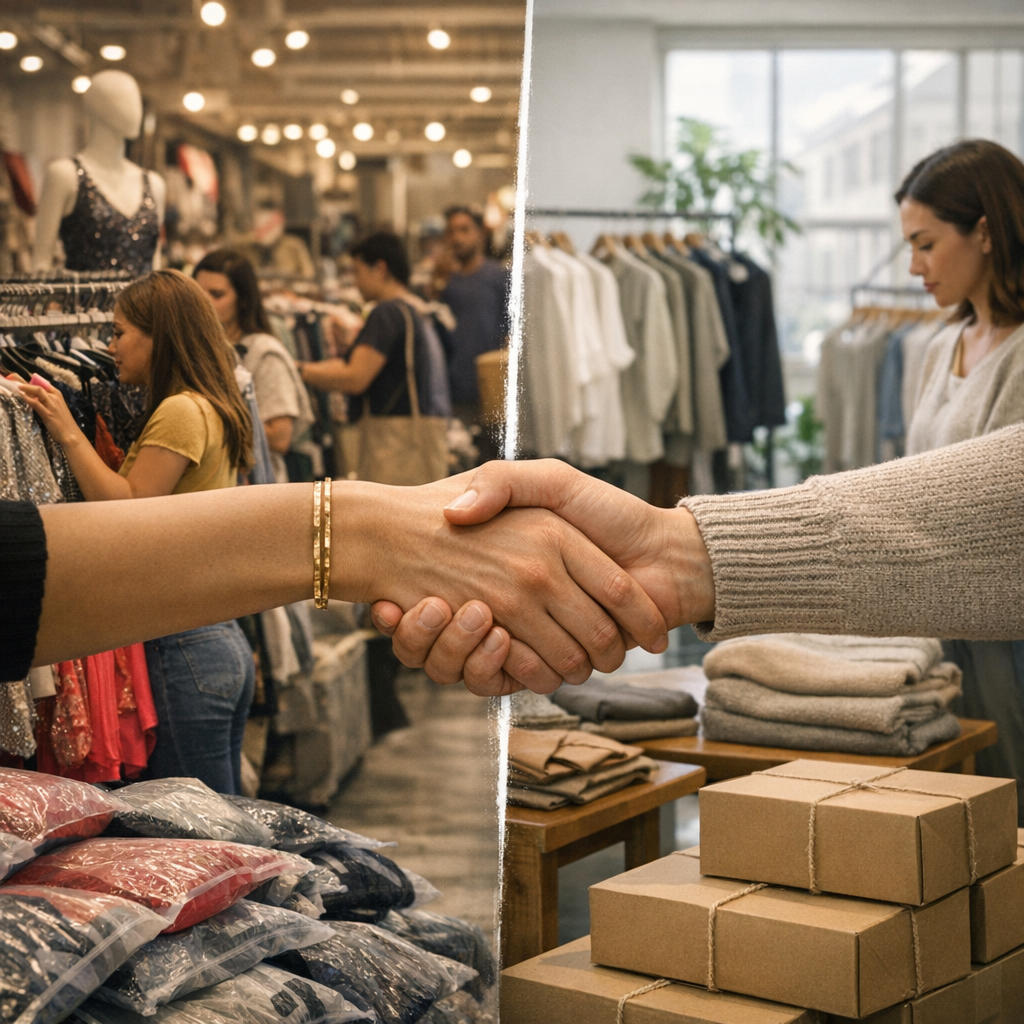
In its article “Made in China? Why Shein Bought Everlane,” Wired examines a deal that signals a striking shift in the global fashion industry: the acquisition of Everlane, a U.S. brand long associated with ethical sourcing and transparent pricing, by Shein, the fast-fashion giant known for its vast scale and controversial labor practices. The move has drawn scrutiny not only for its business implications but also for what it suggests about evolving consumer expectations and the convergence of once-opposing retail models.
Wired reports that the acquisition reflects Shein’s ambition to diversify beyond its ultra-fast, low-cost production model and move into higher-margin, brand-driven segments of the market. Everlane, founded on principles of sustainability and supply chain transparency, offers an established customer base and a reputation that Shein has struggled to cultivate independently. By absorbing such a brand, Shein appears to be attempting to reposition itself amid increasing regulatory pressure and growing consumer awareness around environmental and labor issues.
At the same time, the deal raises fundamental questions about whether Everlane’s identity can survive under new ownership. For years, Everlane marketed itself on “radical transparency,” publishing detailed cost breakdowns and promoting ethical factory conditions. Critics argue that these values are difficult to reconcile with Shein’s business model, which relies on rapid production cycles, data-driven design, and a sprawling network of suppliers that has often been opaque to outside observers.
Wired’s reporting underscores that the acquisition may reflect less of a transformation in Shein’s practices and more of a strategic hedging. By maintaining Everlane as a distinct brand, Shein could potentially appeal to more conscientious consumers without making sweeping changes to its core operations. This dual-track approach mirrors broader trends in the fashion industry, where conglomerates often manage portfolios that span both luxury and mass-market labels, each targeting different demographics with tailored messaging.
The transaction also highlights the shifting geography of influence in global retail. Once seen primarily as a low-cost manufacturer for Western brands, China has become a dominant force in shaping consumer trends and controlling supply chains. Shein’s rise has exemplified this shift, leveraging technological integration and logistical efficiency to achieve unprecedented speed and scale. The acquisition of a Western brand like Everlane marks a new phase, in which Chinese companies are not only producing goods but also acquiring cultural capital and brand equity in Western markets.
Regulatory scrutiny is likely to intensify in response to the deal. Lawmakers in the United States and Europe have already raised concerns about labor practices, environmental impact, and data privacy related to Shein’s operations. Bringing Everlane under its umbrella may invite closer examination of how the combined entity handles sourcing disclosures, sustainability claims, and marketing practices.
For consumers, the acquisition presents a more ambiguous picture. Some may welcome the possibility that Shein could adopt more sustainable practices by integrating Everlane’s standards. Others may see the move as a dilution of Everlane’s original mission, compromising a brand that once differentiated itself by challenging industry norms.
As Wired suggests, the deal encapsulates a broader tension within the fashion world: the collision between speed and sustainability, scale and accountability. Whether Shein’s purchase of Everlane ultimately represents a meaningful shift or merely a strategic rebranding effort will depend on how the company navigates these competing pressures in the years ahead.