A report published by Wired, titled “Madison Square Garden’s Celebrity Database Shows the Reach of Its Surveillance System,” offers a revealing look at how one of the world’s most prominent entertainment companies has built and deployed a sophisticated facial recognition system, raising new concerns about privacy, corporate oversight, and the boundaries of surveillance in public spaces.
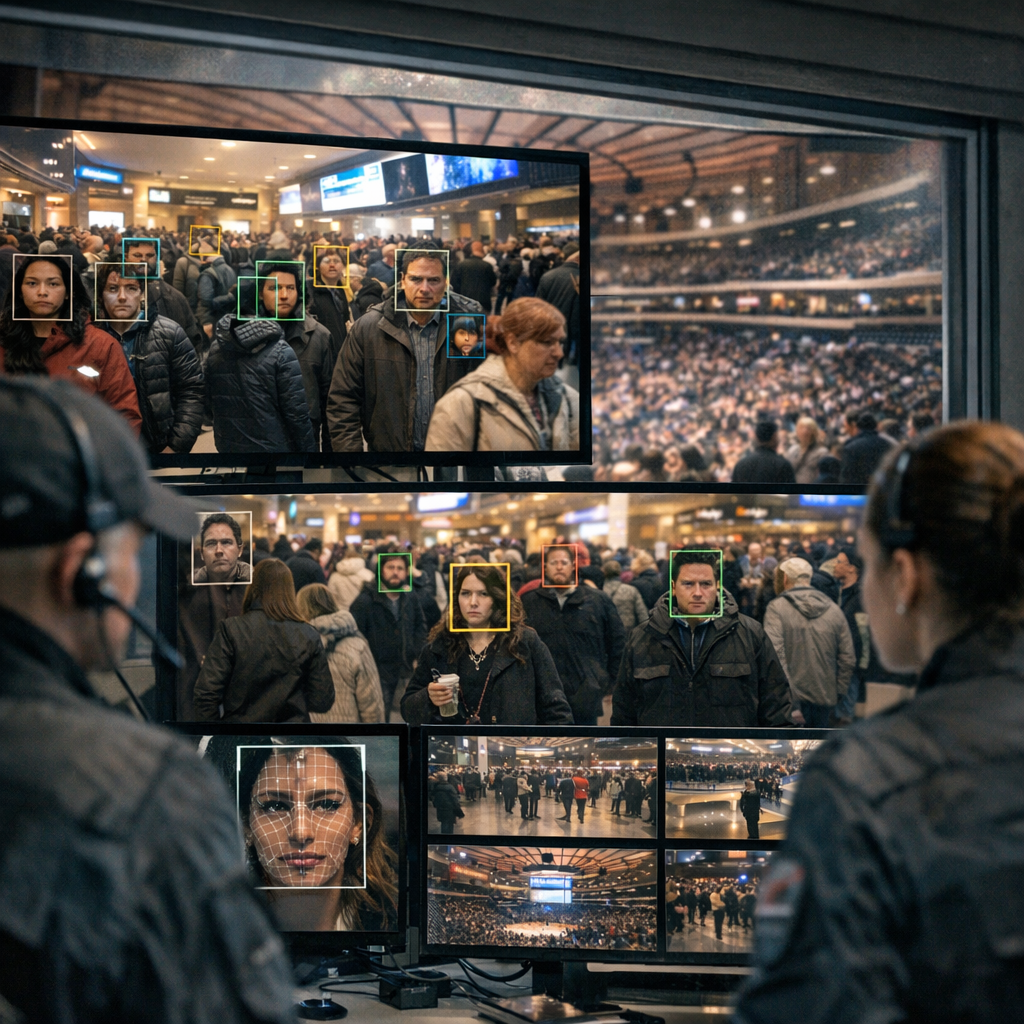
According to the Wired investigation, Madison Square Garden Entertainment has developed an internal database that includes high-profile figures such as athletes, musicians, influencers, and media personalities. The system is designed to identify individuals entering venues owned by the company, which include Madison Square Garden and Radio City Music Hall. While the technology has been publicly justified as a measure for security and operational efficiency, the breadth and nature of the database suggest a more expansive use that extends beyond conventional safety concerns.
The existence of a “celebrity watch list” highlights how biometric surveillance is evolving in private-sector settings. Unlike government-run systems, which are subject to at least some regulatory scrutiny, privately operated facial recognition networks occupy a more ambiguous legal space. Experts cited in the Wired report note that such systems can be deployed with relatively little transparency, leaving the public largely unaware of how data is collected, stored, and used, as also discussed by the Federal Trade Commission’s guidance on biometric privacy.
Madison Square Garden Entertainment has previously faced criticism for its use of facial recognition technology, particularly after reports surfaced that it had used the system to deny entry to certain individuals, including attorneys involved in litigation against the company, as reported by The New York Times. That controversy prompted investigations by state officials and calls for tighter regulation of biometric surveillance in commercial venues. The newly reported database adds another layer to these concerns, suggesting that the company’s capabilities may be broader and more deeply embedded than previously understood.
Privacy advocates argue that the inclusion of celebrities and other recognizable figures in such a system could have a chilling effect, normalizing constant monitoring in spaces traditionally considered public or semi-public. While celebrities may have a higher public profile, critics contend that creating targeted databases of identifiable individuals risks establishing a precedent that could easily extend to the general population, a concern echoed by organizations like the ACLU’s work on facial recognition.
The Wired article also raises questions about data accuracy and consent. Facial recognition technology has been shown in various studies to have uneven performance across different demographic groups, potentially leading to misidentification, including findings from the National Institute of Standards and Technology (NIST). In a high-traffic environment like a major arena, even a small margin of error could result in unjustified denial of entry or heightened scrutiny for innocent attendees.
In response to mounting scrutiny, lawmakers in New York and other jurisdictions have begun considering legislation to limit or regulate the use of biometric technologies in privately owned spaces open to the public, similar to broader policy discussions outlined in the Brookings Institution’s analysis of biometric regulation. However, as the Wired report makes clear, the pace of technological deployment has outstripped the development of clear legal standards, leaving companies with significant discretion.
Madison Square Garden Entertainment has maintained that its use of such systems is lawful and aimed at enhancing the safety and experience of its guests. Yet the revelations detailed in Wired’s reporting underscore a broader tension between innovation and accountability. As facial recognition becomes more deeply integrated into everyday environments, the question is no longer whether such systems will be used, but how far their reach will extend and what safeguards, if any, will be put in place to protect individual rights.