A recently developed stair-climbing robot designed to navigate complex urban environments suffered a notable failure during testing, underscoring the persistent challenges facing advanced mobility systems in robotics.
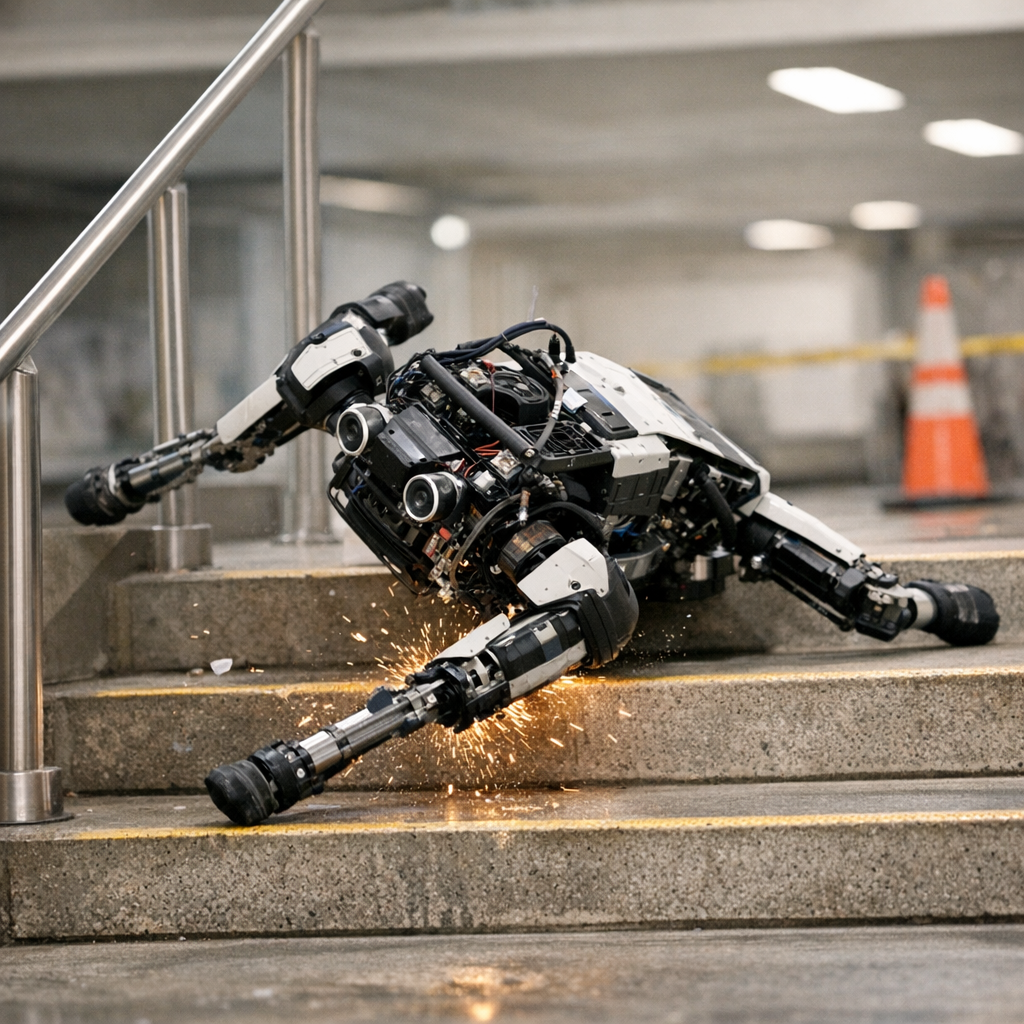
According to the Tech Xplore article titled “Stair-climbing robot falls during test,” the incident occurred during a demonstration intended to showcase the machine’s ability to ascend and descend standard staircases with stability and precision. Instead, the robot lost balance mid-ascent and tumbled backward, raising fresh concerns about the reliability of robotic systems in unpredictable, real-world conditions.
Engineers behind the project had emphasized the robot’s potential applications in search and rescue, infrastructure inspection, and delivery in environments inaccessible to wheeled machines. Equipped with articulated legs or adaptive wheel mechanisms—depending on the design iteration—the system is part of a broader push to create robots that can operate effectively in human-centric spaces. Stair navigation remains one of the most technically demanding aspects of this goal, requiring real-time adjustments to shifting weight, surface variation, and spatial orientation.
The failure, while not resulting in injuries, highlights the gap between controlled laboratory success and deployment in less predictable settings. Even minor miscalculations in balance or timing can cascade into critical errors when a machine is navigating vertical obstacles. Researchers noted that the robot’s fall appeared to stem from instability during a transitional phase between steps, a moment when multiple joints must coordinate precisely under changing loads.
Such incidents are not uncommon in robotics development, where iterative testing often exposes weaknesses that simulations or controlled trials fail to reveal. Specialists in the field point out that public demonstrations, while valuable for attracting investment and interest, also introduce variables—such as slight differences in stair dimensions or material—that can affect performance.
The episode also raises broader questions about how quickly experimental systems should be moved toward real-world deployment. As robotics companies increasingly target applications in public spaces, expectations for reliability and safety are rising accordingly. Failures like this, though part of the development process, can influence public perception and regulatory scrutiny.
Despite the setback, the research team indicated that insights gained from the incident would inform future design improvements, particularly in balance control algorithms and mechanical responsiveness. The long-term trajectory of stair-climbing robots remains promising, driven by demand for machines capable of navigating environments that remain difficult for traditional vehicles.
For now, however, the fall serves as a reminder that even as robotics advances rapidly, mastering seemingly mundane human environments—like a flight of stairs—continues to push the limits of current technology.