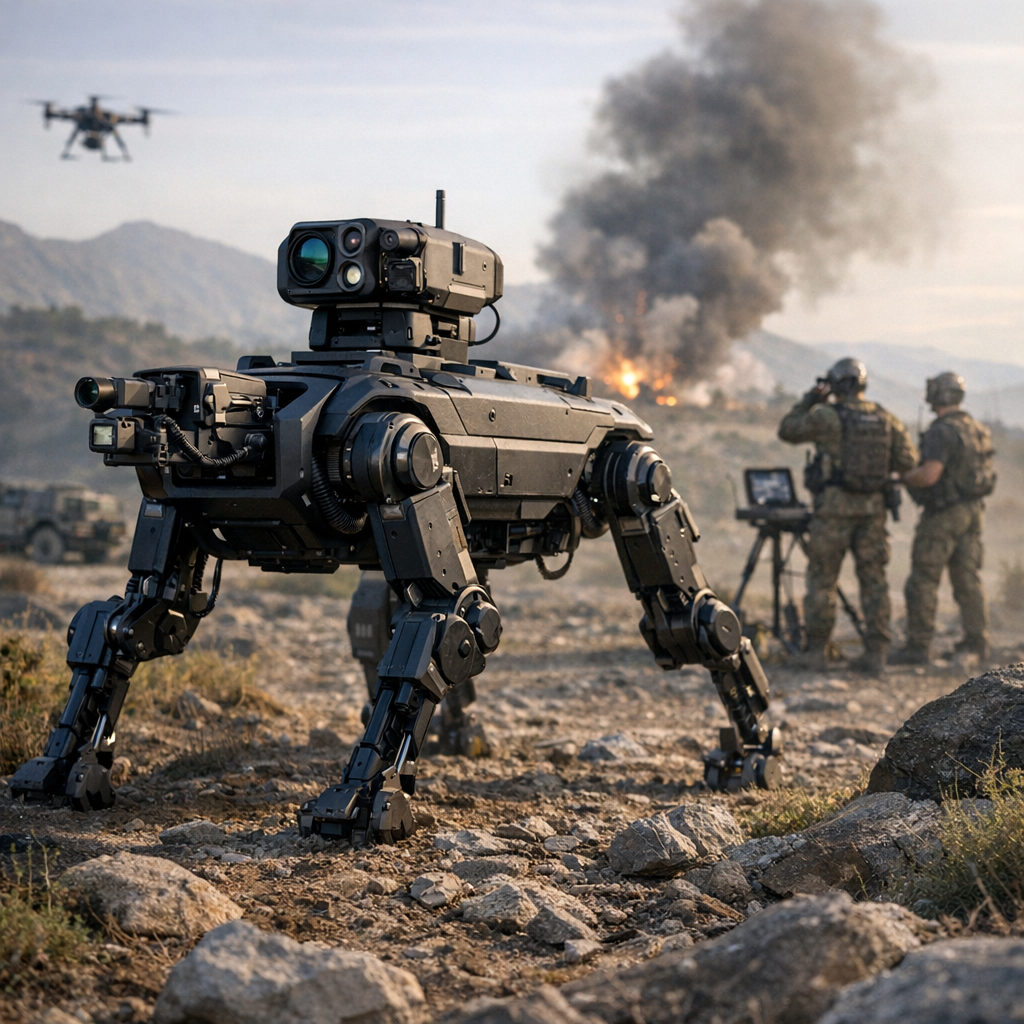
A recent report by TechTime News, titled “XTEND-7,” highlights the unveiling of a new autonomous systems platform that signals a notable shift in how robotics and artificial intelligence are being integrated into field operations. The development reflects a broader trend toward compact, highly adaptive machines designed to operate in complex, often unpredictable environments with minimal human intervention.
According to the TechTime News article, the XTEND-7 platform represents a significant evolution from earlier iterations, combining improved mobility with enhanced real-time data processing capabilities. The system is designed to function across a range of operational settings, including urban environments and high-risk zones, where traditional equipment may face limitations. Its modular design allows for rapid customization, enabling operators to adapt the platform to specific mission requirements without extensive recalibration.
A central feature of XTEND-7 is its reliance on advanced machine vision and sensor fusion. By integrating multiple streams of environmental data, the system can identify obstacles, track movement, and adjust its behavior dynamically. This capability reduces dependence on continuous human oversight and supports more efficient decision-making in time-sensitive scenarios. Analysts note that such autonomy is becoming a defining characteristic of next-generation robotics, particularly in sectors where situational awareness is critical, as highlighted in research from organizations like IEEE.
The TechTime News report also emphasizes improvements in connectivity and control interfaces. XTEND-7 is built to operate within distributed networks, allowing multiple units to coordinate with one another while sharing data in real time. This networked approach enhances scalability and supports collaborative operations, which are increasingly sought after in both civilian and security contexts. The platform’s user interface is designed to be more intuitive than previous models, lowering the barrier to adoption for operators with varying levels of technical expertise.
Industry observers view the introduction of XTEND-7 as part of a broader push toward systems that balance autonomy with human oversight. While fully autonomous operation remains a long-term goal, current designs prioritize a hybrid model in which machines handle routine or high-risk tasks while humans retain strategic control. This approach addresses both practical limitations and ethical considerations associated with deploying advanced AI in sensitive environments, a topic widely discussed in frameworks such as the EU AI Act.
The release comes amid growing competition in the robotics and autonomous systems sector, where companies are racing to deliver platforms that can perform reliably under real-world conditions. As outlined in the TechTime News article, the XTEND-7’s emphasis on adaptability and resilience may give it an advantage in applications ranging from infrastructure inspection to emergency response.
However, experts caution that the rapid advancement of such technologies raises important regulatory and societal questions. Issues related to safety standards, data privacy, and accountability remain unresolved, particularly as systems become more autonomous and widely deployed. Ensuring that these technologies are used responsibly will likely require coordinated efforts among developers, policymakers, and end users.
The debut of XTEND-7 underscores the pace at which robotics innovation is accelerating. As systems become more capable and accessible, their role in everyday operations is expected to expand, reshaping industries and redefining how complex tasks are managed.